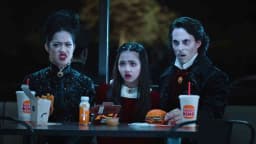
Daily Harvest launches 'Eat Food, Not Fiction' via Schaaf and Station Film, a CTV and digital campaign using a Sound of Music parody to expose wellness

Daily Harvest Calls Out Wellness Misinformation With Eat Food, Not Fiction
Daily Harvest's 'Eat Food, Not Fiction' is a fully integrated brand campaign launched December 26, 2025, created by women-owned independent agency Schaaf and directed by Sara Shelton of Station Film Productions, positioning real fruits, vegetables, and grains as a direct rebuttal to the pseudoscience, buzzwords, and misinformation that saturate the United States wellness market.
The campaign debuted across digital video, social media platforms including Instagram, TikTok, and Meta, and connected TV, running through Q1 2026. At its centre is a sixty-second hero film titled 'Fictional Things,' a parody of 'My Favorite Things' from The Sound of Music, rewritten to skewer the exotic superfoods, proprietary blends, and celebrity-endorsed powders that have come to define mainstream wellness marketing in the United States. As noted by Muse by Clios on December 29, 2025, the campaign functions as a Broadway-style sendup of hyperprocessed food culture and the confusing health claims that accompany it. Campaign magazine, in coverage dated January 7, 2026, described Daily Harvest as 'taking a shot' at wellness brands through the work.
The campaign also introduced an updated Daily Harvest website engineered for what the brand calls radical ingredient transparency, alongside new product launches. Kepler was appointed as media agency of record for the initiative, according to reporting cited across trade sources. Sarah Tabb, Chief Commercial and Marketing Officer at Daily Harvest, framed the strategic intent plainly: 'Food has become overcomplicated and over-marketed. With Eat Food, Not Fiction, we're pulling back the curtain on wellness culture and reminding people that real nourishment doesn't come from trends — it comes from ingredients you can actually recognize.' The positioning and creative platform were developed by Schaaf and the Daily Harvest team in under three months, according to available production documentation.
Daily Harvest competes at the intersection of direct-to-consumer prepared meals, frozen plant-based foods, and online meal kits in the United States. The global online meal-kit market was estimated at $20.16 billion in 2024 and is projected to reach $65.67 billion by 2031 at an approximately 18.3 percent compound annual growth rate, according to Fortune Business Insights — a trajectory that reflects both the scale and the competitive intensity of the category in which Daily Harvest operates.
The competitive landscape in the United States includes players such as HelloFresh and Home Chef, a Kroger-owned brand. The presence of large-scale meal-kit operators means that point-of-difference positioning is not a luxury for Daily Harvest — it is a structural necessity. Where HelloFresh competes primarily on convenience and variety, Daily Harvest's product identity is anchored in whole, plant-based ingredients. 'Eat Food, Not Fiction' converts that ingredient philosophy into cultural commentary, allowing the brand to occupy a distinct position without engaging in direct price or feature comparison.
The strategic insight driving the campaign is precise: United States consumers have been trained by the wellness industry to distrust simplicity. Supplements promising transformation, labels dense with unpronounceable compounds, and influencer endorsements of proprietary blends have created a market-wide credibility gap. Kendra Schaaf, Founder of Schaaf, articulated the opportunity directly: 'The wellness category has trained consumers to look for magic — exotic superfoods, proprietary blends, celebrity-endorsed powders. Daily Harvest's superpower is that they don't need any of that.' By deploying humour and cultural reference rather than earnest health claims, the campaign sidesteps the very register it is critiquing, giving it a rhetorical advantage that straightforward product advertising would not achieve.
Sara Shelton of Station Film Productions directed the hero film for 'Eat Food, Not Fiction,' working from creative developed by Schaaf, the women-owned independent agency founded by Kendra Schaaf. The decision to anchor the campaign in a musical parody is a precise creative choice: it borrows the warmth and familiarity of The Sound of Music while inverting its sentiment, replacing beloved things with the fictional promises of wellness culture.
The sixty-second film titled 'Fictional Things' functions as the campaign's primary emotional and argumentative engine. Musical parody as an advertising format carries specific creative risks — it must be legible enough to trigger recognition, irreverent enough to generate genuine amusement, and pointed enough to land an argument. According to Muse by Clios, the execution achieved that balance, characterising the work as a Broadway-style sendup that addresses the confusion generated by hyperprocessed food marketing in the United States. The choice of connected TV as a primary distribution channel reinforces the theatrical register of the film, placing a production with genuine musical construction in a context where viewers are accustomed to higher production values than standard digital advertising.
The campaign's integrated design extends the creative logic beyond the hero film. The updated Daily Harvest website, built around ingredient transparency, translates the film's argument into a functional brand experience — the promise made in the parody song is substantiated by what the consumer finds when they arrive at the brand's owned channels. Caroline Gibney, Stephen Orent, and Anthony Rescigno are credited in production documentation associated with the campaign, alongside Christine Ng. The full scope of individual roles across the Schaaf and Station Film production is not comprehensively documented in publicly available sources, but the collaboration between Schaaf as creative agency and Station Film as production company is confirmed across multiple trade reports including coverage by reel360.com and musebyclios.com.
No independently verified performance data — including reach figures, conversion rates, or sales uplift — for 'Eat Food, Not Fiction' is publicly available at the time of this analysis. The campaign's measurement framework, managed in part by media agency of record Kepler, has not been disclosed in trade or brand communications reviewed for this case study.
Structurally, the campaign presents several indicators of potential effectiveness. Its multi-channel deployment across Instagram, TikTok, Meta, digital video, and connected TV in the United States reflects a media architecture designed for both broad awareness and targeted engagement. The musical parody format is inherently shareable, particularly on platforms where audio-led content such as TikTok rewards creative distinctiveness. The campaign's earned media footprint — including coverage from Campaign magazine, Muse by Clios, and reel360.com within days of launch — suggests the creative concept generated genuine industry attention beyond paid distribution.
The timing of the December 26 launch is also strategically coherent. Placing an anti-wellness-hype campaign at the precise moment when New Year resolution marketing peaks in the United States creates contextual contrast that amplifies the campaign's argument without additional media spend. The brand's decision to pair the campaign with a redesigned website and new product launches means the advertising investment was structured to convert attention into commercial action, not awareness alone.
Clapboard rates 'Eat Food, Not Fiction' at 63 out of 100. The campaign demonstrates strong strategic clarity and a well-executed creative device, with the Schaaf-directed musical parody format meaningfully differentiated from category norms. The score reflects the campaign's current absence of verified performance data and the inherent execution risk of parody advertising at scale.
'Eat Food, Not Fiction' is a fully integrated brand campaign launched by Daily Harvest on December 26, 2025, across digital video, social media, and connected TV in the United States. Created by women-owned agency Schaaf and directed by Sara Shelton of Station Film Productions, it uses a musical parody to challenge wellness industry pseudoscience and position real ingredients as the alternative.
Schaaf, a women-owned independent agency founded by Kendra Schaaf, created the campaign. Sara Shelton of Station Film Productions directed the hero film. Kepler served as media agency of record. The creative platform was developed jointly by Schaaf and the Daily Harvest team in under three months, according to production documentation associated with the campaign.
'Fictional Things' is the sixty-second hero film at the centre of 'Eat Food, Not Fiction.' Directed by Sara Shelton of Station Film Productions, it parodies 'My Favorite Things' from The Sound of Music, rewriting the lyrics to satirise exotic superfoods, proprietary blends, and celebrity-endorsed wellness products. Muse by Clios described it as a Broadway-style sendup of hyperprocessed food culture.
Daily Harvest launched 'Eat Food, Not Fiction' on December 26, 2025, across Instagram, TikTok, Meta, digital video, and connected TV in the United States. The campaign ran through Q1 2026. Campaign magazine covered the launch on January 7, 2026, describing it as Daily Harvest taking a direct shot at wellness brands.
Clapboard rates 'Eat Food, Not Fiction' at 63 out of 100. The score reflects the campaign's strong strategic clarity and differentiated creative execution via the Schaaf-developed musical parody format, balanced against the current absence of publicly verified performance metrics and the inherent execution risk that parody advertising carries at scale across connected TV and social channels.
'Eat Food, Not Fiction' marks a distinct creative shift for Daily Harvest. The brand's previous notable campaign, produced by Maximum Effort and featuring Blake Griffin in January 2023, took a humour-led but talent-dependent approach, according to reporting by mediapost.com. The 2025 Schaaf campaign centres the brand's own ingredient philosophy rather than celebrity association, reflecting a move toward owned brand identity.
.webp)
Creative Collaboration Platform: The Backbone of Modern Creative WorkWhat is a creative collaboration platform?Clapboard defines a creative collaboration platform as the operational core for today’s distributed creative teams. This is not a collection of digital collaboration tools stitched together; Clapboard’s system


Understanding the Creative Production MarketplaceWhat is a Creative Production Marketplace?Clapboard defines a creative production marketplace as a structured ecosystem where brands, agencies, and production talent converge to execute video, advertising, and branded content at scale. Unlike the legacy agency or freelanREAD FULL ARTICLE

The Urgent Need for a Creative Production Operating SystemWhy Traditional Creative Production Models Break DownClapboard sees the creative production landscape shifting under pressure. Content velocity is no longer a buzzword—it’s a mandate. Modern advertising demands relentless output across dozens of channels, each wREAD FULL ARTICLE