 ARCHIVE
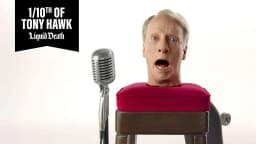
Liquid Death Hires 1/10th of Tony Hawk to Sell Less Sugar
How Liquid Death Turned a Sugar Statistic Into a Tony Hawk Stunt Liquid Death's '1/10th of Tony...
Mathieu Grimard Dares Québec Advertising to Stop Being Skippable
Prière de ne Pas Skipper (Please Don't Skip) is a self-funded, three-minute satirical short film written and directed by Québec commercial director Mathieu Grimard, released in November 2025, that parodies the recurring character archetypes of Québec advertising culture as a pointed meditation on the industry's struggle to hold audience attention, according to Grenier Qc Ca.
Grimard, a veteran of more than a decade directing recognizable commercial work in Québec, conceived the project as the advertisement he could never make within the traditional system, according to Clapboard's editorial record. Rather than serving a client brief, the film serves a cultural argument: that advertising, particularly in the Québec market, risks becoming structurally skippable unless it evolves beyond its most comfortable tropes. The film was published on November 29, 2025, and had been unveiled publicly on November 14, 2025, as reported by Grenier aux nouvelles.
The film's mechanism is a closed-room sketch structure that resurrects immediately recognizable figures from decades of Québec commercial television — the yogurt mom, the submissive insurance husband, the milk-drinking child, the beer guys, the lottery comedian — and confronts each of them with the conventions they embody. The effect operates simultaneously as affectionate parody and genuine industry critique. Grimard has described the piece as a cri du cœur for an advertising industry that must improve its capacity to earn, not merely command, attention, as documented by Grenier aux nouvelles. The project was self-financed and self-promoted by Grimard, with production support from companies 00001 and Cinélande, per Clapboard's records, according to Agencetangente. Its geographic focus is unambiguously Québec, and its cultural specificity — rooted in French-Canadian commercial television vernacular — is both its sharpest creative asset and the engine of its organic reach, according to Musebyclios.
Grimard structured the film as a deliberate creative provocation aimed at an industry-wide problem, according to Reals Quebec. Audience attention in digital environments has become the advertising industry's most contested resource, and in Québec's French-language media landscape that tension is particularly acute given the market's relatively compact scale and the high cultural familiarity audiences have with its recurring commercial characters, according to Omada Ca. By building the film around archetypes every Québec viewer already recognizes — the yogurt mom, the beer guys, the lottery comedian — Grimard inverted the conventional attention-capture logic: instead of disguising advertising conventions, he placed them on trial.
The strategic insight driving the film is that advertising satire earns the attention that straight advertising must fight for. This is not a new idea in global advertising — campaigns such as Old Spice's character-driven absurdism and Liquid Death's anti-marketing positioning have demonstrated that meta-awareness of advertising convention can itself function as a differentiator — but in the specific context of Québec advertising culture in 2025, the move carries particular weight. No comparable self-critical satirical short film targeting Québec commercial archetypes had achieved comparable organic traction in recent memory, according to Clapboard's editorial assessment.
Grimard deliberately designed the film to be what Grenier aux nouvelles described as a fake and commercially unmarketable advertisement — a formal choice that liberated the work from the constraints governing client-facing production. By removing the client from the equation entirely, the film could interrogate the industry's conventions without the industry's permission. That structural freedom is itself the film's core strategic statement: the most honest advertisement Grimard could make was one that served no advertiser. The Clapboard Score for this campaign is 74 out of 100, reflecting its strong creative ambition and organic cultural resonance within a defined regional market.
Gabriel Brault Tardif CSC served as director of photography on the film, bringing professional cinematographic credibility to a project that deliberately mimics the visual grammar of broadcast commercial production. The casting of performers including Erich Preach, Patrick Emmanuel Abellard, and Mathieu Bouillon, as documented in production records cited by Clapboard and confirmed by Grenier aux nouvelles, allowed each archetypal character to be rendered with sufficient precision that Québec audiences could recognize the conventions being parodied without the film tipping into mere caricature.
The art direction was handled by Maxine Dutil-Gravel, with costumes designed by Neyra, and makeup and hair managed by Janick Sabourin and Lydia Depeault, per production credits documented by Clapboard. This level of craft investment is significant context: Grimard did not produce a rough, lo-fi internet parody. He produced a formally disciplined satirical film that meets the production standards of the very commercial genre it critiques. The film's sound was recorded by Thomas Malenfant-Gilbert, with sound design by François Bélanger of Cult, and no music composer is credited, suggesting the sonic environment was constructed entirely through design rather than score — a compositional choice that reinforces the film's interrogation of commercial formula.
Grimard served not only as director but as writer, editor, and co-producer alongside Marie-Soleil Patry, as confirmed by Grenier aux nouvelles. Co-writer Julien Corriveau collaborated on the script, and the production was supported by companies 00001 and Cinélande, per Clapboard's records. The film's runtime of approximately three minutes and eleven seconds, as documented by Muse by Clios, deliberately exceeds the standard commercial format — an act of formal transgression that the title itself acknowledges, asking viewers directly not to do the thing the medium has trained them to do.
No independently audited third-party performance verification for Prière de ne Pas Skipper is publicly available beyond the figures supplied by the project's own documentation. However, the numbers reported are structurally significant. According to Clapboard's editorial records, the film generated nearly 200,000 organic views within under a week of release and approximately 6,000 organic interactions across Grimard's Instagram and Facebook platforms — figures that, if accurate, represent exceptional unpaid reach for a self-funded short film in a regionally specific French-language market.
Muse by Clios provided coverage of the campaign, and Grenier aux nouvelles reported on the project both at its November 14, 2025 unveiling and again in a January 29, 2026 follow-up, indicating sustained media interest beyond the initial launch window. For a project with no client budget, no paid media, and no brand distribution infrastructure behind it, that sustained press attention is itself a measurable outcome. The film's reach extended, per Clapboard's editorial observation, well beyond the advertising community into the broader Québec public — precisely the audience the film's argument is about.
Structurally, the campaign's effectiveness rests on the alignment between its message and its mechanism. A film arguing that advertising must earn attention by evolving beyond formula is validated, rather than undermined, by earning attention through exactly that kind of evolution. The Clapboard Score of 74 out of 100 reflects a campaign that achieves genuine cultural impact within its defined geographic and linguistic market, with craft execution that exceeds the expectations of its self-funded format, while acknowledging that its reach, however impressive organically, remains bounded by the specificity of its Québec cultural references.
Prière de ne Pas Skipper is a self-funded, three-minute satirical short film written and directed by Québec commercial director Mathieu Grimard, released in November 2025. It parodies recurring character archetypes from Québec advertising — including the yogurt mom, beer guys, and lottery comedian — as a critique of the industry's struggle to hold audience attention.
The film generated nearly 200,000 organic views within under a week of release, according to Clapboard's editorial records. It also produced approximately 6,000 organic interactions across Grimard's Instagram and Facebook platforms. These figures were reported by the project's own documentation and have not been independently audited by a third party.
Mathieu Grimard directed, wrote, edited, and co-produced the film alongside producer Marie-Soleil Patry. Julien Corriveau co-wrote the script. Gabriel Brault Tardif CSC served as director of photography. Performers included Erich Preach, Patrick Emmanuel Abellard, and Mathieu Bouillon, per production credits documented by Clapboard and confirmed by Grenier aux nouvelles.
Grimard created the film as a project he could not make within the traditional client-brief system, according to Clapboard's editorial records. He described it as a cri du cœur for an advertising industry that must earn rather than command attention. Designing it as a commercially unmarketable advertisement, per Grenier aux nouvelles, was a deliberate formal and strategic choice.
The film brings back five recognizable figures from Québec commercial television: the yogurt mom, the submissive insurance husband, the milk-drinking child, the beer guys, and the lottery comedian. Each archetype is confronted with the conventions they embody, as identified in coverage by Grenier aux nouvelles and documented in Clapboard's editorial records.
Prière de ne Pas Skipper received a Clapboard Score of 74 out of 100. The score reflects the film's strong creative ambition, disciplined production craft, and genuine organic cultural resonance within the Québec French-language market, balanced against the geographic and linguistic boundaries that naturally limit the scale of its broader reach.
.webp)
Creative Collaboration Platform: The Backbone of Modern Creative WorkWhat is a creative collaboration platform?Clapboard defines a creative collaboration platform as the operational core for today’s distributed creative teams. This is not a collection of digital collaboration tools stitched together; Clapboard’s system


Understanding the Creative Production MarketplaceWhat is a Creative Production Marketplace?Clapboard defines a creative production marketplace as a structured ecosystem where brands, agencies, and production talent converge to execute video, advertising, and branded content at scale. Unlike the legacy agency or freelanREAD FULL ARTICLE

The Urgent Need for a Creative Production Operating SystemWhy Traditional Creative Production Models Break DownClapboard sees the creative production landscape shifting under pressure. Content velocity is no longer a buzzword—it’s a mandate. Modern advertising demands relentless output across dozens of channels, each wREAD FULL ARTICLE