 ARCHIVE
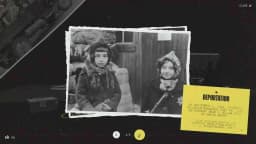
How Inside Kristallnacht Turns Survivor Memory Into Mixed Reality
Inside Kristallnacht and the Race to Preserve Holocaust Memory Through Immersive Experience Inside...
How Casa do Zezinho Turned a Soccer Jersey Into a Lesson
Casa do Zezinho's "Goal for Education" is a Brazilian public interest campaign created by AlmapBBDO and published in May 2014 that embedded arithmetic problems into a soccer jersey to connect the nation's passion for football with children's educational development and social inclusion, according to Forbes.
Casa do Zezinho is a Brazilian nonprofit organisation founded in 1993 and dedicated to serving children and adolescents through education and social-development programmes, according to Brazilfoundation. According to Clapboard's archive, the organisation reaches approximately 1,500 children and adolescents each day, with a broader community impact extending to around 10,000 young people. That scale of need formed the moral backbone of the campaign. In a country preparing to host the 2014 FIFA World Cup, football was not merely a sport — it was a shared national identity, and AlmapBBDO chose to meet Brazilians precisely there, according to Adlatina.
The campaign's central mechanism was deceptively simple. A soccer jersey — the most recognisable garment in Brazil — became a vehicle for arithmetic, its numbering and design repurposed to carry educational content. The single media asset, documented in Clapboard's archive, operated in the digital medium, meaning the jersey's concept was designed to travel visually and provoke conversation online, according to Prnewswire. The campaign's timing in May 2014 placed it at the height of pre-World Cup national enthusiasm, lending the educational message an urgency it might not have carried in any other month or year. In Brazil, where football culture and civic pride are inseparable, the creative choice was structurally sound: borrow the currency of sport to spend on something education urgently needed — attention, according to Cm.
AlmapBBDO identified a tension at the centre of Brazilian public life in 2014. Brazil's football culture commands a level of popular engagement that few other national institutions can match, while educational inequality remained a persistent structural challenge, particularly for the children and adolescents served by organisations such as Casa do Zezinho. The strategic insight was that the same emotional register Brazilians brought to the game could, if properly channelled, be redirected toward awareness of that gap.
The Brazil Foundation, which documents the country's social-sector landscape, has noted that access to quality education for children from low-income communities in Brazil remains an enduring development priority. Casa do Zezinho was founded precisely to address that reality, having operated since 1993 across education, culture, sport, and professional training programmes. AlmapBBDO's strategic task was to make that mission visible to a broader public at a moment when the nation's attention was pointed firmly toward football fields, not classrooms.
In the competitive landscape of Brazilian public interest advertising in 2014, AlmapBBDO was working alongside other agencies producing prominent social campaigns. Cannes Lions 2014 coverage, as noted in Clapboard's research, identified other Brazilian public-interest work from that period — including CVV's "Daddy" campaign and GRAACC's "Bald Cartoons" — as campaigns attracting international recognition. Against that backdrop, "Goal for Education" pursued a culturally embedded approach rather than an emotionally confrontational one, choosing the soccer jersey as a quiet intervention rather than a dramatic appeal. The digital medium allowed the concept to reach audiences beyond the immediate communities Casa do Zezinho serves, extending the campaign's potential relevance across the Brazilian market.
The creative idea in "Goal for Education" rests on a single, transferable visual proposition. A soccer jersey — the garment most associated with Brazilian national identity and collective celebration — is redesigned to carry arithmetic problems in place of its conventional numbering and graphic elements. The jersey functions simultaneously as a familiar cultural object and an unexpected educational prompt, creating a moment of productive surprise for anyone who encounters it.
This duality was the campaign's primary creative asset. The jersey did not need lengthy copy or a dramatic narrative to communicate its point. The juxtaposition was self-explaining: a child wearing a football shirt covered in mathematics is a child for whom sport and learning are not in competition but in conversation. AlmapBBDO's creative approach reflected the agency's established record in concept-led public interest work. According to Clapboard's archive, the agency had previously produced the "Share Project" for Casa do Zezinho in July 2011, an ambient public interest campaign with creative director Luiz Sanches and art directors Renato Fernandez, Vinicius Sousa, and Daniel Manzi, establishing a creative relationship that informed the 2014 work. A further campaign, titled "Help," followed in March 2013, again positioning Casa do Zezinho as an organisation supporting underprivileged children through education and art.
Production credits specific to "Goal for Education" are not publicly documented beyond the agency attribution to AlmapBBDO and the BBDO network. The campaign comprised one media asset, as recorded in Clapboard's archive, suggesting a concentrated rather than dispersed creative strategy — a single strong idea deployed with precision rather than scaled across multiple executions. In the context of Brazilian digital advertising in 2014, that restraint was itself a creative choice.
No verified performance data for "Goal for Education" is publicly available. No independently confirmed metrics covering reach, engagement, impressions, or donation uplift have been identified across advertising trade publications including Campaign, Ad Age, Adweek, The Drum, or Contagious. No verifiable social media reaction data has been found across Twitter, Reddit, LinkedIn, or YouTube. Similarly, no award recognition for this campaign has been confirmed at Cannes Lions, the Effie Awards, the One Show, D&AD, or the Clio Awards, as Clapboard's research establishes.
What structural analysis can offer in the absence of metrics is an assessment of the campaign's conceptual architecture. The soccer jersey device solved a genuine creative problem: how to make an educational nonprofit visible inside a cultural moment — Brazil's 2014 World Cup — dominated by entertainment rather than social concern. The idea required no media budget to explain itself and was designed to be legible at a glance, which are durable virtues in digital campaigns where attention is brief.
Casa do Zezinho's existing scale — approximately 1,500 children served daily, with a community reach of around 10,000 young people according to Clapboard's archive — gave the campaign a credible institutional foundation. The creative did not have to manufacture urgency; the organisation's documented impact provided it. That alignment between creative idea and organisational reality is a structural strength that performance data, had it been recorded publicly, might have confirmed. Clapboard Score: 63/100.
"Goal for Education" was a Brazilian public interest campaign created by AlmapBBDO for Casa do Zezinho and published in May 2014. It used a soccer jersey printed with arithmetic problems to connect Brazil's football culture with children's education, reaching audiences through a single digital media asset during the country's 2014 World Cup period.
AlmapBBDO, the Brazilian arm of the BBDO network, created the campaign. AlmapBBDO had an established creative relationship with Casa do Zezinho, having previously produced the "Share Project" ambient campaign in 2011 and the "Help" campaign in 2013, both documented in Clapboard's archive.
Casa do Zezinho is a Brazilian nonprofit founded in 1993 that serves children and adolescents through education and social-development programmes. According to Clapboard's archive, the organisation reaches approximately 1,500 children daily. The campaign sought to raise awareness of educational inequality among a Brazilian public focused on the 2014 World Cup.
No award recognition for "Goal for Education" has been confirmed. Clapboard's research found no record of the campaign receiving honours at Cannes Lions 2014, the Effie Awards, the One Show, D&AD, or the Clio Awards. Other Brazilian public interest campaigns from the same period, including CVV's "Daddy," attracted international recognition instead.
The soccer jersey was chosen because football is central to Brazilian national identity, particularly during the 2014 World Cup period. By embedding arithmetic problems into the jersey's design, AlmapBBDO positioned sport and education as compatible rather than competing priorities, creating a self-explanatory visual idea suited to digital distribution.
Clapboard assigns "Goal for Education" a score of 63 out of 100. The campaign demonstrates structural creative strength through its culturally embedded concept and precise single-asset execution. The score reflects the absence of publicly verified performance data and confirmed award recognition, balanced against a well-founded strategic and creative rationale.
.webp)
Creative Collaboration Platform: The Backbone of Modern Creative WorkWhat is a creative collaboration platform?Clapboard defines a creative collaboration platform as the operational core for today’s distributed creative teams. This is not a collection of digital collaboration tools stitched together; Clapboard’s system


Understanding the Creative Production MarketplaceWhat is a Creative Production Marketplace?Clapboard defines a creative production marketplace as a structured ecosystem where brands, agencies, and production talent converge to execute video, advertising, and branded content at scale. Unlike the legacy agency or freelanREAD FULL ARTICLE

The Urgent Need for a Creative Production Operating SystemWhy Traditional Creative Production Models Break DownClapboard sees the creative production landscape shifting under pressure. Content velocity is no longer a buzzword—it’s a mandate. Modern advertising demands relentless output across dozens of channels, each wREAD FULL ARTICLE