Canadian Safe Boating Council's 'Deli counter, Frog' by Saatchi & Saatchi Canada reframed impaired boating as a criminal offence through two national PSA films

How the Canadian Safe Boating Council Made Impaired Boating Feel Like a Crime
The Canadian Safe Boating Council's 'Deli counter, Frog' campaign is a 2015 national public service initiative, created by Saatchi & Saatchi Canada, comprising two film-format PSAs that deliver a single, legally grounded message: the second a person operates a boat while impaired, they are committing a criminal offence.
The campaign was published in Canada in August 2015 and announced publicly on September 4, 2015, according to Saatchi & Saatchi Canada and the Canadian Safe Boating Council. It consists of exactly two television spots — titled 'Deli counter' and 'Frog' respectively — unified by the tagline 'The Second You Boat While Impaired, You're a Criminal.' That tagline is the campaign's strategic cornerstone: it dispenses with cautionary language about risk and injury, and instead positions impaired boating as an act with immediate criminal consequences.
Distribution ran nationally across television and online video channels, extending the reach of the message beyond traditional broadcast audiences and into digital environments where younger recreational boaters increasingly consume content. In Canada, recreational boating is a culturally embedded warm-weather activity, and the summer publication window — August 2015 — was deliberately timed to reach boaters at peak season. The Canadian Safe Boating Council was established in 1991, according to Csbc Ca, specifically to improve coordination among government departments, agencies, and organisations engaged in recreational boating safety, giving the council the institutional authority to anchor a message of this legal weight.
Ted Rankine of the Canadian Safe Boating Council noted, as reported by saatchi.com, that the campaign represented a deliberate strategic shift — moving the organisation's messaging away from consequences framed around physical injury and toward consequences framed around criminal liability. That shift defines the campaign's identity and separates it from the broader category of water-safety public service communications. The Clapboard Score for 'Deli counter, Frog' is 60 out of 100, reflecting solid strategic clarity and purposeful creative framing within the constraints of a public interest brief.
The Canadian Safe Boating Council identified a gap between public awareness of boating danger and public understanding of boating law. The strategic insight driving 'Deli counter, Frog' is that many recreational boaters in Canada did not regard impaired boating as a criminal act — they regarded it as a safety risk, a matter of personal judgment rather than legal jeopardy. That distinction is consequential. Safety messaging can be rationalised away; criminal liability cannot.
According to Canada Ca, Canada's Criminal Code treats operation of a vessel while impaired by alcohol or drugs as a criminal offence, carrying the same legal weight as impaired driving. Despite that legal equivalence, public perception had not kept pace. Prior CSBC campaigns, including Saatchi & Saatchi Canada's 'Glass' print campaign from April 2014 and 'Bottle' ambient campaign from May 2014, as documented on clapboard.com, had addressed boating safety through visual metaphor and environmental placement. 'Deli counter, Frog' escalated the directness of the message substantially, moving from suggestion to explicit legal declaration.
The public service advertising landscape in Canada includes institutional communicators such as Transport Canada and provincial boating safety bodies, which have historically led with injury-prevention statistics and hazard awareness. The CSBC's decision to foreground criminal consequence rather than physical harm represents a meaningful strategic departure from that category norm. According to Ourcommons Ca, parliamentary discussions around recreational boating safety in Canada have consistently referenced the gap between legislative intent and boater behaviour, lending institutional context to the campaign's urgency. By anchoring the message in law rather than fear, Saatchi & Saatchi Canada positioned the CSBC as a source of legal truth rather than cautionary advice — a posture with considerably greater authority in a crowded public interest media environment.
Director Derek Shapton led the production of 'Deli counter, Frog' for the Canadian Safe Boating Council, working through production company OPC. The campaign was built on a documentary and social experiment creative framework — a format that places ordinary people in constructed situations to reveal authentic reactions, lending the finished work a texture of observed reality rather than scripted drama.
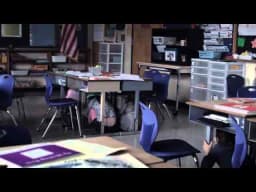
The two films — 'Deli counter' and 'Frog' — each function as self-contained social experiments in which everyday Canadians encounter scenarios that parallel the impaired boating situation, with responses that expose the gap between how people perceive criminal behaviour in familiar contexts and how they discount it on the water. This structural device is central to the campaign's persuasive logic: by making the criminal framing feel discovered rather than declared, it sidesteps the audience resistance that direct-address public service announcements often generate.
Executive creative director Brian Sheppard oversaw the work, with group creative directors Matt Antonello and Joel Arbez leading the creative team. Matt Antonello and Cory Hansen served as copywriters, with Joel Arbez as art director, according to Saatchi & Saatchi creative documentation cited by saatchi-ch.com and saatchi.com. The production's choice of a documentary register — handheld observational camera work, natural lighting, unscripted-feeling performances — is consistent with the broader social experiment genre that gained significant credibility in public service and advocacy advertising during this period. For a campaign whose entire argument rests on the authenticity of a legal fact, that formal choice reinforces the message: this is not a dramatised warning, it is a documentation of how the law already works. The two-asset structure also allows the campaign to reach different audience segments through two distinct scenarios while maintaining absolute consistency of message and tagline.
No verified performance data for 'Deli counter, Frog' is publicly available in the form of reach figures, recall scores, or behavioural outcome metrics. This is not unusual for public service campaigns of this era and category, where measurement infrastructure often differs from commercial advertising and where post-campaign analytics are rarely released into the public domain.
What is documentable is the campaign's industry recognition. Saatchi & Saatchi Canada received a Media Contribution acknowledgement in connection with the campaign, as reported by powerboating.com, reflecting the value attributed to the pro-bono or reduced-rate media placement that allowed national television distribution. That form of recognition is structurally significant: it confirms the campaign achieved national broadcast exposure, which is the primary distribution goal for a public interest film campaign of this type.
Analytically, the campaign's structural effectiveness rests on three decisions that reinforce one another. First, the criminal framing of the tagline creates a message with zero ambiguity — legal consequence is binary in a way that injury risk is not. Second, the social experiment documentary format generates authenticity that scripted PSAs typically cannot. Third, the dual-asset structure — 'Deli counter' and 'Frog' as distinct films — provides scheduling flexibility across broadcast contexts without diluting the unified message. According to csbc.ca, the Canadian Safe Boating Council has maintained a consistent long-term commitment to public awareness programming since its founding in 1991, and 'Deli counter, Frog' represents one of the more legally assertive expressions of that mandate in the organisation's public communications history.
'Deli counter, Frog' is a 2015 national public service campaign by the Canadian Safe Boating Council, created by Saatchi & Saatchi Canada. It comprises two PSA films using a social experiment format to communicate that operating a boat while impaired is a criminal offence under Canadian law, using the tagline 'The Second You Boat While Impaired, You're a Criminal.'
Derek Shapton directed 'Deli counter, Frog' through production company OPC. The campaign's creative leadership at Saatchi & Saatchi Canada included executive creative director Brian Sheppard, group creative directors Matt Antonello and Joel Arbez, copywriters Matt Antonello and Cory Hansen, and art director Joel Arbez, as documented by saatchi-ch.com and saatchi.com.
The Canadian Safe Boating Council shifted its messaging strategy to emphasise criminal liability because physical-injury warnings had not changed boater behaviour sufficiently. Ted Rankine of the CSBC confirmed this strategic shift, as reported by saatchi.com. Canadian law treats impaired boating as a criminal offence equivalent to impaired driving, according to canada.ca, making legal framing both accurate and actionable.
'Deli counter, Frog' was published in Canada in August 2015 and announced on September 4, 2015, according to Saatchi & Saatchi Canada and the Canadian Safe Boating Council. The campaign distributed nationally across television and online video channels, targeting recreational boaters during peak summer season across the Canadian market.
Saatchi & Saatchi Canada used a documentary social experiment format for 'Deli counter, Frog.' Each of the two films places ordinary Canadians in constructed scenarios that reveal how impaired boating is perceived differently from other criminal acts, generating authentic responses that reinforce the campaign's legal message without relying on scripted dramatisation.
Saatchi & Saatchi Canada received a Media Contribution acknowledgement connected to the campaign, as reported by powerboating.com, confirming national broadcast placement was achieved. No additional awards data for 'Deli counter, Frog' is publicly documented. The campaign carries a Clapboard Score of 60 out of 100, reflecting its strategic clarity within a public interest brief.
.webp)
Creative Collaboration Platform: The Backbone of Modern Creative WorkWhat is a creative collaboration platform?Clapboard defines a creative collaboration platform as the operational core for today’s distributed creative teams. This is not a collection of digital collaboration tools stitched together; Clapboard’s system


Understanding the Creative Production MarketplaceWhat is a Creative Production Marketplace?Clapboard defines a creative production marketplace as a structured ecosystem where brands, agencies, and production talent converge to execute video, advertising, and branded content at scale. Unlike the legacy agency or freelanREAD FULL ARTICLE

The Urgent Need for a Creative Production Operating SystemWhy Traditional Creative Production Models Break DownClapboard sees the creative production landscape shifting under pressure. Content velocity is no longer a buzzword—it’s a mandate. Modern advertising demands relentless output across dozens of channels, each wREAD FULL ARTICLE