Bud Light Medieval Barbers Rewrites the Super Bowl Playbook
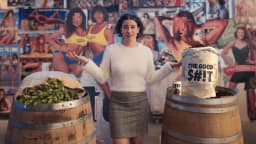
Bud Light's "Medieval Barbers" is a 15-second film commercial that aired during Super Bowl LIII on February 3, 2019, in the United States, created by Wieden + Kennedy New York to promote the brand's "no corn syrup" positioning by depicting two medieval barbers discussing corn syrup found in competitor beers Miller Lite and Coors Light.
The spot is one of three executions Bud Light launched simultaneously that day, alongside "Special Delivery" and "Trojan Horse Occupants," all anchored to the same corn syrup message. Together they represented a coordinated comparative advertising offensive rather than a single standalone film, a structural choice that gave the brand repeated presence across one of the most expensive and competitive media environments in United States advertising. The medieval setting was not incidental. It extended the "Dilly Dilly" fantasy-kingdom platform that Wieden + Kennedy had been building for Bud Light since 2017, according to Ad Age, giving the new corn syrup argument a recognisable visual world and an existing audience already familiar with the brand's medieval characters.
The campaign contained one media asset, a concentrated creative investment deployed against an audience that, according to reporting across multiple outlets, reached nearly 100 million viewers for Super Bowl LIII. In the United States food and drink category, and specifically within alcoholic drinks, few media moments carry equivalent reach or cultural weight. For Bud Light, "Medieval Barbers" was both a brand-building act and a direct competitive challenge, placing the corn syrup distinction front and centre in the national conversation at the precise moment when the most consumers were paying attention. The Clapboard Score for this campaign is 63 out of 100.
Bud Light entered Super Bowl LIII with a specific strategic problem. The United States beer market was contracting, with US beer volume falling by approximately 1.1 percent in 2017 to 2.8 billion 2.25-gallon cases, and light beer specifically declining by around 3.1 percent in the same period, according to Brewed Culture. Craft beer, by contrast, grew roughly 4.9 percent to 310 million cases in 2017, per Brewed Culture, and alcohol-infused seltzers were taking measurable share from the beer category by 2019, as reported by CNBC.
Against that backdrop, a purely aspirational campaign risked irrelevance. The "Medieval Barbers" execution and its companion spots chose a different path: ingredient-level differentiation through comparative advertising targeting Miller Lite and Coors Light by name. Both brands are produced by MillerCoors, making the campaign a direct two-front attack on Bud Light's most direct light beer competitors in the United States market. The strategic logic was that health-conscious consumers, already leaving the category for seltzers and spirits, could be retained or won back if given a reason to believe their light beer choice was meaningfully cleaner than the alternative.
The broader "Dilly Dilly" platform, which Wieden + Kennedy launched for Bud Light in 2017 according to Ad Age, had established a comedic medieval world that gave the brand cultural distinctiveness without relying on sports tropes. "Medieval Barbers" grafted a product-truth argument onto that established creative world, combining memorability with a substantive competitive claim. The decision to air during Super Bowl LIII was consistent with Bud Light's long history of using the game as its primary brand-building stage in the United States, where the event commands premium attention across the food and drink category.
Wieden + Kennedy New York created "Medieval Barbers" for Bud Light, delivering a 15-second film within the constraints of a Super Bowl commercial slot and the wider medieval creative world already established by the "Dilly Dilly" platform.
The production was directed by Ulf Johansson, with creative direction by John Parker, according to johnparkercreative.com. Copywriting was handled by Katie D'Agostine and art direction by Grace Martin, per the same source. The creative team faced a structural challenge common to short-form Super Bowl advertising: compressing a comparative product argument — corn syrup in Miller Lite and Coors Light versus no corn syrup in Bud Light — into a comedic narrative short enough to hold attention but long enough to land the brand message clearly. The medieval barber shop setting provided a ready-made comedic frame, with the absurdity of medieval tradespeople discussing modern ingredient labelling doing the tonal work that a 15-second window rarely allows for through dialogue alone.
The film medium was the only format deployed for this execution, and the campaign contains one media asset, suggesting the creative team made a deliberate choice to concentrate impact rather than extend the concept across multiple formats. The spot aired on NFL.com as well as during the Super Bowl broadcast itself, per nfl.com and adsoftheworld.com, extending its reach beyond the live television audience. The production company, post-production house, music composer, and editor for "Medieval Barbers" are not publicly documented in available sources. What is documented is a creative execution that prioritised economy of storytelling, using a familiar visual world and a single sharp product claim to deliver a competitive message inside one of the most scrutinised advertising slots in the United States.
No verified performance data for the "Medieval Barbers" campaign is publicly available in the form of sales uplift, brand tracking shifts, or view counts specific to this execution.
What is documented is critical reception. Adweek published a sharply negative assessment on February 4, 2019, describing the execution as "not really that great" and concluding "this wasn't even close," according to Adweek's own reporting. The same outlet rated the medieval barber shop ad below Bud Light's concurrent "Game of Thrones" commercial, suggesting that within its own Super Bowl portfolio, "Medieval Barbers" was not the standout execution. The campaign did, however, generate significant legal and industry attention. According to a MillerCoors legal filing cited by libationlawblog.com and reedsmith.com, the corn syrup campaign as a whole prompted a lawsuit from MillerCoors, which disputed the accuracy and fairness of the comparative claims — an outcome that paradoxically extended the campaign's media life well beyond Super Bowl LIII.
Structurally, a 15-second comparative film delivered to nearly 100 million Super Bowl LIII viewers, as reported across multiple outlets, carries inherent reach advantages that no post-campaign metric fully captures. The integration of "Medieval Barbers" into the wider "Dilly Dilly" platform, documented by Ad Age, gave it the benefit of an established creative world, reducing the cognitive load required for a viewer to situate the commercial's premise. The Clapboard Score of 63 out of 100 reflects a campaign with clear strategic coherence and strong media placement, offset by creative execution that drew mixed critical response and operated in the shadow of more celebrated work within the same Super Bowl slate.
"Medieval Barbers" is a 15-second Bud Light film that aired during Super Bowl LIII on February 3, 2019, in the United States. Created by Wieden + Kennedy New York, it features medieval barbers discussing corn syrup in competitor beers Miller Lite and Coors Light, positioning Bud Light as brewed without corn syrup.
Wieden + Kennedy New York created the campaign. Creative director John Parker led the project, with copywriter Katie D'Agostine, art director Grace Martin, and director Ulf Johansson, according to johnparkercreative.com. The production company and post-production house for this film are not publicly documented in available sources.
Bud Light used "Medieval Barbers" to argue a direct ingredient-level distinction from Miller Lite and Coors Light in the United States market. The strategy responded to a contracting light beer category, documented by Brewed Culture, by giving health-conscious consumers a specific, verifiable reason to choose Bud Light over its two closest competitors.
Critical reception was mixed. Adweek rated "Medieval Barbers" below Bud Light's concurrent "Game of Thrones" Super Bowl commercial, describing it as "not really that great." The Clapboard Score for the campaign is 63 out of 100, reflecting sound strategic placement offset by creative execution that did not match the strongest work in the same Super Bowl slate.
MillerCoors filed a legal complaint against Anheuser-Busch over the 2019 corn syrup campaign, according to libationlawblog.com and reedsmith.com. The dispute centred on whether the comparative claims about corn syrup in Miller Lite and Coors Light were accurate and fair, extending the campaign's public visibility well beyond Super Bowl LIII itself.
"Medieval Barbers" extends the "Dilly Dilly" medieval platform that Wieden + Kennedy launched for Bud Light in 2017, according to Ad Age. The 2019 execution grafted a product-truth corn syrup argument onto an already established comedic world, giving the comparative advertising message the benefit of audience familiarity built over two prior years of brand-building in the United States.
.webp)
Creative Collaboration Platform: The Backbone of Modern Creative WorkWhat is a creative collaboration platform?Clapboard defines a creative collaboration platform as the operational core for today’s distributed creative teams. This is not a collection of digital collaboration tools stitched together; Clapboard’s system


Understanding the Creative Production MarketplaceWhat is a Creative Production Marketplace?Clapboard defines a creative production marketplace as a structured ecosystem where brands, agencies, and production talent converge to execute video, advertising, and branded content at scale. Unlike the legacy agency or freelanREAD FULL ARTICLE

The Urgent Need for a Creative Production Operating SystemWhy Traditional Creative Production Models Break DownClapboard sees the creative production landscape shifting under pressure. Content velocity is no longer a buzzword—it’s a mandate. Modern advertising demands relentless output across dozens of channels, each wREAD FULL ARTICLE