#breathewithme Revolution's Black America ReFund campaign, created by Atlantic New York in 2021, reframes reparations as economic justice on the Tulsa Massacre

Black America ReFund Turns a Century of Injustice Into Economic Action
The Black America ReFund is a 2021 United States public-interest film campaign created by Atlantic New York for veteran activist organisation #breathewithme Revolution, launched on the centennial of the 1921 Tulsa Massacre to reposition direct financial relief for Black families not as charity but as an act of economic justice owed.
#breathewithme Revolution was founded in 2020 by Willie "Prophet" Stiggers, according to breathewithmerevolution.org, and the Black America ReFund represents the organisation's first documented advertising effort. The campaign arrived at a precise historical inflection point: June 2021 marked one hundred years since a white mob destroyed the thriving Greenwood District of Tulsa, Oklahoma — the neighbourhood known as Black Wall Street — burning thirty-five blocks of community infrastructure to the ground and killing hundreds of Black residents. As documented by the City of Tulsa and confirmed in congressional testimony cited by Govinfo Gov, the massacre erased what had been one of the most prosperous Black communities in the United States and left its residents without restitution for a century.
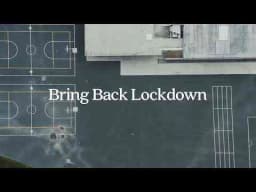
Against that backdrop, Atlantic New York produced a documentary-style short film drawing on archival footage to trace the unbroken line between the Tulsa Massacre and the structural economic inequities facing Black Americans in 2021. Production partners Cut and Run, Heavy Duty Music, and Ameba collaborated on the film, which directed audiences to donate at blackamericarefund.com. The campaign's defining rhetorical move — foregrounded in its on-screen copy and press materials — was a single declarative reframe: "This is not charity. This is economic justice." That framing deliberately shifted the moral register from philanthropic generosity to civic obligation, targeting white allies specifically as an accountability audience alongside the broader American public.
The 1921 Tulsa Massacre centennial created a rare convergence of cultural attention and institutional momentum in the United States. In May 2021, President Biden attended Tulsa centennial commemorations, and the Biden White House published statements acknowledging the massacre's legacy, as documented by Bidenwhitehouse Archives Gov. The Equal Justice Initiative, cited by eji.org, has extensively documented how the destruction of Black Wall Street represented not only physical violence but the deliberate dismantling of self-sustaining Black economic infrastructure — a fact the Black America ReFund campaign placed at the centre of its argument.
Atlantic New York's strategic insight was that the centennial moment had generated public familiarity with the Tulsa Massacre through news coverage, presidential acknowledgment, and cultural programming, creating an audience already primed to receive the film's historical narrative. Rather than educating viewers from zero, the campaign could move directly to the demand: economic participation. The Human Rights Watch, cited by hrw.org, has documented patterns of systemic economic disadvantage facing Black Americans across housing, employment, and wealth accumulation — the structural context the film mobilised to make its case for the fund's urgency.
In the United States nonprofit and social-impact funding landscape, campaigns that connect historical injustice to present-day action have demonstrated greater donor engagement than purely need-based appeals, according to research published by nonprofitpro.com. The Black America ReFund's positioning was designed to sidestep the traditional charity dynamic — in which donors hold power — by asserting that contributions represent the repayment of a debt. This distinction separated the campaign from contemporaneous racial-justice fundraising efforts by organisations including the NAACP Legal Defense Fund and the Equal Justice Initiative itself, which framed their appeals in terms of ongoing advocacy rather than direct restitution. Atlantic New York, then a recently formed agency co-founded by João Coutinho and Marco Pupo as reported by mediapost.com, brought a creative agency's structural discipline to an activist organisation's moral urgency.
The Black America ReFund film uses documentary craft as its primary persuasive instrument. Archival footage grounds the film's argument in visual evidence, placing viewers in direct contact with the historical record of Black Wall Street and its destruction rather than relying on dramatisation or illustration. This production choice carries editorial weight: it asserts that the historical record itself is sufficient indictment, requiring no embellishment.
Cut and Run handled editorial production, while Heavy Duty Music contributed to the film's sound design and score, and Ameba joined as an additional production partner, as documented in campaign materials cited by LBBOnline's June 2021 entry written by Amanda Marien. The collaboration between a newly launched creative agency and established post-production and music partners reflects a common structural model in public-interest filmmaking, where lean agency teams leverage specialist craft houses to achieve production quality that commands attention without requiring broadcast-scale budgets.
The film's language operates in two registers simultaneously. Its historical narration addresses all viewers with informational authority, while its call to action addresses white allies directly and specifically, asking them to acknowledge accountability rather than perform generosity. This dual-address structure is a sophisticated rhetorical choice: it avoids the homogenising of audience experience that flattens many social-cause campaigns, instead creating distinct emotional journeys for different viewer identities. According to LBBOnline's coverage of the campaign, Atlantic New York founders João Coutinho and Marco Pupo shaped the campaign's creative direction, with the agency positioning the work as a demonstration of its commitment to culturally specific, historically grounded public-interest advertising. Production credits beyond the partner studios are not fully documented in publicly available sources, and Clapboard's archive records one media asset associated with the campaign.
No verified performance data measuring donation totals, donor acquisition rates, or cost per donation for the Black America ReFund campaign is publicly available. No published data exists on brand-awareness shifts, audience reach beyond the platform archive, or behavioural impact measures, based on available public records.
The campaign's archive record, as documented on Clapboard, reports one thousand six hundred and fifteen views, twenty likes, and no comments on the platform at the time of assessment. No verified award wins or finalist placements are recorded for this campaign across Cannes Lions, the Effie Awards, The One Show, D&AD, the Clio Awards, the Webby Awards, or WARC Awards, based on available data.
Structurally, the campaign's effectiveness rests on a foundation of strategic timing and rhetorical precision rather than scale. Launching in June 2021 at the exact centennial of the Tulsa Massacre placed the Black America ReFund inside a nationally active news cycle, reducing the cost of audience priming that most awareness campaigns must absorb independently. The reframe from charity to economic justice is structurally sound as a donor-conversion mechanism: it removes the psychological distance that accompanies charitable giving and replaces it with a sense of obligation, which social-impact research consistently associates with higher intent to act, according to associationheadquarters.com. The direct-response mechanic — a dedicated donation URL featured in the film — creates a closed loop between emotional engagement and transactional action. The campaign's Clapboard Score of 63 out of 100 reflects the strength of its strategic and creative positioning alongside the limited documented evidence of measurable public reach.
The Black America ReFund is a 2021 United States public-interest film campaign created by Atlantic New York for #breathewithme Revolution. It uses archival documentary footage to connect the 1921 Tulsa Massacre to present-day economic inequality, directing audiences to donate to a fund explicitly positioned as economic justice rather than charity.
June 2021 marked the centennial of the Tulsa Massacre, when a white mob destroyed Black Wall Street and killed hundreds of Black residents. #breathewithme Revolution and Atlantic New York timed the campaign to align with national commemorations and heightened public awareness of the massacre's unaddressed economic legacy in the United States.
Atlantic New York, a recently formed creative agency co-founded by João Coutinho and Marco Pupo, created the campaign for #breathewithme Revolution. Production partners included Cut and Run, Heavy Duty Music, and Ameba. #breathewithme Revolution was itself founded in 2020 by Willie "Prophet" Stiggers, according to breathewithmerevolution.org.
No verified donation totals or audience-reach data for the Black America ReFund are publicly available. The campaign's archive record documents one thousand six hundred and fifteen platform views and twenty likes. No award placements across Cannes Lions, the Effies, or D&AD are recorded. The campaign earned a Clapboard Score of 63 out of 100.
The Black America ReFund explicitly frames contributions as economic justice owed rather than charitable giving, targeting white allies as an accountability audience. This distinguishes it from contemporaneous campaigns by organisations including the NAACP Legal Defense Fund and the Equal Justice Initiative, which centred their appeals on ongoing advocacy rather than direct restitution.
.webp)
Creative Collaboration Platform: The Backbone of Modern Creative WorkWhat is a creative collaboration platform?Clapboard defines a creative collaboration platform as the operational core for today’s distributed creative teams. This is not a collection of digital collaboration tools stitched together; Clapboard’s system


Understanding the Creative Production MarketplaceWhat is a Creative Production Marketplace?Clapboard defines a creative production marketplace as a structured ecosystem where brands, agencies, and production talent converge to execute video, advertising, and branded content at scale. Unlike the legacy agency or freelanREAD FULL ARTICLE

The Urgent Need for a Creative Production Operating SystemWhy Traditional Creative Production Models Break DownClapboard sees the creative production landscape shifting under pressure. Content velocity is no longer a buzzword—it’s a mandate. Modern advertising demands relentless output across dozens of channels, each wREAD FULL ARTICLE