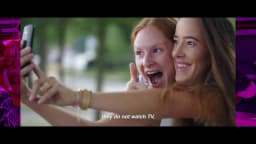
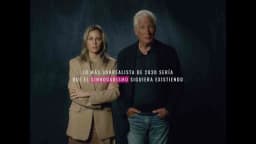
Boko Halal's 'Put Yourself in Their Shoes' by Noah's Ark Creative ran in Nigeria in August 2015, using a single digital asset to humanise the Chibok abduction

Boko Halal Puts Nigeria's Chibok Crisis Into a Single Digital Frame
Boko Halal's 'Put Yourself in Their Shoes' is a single-asset digital public-interest campaign created by Noah's Ark Creative, published in Nigeria in August 2015, designed to build empathy for the girls abducted by Boko Haram by inviting viewers to imagine themselves in the victims' position.
The campaign arrives more than a year after the April 2014 Chibok school abductions that galvanised the global #BringBackOurGirls movement. Where that movement spread across social platforms in the form of celebrity photographs and political pledges, 'Put Yourself in Their Shoes' takes a more intimate, uncomfortably direct approach. Delivered as a single digital creative unit, it strips away the noise of mass protest and asks one question of each viewer individually. The compression of that premise into a solitary media asset is itself a creative statement: the crisis is not abstract, and it demands a personal response rather than a collective one.
In Nigeria, where the Boko Haram insurgency had displaced millions and the fate of the Chibok girls remained unresolved throughout 2015, the campaign's emotional framing carried acute local resonance. Noah's Ark Creative positions Boko Halal not as an external commentary on the crisis but as an ongoing public-interest programme rooted in Nigerian civil society. According to adsoftheworld.com, the Boko Halal body of work by Noah's Ark spans multiple executions, of which 'Put Yourself in Their Shoes' is one chapter. The campaign is classified under the Public Interest industry, a category that, according to Brandcom Ng and financialnigeria.com, represented approximately ₦3.8 billion in measured advertising expenditure in Nigeria in 2015, or roughly 3.9 percent of the country's total ad spend of ₦97.9 billion that year. The work earns a Clapboard Score of 63 out of 100, reflecting its conceptual clarity and contextual courage alongside the limitations imposed by a single-asset digital deployment.
Noah's Ark Creative identifies a gap that most public-service advertising in Nigeria does not close: the distance between awareness and felt experience. The #BringBackOurGirls campaign, launched on 14 April 2014 following the Chibok abductions, generated extraordinary global visibility, according to reporting archived across multiple sources including Thesun Ng and Brandcrunch Com Ng. Yet sustained domestic engagement proved harder to maintain as months passed without the girls' return. By August 2015, compassion fatigue was a real strategic obstacle.
'Put Yourself in Their Shoes' responds to that fatigue not with new information but with a reframing device. The empathy prompt embedded in the campaign's title is the strategy: it asks each viewer to personalise a crisis that had, for many, receded into background news. This approach aligns with what communication researchers describe as identifiable-victim effect thinking, where a single, relatable point of identification produces stronger emotional response than aggregate statistics or crowd imagery. Noah's Ark Creative applies that principle to documentary-style public-interest work, a mode the agency had been developing under the Boko Halal platform since at least 2013 and 2014, according to a Brand Communicator publication cited by adsoftheworld.com that describes the initiative as a CSR effort connected to literacy and youth welfare.
In the Nigerian public service advertising landscape, Boko Halal occupies a distinct position alongside state-backed campaigns from bodies such as the National Orientation Agency and private-sector CSR initiatives from telecommunications companies. Neither category deploys the kind of sustained, creatively driven social-experiment framing that Noah's Ark brings to this work. That differentiation is the agency's competitive asset in a market where, according to financialnigeria.com, overall advertising expenditure grew 5.2 percent in 2015, but public-interest budgets remained a comparatively small share of total measured spend.
The campaign delivers its entire argument through a single digital media asset. That constraint is not a limitation of budget alone; it is a craft decision that concentrates meaning. In documentary and social-experiment advertising, the single image or single scene functions as an ethical mirror: the viewer cannot look past it to the next frame because there is no next frame.
According to linkedin.com profiles associated with the project, Grillo Adebiyi served as senior art director at Noah's Ark Creative on the Boko Halal body of work and has described these executions as public-service advertising directly addressing the Chibok abductions. The campaign archive on adsoftheworld.com credits Esther Usman, Dorcas Yakubu, and Naomi Zakariya as part of the Noah's Ark Creative team associated with the Boko Halal portfolio, indicating a collaborative creative structure rather than a single-author work. The visual language implicit in the 'Put Yourself in Their Shoes' concept draws on the social-experiment tradition common in digital public-interest advertising internationally, where the viewer is placed inside a simulated or imagined experience rather than positioned as an external observer of suffering.
The documentary mode matters in the Nigerian context of 2015 because it implicitly argues for authenticity over spectacle. At a moment when the #BringBackOurGirls hashtag had become entangled in debates about slacktivism and the performative dimensions of online solidarity, a single, unadorned digital asset sidesteps the hashtag economy entirely and stakes a claim for stillness and individual reckoning. Production credits beyond those named above are not fully documented in publicly available sources, and no director credit for the specific 'Put Yourself in Their Shoes' execution has been confirmed in trade press or award records reviewed for this case study.
No verified third-party performance data for 'Put Yourself in Their Shoes' is publicly available. No engagement figures, reach metrics, or conversion data have been reported in Campaign, Ad Age, Adweek, The Drum, or Contagious, and no archived social engagement counts for the specific execution have been located, according to the research available to Clapboard.
The campaign earns a Clapboard Score of 63 out of 100. That score reflects genuine creative and strategic strengths: the empathy-first premise is conceptually precise, the single-asset format demonstrates discipline rather than limitation, and the work arrives at exactly the right cultural moment in Nigeria to intervene meaningfully in a fatigued public conversation. The score is tempered by the absence of documented distribution strategy, no confirmed media amplification plan, and the structural challenge that a single digital unit without paid media support or influencer seeding faces in achieving measurable reach.
Structurally, the campaign's effectiveness rests on shareability rather than broadcast scale. A separate Noah's Ark microsite campaign connected to the Boko Halal platform generated nearly 2,000 shares, according to linkedin.com data associated with the agency's own reporting, suggesting the broader initiative had an engaged audience willing to participate. Whether 'Put Yourself in Their Shoes' drew on that same network or reached new audiences is not documentable from available evidence. What is assessable is the work's integrity: it does not exploit the Chibok crisis for brand visibility but instead directs its entire creative energy toward producing a moment of private, personal empathy in the viewer. In a public-interest landscape where sincerity is the scarcest resource, that orientation has lasting structural value.
'Put Yourself in Their Shoes' is a digital public-interest campaign created by Noah's Ark Creative for Boko Halal, published in Nigeria in August 2015. It uses a single media asset to ask viewers to empathise with girls abducted by Boko Haram, connecting directly to the ongoing #BringBackOurGirls movement and the Chibok crisis.
Noah's Ark Creative, a Nigerian advertising agency, created the campaign. According to adsoftheworld.com, the creative team included Esther Usman, Dorcas Yakubu, and Naomi Zakariya, with Grillo Adebiyi identified via linkedin.com as senior art director on the broader Boko Halal public-service advertising programme addressing the Chibok abductions.
The campaign responds directly to the #BringBackOurGirls movement, which launched in April 2014 after the Chibok school abductions. Where the hashtag movement operated at global scale, 'Put Yourself in Their Shoes' addresses compassion fatigue by shifting from collective protest to individual empathy, asking each viewer to personalise the crisis personally.
Nigeria's total advertising expenditure reached ₦97.9 billion in 2015, according to brandcom.ng and financialnigeria.com. Public service advertising represented approximately ₦3.8 billion, or 3.9 percent of total measured spend. Boko Halal operated within this comparatively small but culturally significant share of Nigeria's advertising economy.
No award recognitions for 'Put Yourself in Their Shoes' have been confirmed. No Cannes Lions, D&AD, Clio, One Show, Effie, or Webby Award records for this specific execution have been identified in available sources. The campaign is listed in the Boko Halal portfolio on adsoftheworld.com without accompanying editorial or award citations.
The campaign receives a Clapboard Score of 63 out of 100. The score recognises the work's conceptual precision and its well-timed intervention in Nigeria's public discourse around the Chibok crisis, while reflecting the constraints of a single-asset format deployed without documented paid distribution or confirmed third-party performance metrics.
.webp)
Creative Collaboration Platform: The Backbone of Modern Creative WorkWhat is a creative collaboration platform?Clapboard defines a creative collaboration platform as the operational core for today’s distributed creative teams. This is not a collection of digital collaboration tools stitched together; Clapboard’s system


Understanding the Creative Production MarketplaceWhat is a Creative Production Marketplace?Clapboard defines a creative production marketplace as a structured ecosystem where brands, agencies, and production talent converge to execute video, advertising, and branded content at scale. Unlike the legacy agency or freelanREAD FULL ARTICLE

The Urgent Need for a Creative Production Operating SystemWhy Traditional Creative Production Models Break DownClapboard sees the creative production landscape shifting under pressure. Content velocity is no longer a buzzword—it’s a mandate. Modern advertising demands relentless output across dozens of channels, each wREAD FULL ARTICLE