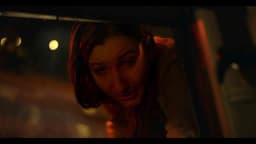
How VML and Project:Poland Used HateStop to Confront Hate Speech
HateStop is a 2016 digital public-interest campaign created by VML for Project:Poland, published in Poland in May 2016, designed to document and confront antisemitism, homophobia, xenophobia, and racism in Polish public spaces through a social experiment and documentary format.
The campaign served as the communicative culmination of a broader initiative that ran from March 2014 to January 2016, according to EEA Grants. During that period, the underlying HateStop programme documented 1,700 instances of hate speech in public space and facilitated the painting over of 500 hate-speech messages, as reported by EEA Grants. The initiative engaged 770 participants across 62 local paint-over actions, ultimately reaching a campaign audience of over 2,295,000 people, also per EEA Grants. VML's May 2016 digital execution distilled these two years of on-the-ground civic activity into a single media asset designed for distribution across digital channels, bringing the programme's findings to a national audience in Poland.
Project:Poland, the client behind the campaign, is a civic initiative concerned with Polish public identity and social cohesion. The HateStop programme it sponsored sat at the intersection of social activism and public interest advertising, giving VML an unusual creative brief: translate grassroots anti-hate action into a piece of digital storytelling capable of shifting public perception. In Poland, where public discourse around hate speech and minority rights has remained contested, the campaign entered a charged social environment. The broader HateStop programme also produced three clips, a billboard campaign, a website, and mobile applications, as noted by Clapboard, making the VML digital execution one component within a wider communications ecosystem. Clapboard assigns this campaign a score of 52 out of 100, reflecting its civic ambition and documented real-world reach alongside the limited independent critical recognition it attracted at the time of release.
VML grounded the HateStop campaign in a concrete, observable social problem: the visible presence of hate speech on Polish walls, online platforms, and in public discourse. The strategic choice to lead with documented evidence rather than abstract messaging gave the campaign an empirical backbone that distinguished it from conventional public service communications.
The broader HateStop programme, implemented in part by Saatchi & Saatchi Poland according to EEA Grants, demonstrated that community mobilisation was achievable at speed. Around 50 people were mobilised through social media to paint over graffiti within 24 hours of online calls to action, as reported by VML. The HateStop Facebook page had accumulated nearly 15,000 followers as of 2014, per EEA Grants, and the wider programme resulted in approximately 2,000 hateful fan pages being closed and around 20,000 Facebook comments removed, also according to EEA Grants. VML's 2016 campaign inherited this established community infrastructure and converted its outcomes into a documentary-style digital narrative aimed at extending reach beyond the activist base already engaged with the initiative.
In Poland, online advertising exceeded PLN 2.5 billion in 2016 and grew approximately 17 percent year over year, according to estimates cited by Ejournals Eu, making digital the fastest-growing channel in the Polish advertising market. The total Polish advertising market reached approximately PLN 6.9 billion net in 2016, according to Zenith estimates as cited by Polsat. Within this environment, a documentary-format digital asset offered Project:Poland a cost-efficient mechanism to generate awareness without the scale of media spend available to commercial advertisers. Saatchi & Saatchi Poland's parallel involvement in the broader programme underscores the competitive landscape in which VML operated, with multiple agency partners contributing to a single civic communications effort across different executional streams.
VML constructed the HateStop campaign around a social experiment and documentary format, a creative approach that lent the work the observational authority of journalism rather than the persuasive register of conventional advertising. The single media asset published in May 2016 drew its visual and narrative material directly from the two years of documented field activity conducted under the HateStop programme, giving the execution an authenticity rooted in real events rather than staged scenarios.
Joanna Grabarczyk, who served as project coordinator for the HateStop campaign at the Polska Association, was among the key figures whose perspective shaped the programme's public communications. As reported by EEA Grants, Grabarczyk stated in October 2014: "In 5 years, I would like the walls in Poland to be clean and to create a trend that shows people that hate speech and intolerance are not acceptable." That statement, published by the EEA Grants Financial Mechanism Office, captures the aspirational civic tone that the VML execution carried forward into its 2016 digital format.
The documentary approach served a dual strategic and creative function. Creatively, it allowed the campaign to show rather than argue, presenting audiences in Poland with a visual record of hate speech in public space and the human effort required to address it. Structurally, the format aligned with the growing prevalence of long-form and factual content in digital environments, where audiences increasingly engage with content that carries the texture of real-world observation. Production credits for the specific May 2016 VML digital execution are not publicly documented beyond the agency's own attribution. The campaign's single-asset format, combining the social experiment methodology with documentary narration, positioned it as a piece of civic content designed for sharing rather than paid placement, consistent with Project:Poland's public interest mandate.
No verified performance data for the specific May 2016 VML digital execution of HateStop is publicly available in trade press sources including Campaign, Ad Age, Adweek, The Drum, or Contagious, as confirmed by Clapboard. No attributable social media discussion of the specific 2016 VML execution has been documented across Twitter/X, Reddit, LinkedIn, or YouTube, also per Clapboard.
The programme-level results attributed to the broader HateStop initiative, as reported by EEA Grants, nonetheless provide the most meaningful frame for assessing impact. The initiative reached 2,295,000 campaign recipients, documented 1,700 instances of hate speech, facilitated 500 paint-overs, and engaged 770 participants across 62 local actions over its March 2014 to January 2016 lifespan. These figures represent the civic infrastructure that VML's digital campaign was built to communicate and extend.
Structurally, the campaign's effectiveness rests on several sound principles. It anchored an abstract social problem in quantified, verifiable evidence, lending the work credibility in a public discourse environment where claims about hate speech are frequently contested. The documentary and social experiment format lowered audience resistance by presenting observation rather than advocacy. And by publishing through digital channels in Poland's fastest-growing advertising medium, according to growth figures cited by ejournals.eu, the campaign positioned its message where attention was already migrating. The Clapboard Score of 52 out of 100 reflects a campaign that executed its civic brief competently and with genuine real-world grounding, while stopping short of the creative or cultural breakthrough that would have generated wider industry recognition or measurable shifts in documented public attitudes.
HateStop is a digital public-interest campaign created by VML for Project:Poland, published in Poland in May 2016. It used a social experiment and documentary format to address antisemitism, homophobia, xenophobia, and racism in Polish public spaces, drawing on two years of documented grassroots activity conducted under the broader HateStop programme.
The broader HateStop programme, which ran from March 2014 to January 2016, reported reaching 2,295,000 people, documenting 1,700 hate speech instances, and facilitating 500 paint-overs across 62 local actions, according to EEA Grants. No verified performance data for the specific May 2016 VML digital execution is publicly available.
VML created the digital campaign for Project:Poland, published in May 2016 in Poland. Joanna Grabarczyk served as project coordinator at the Polska Association for the wider HateStop initiative, as reported by EEA Grants. Saatchi & Saatchi Poland was also involved in the broader programme, according to EEA Grants.
VML employed a social experiment and documentary format for the single digital media asset published in May 2016. The approach drew directly from two years of on-the-ground civic activity in Poland, presenting observable evidence of hate speech in public space rather than using conventional persuasive advertising techniques.
The HateStop campaign by VML receives a Clapboard Score of 52 out of 100. The score reflects the campaign's civic ambition, real-world programme reach, and sound use of documentary format, balanced against the absence of independent trade press recognition or documented performance data for the specific 2016 digital execution.
The broader HateStop programme mobilised around 50 people via social media to paint over graffiti within 24 hours of online calls to action, according to VML. It also contributed to closing approximately 2,000 hateful fan pages and removing around 20,000 Facebook comments, as reported by EEA Grants, alongside building a Facebook following of nearly 15,000.
.webp)
Creative Collaboration Platform: The Backbone of Modern Creative WorkWhat is a creative collaboration platform?Clapboard defines a creative collaboration platform as the operational core for today’s distributed creative teams. This is not a collection of digital collaboration tools stitched together; Clapboard’s system


Understanding the Creative Production MarketplaceWhat is a Creative Production Marketplace?Clapboard defines a creative production marketplace as a structured ecosystem where brands, agencies, and production talent converge to execute video, advertising, and branded content at scale. Unlike the legacy agency or freelanREAD FULL ARTICLE

The Urgent Need for a Creative Production Operating SystemWhy Traditional Creative Production Models Break DownClapboard sees the creative production landscape shifting under pressure. Content velocity is no longer a buzzword—it’s a mandate. Modern advertising demands relentless output across dozens of channels, each wREAD FULL ARTICLE