Baskin-Robbins launched 'Got Me Like' in April 2018 via 22Squared, shifting from product-led ads to an emotion-first platform built on meme culture and

Baskin Robbins Got Me Like and the Joy Pivot That Rewired Ice Cream Advertising
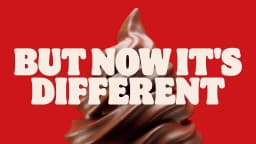
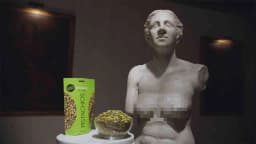
Baskin-Robbins launched "Got Me Like" in April 2018, a United States market campaign created by Atlanta-based agency 22Squared that replaced product-led advertising with an emotion-first creative platform built around the unfiltered joy of eating ice cream, expressed through meme language, animated dessert characters, and social-native content.
The campaign marked a deliberate strategic inflection point for the brand. Rather than centering communication on flavours, ingredients, or promotions, "Got Me Like" asked consumers to project their own emotional states onto the act of eating a scoop or a slice of cake — a posture that aligned Baskin-Robbins with a broader cultural shift in how younger audiences relate to food brands. The creative work spanned Scoops and Cakes, Ice Cream, and related product occasions, with three primary media assets anchoring the broader content universe. According to The Drum, digital channels went live during the week of April 18, 2018, with a television rollout planned for mid-April of the same year.
The scope of production behind the campaign was substantial. As reported by thedrum.com, 22Squared partnered with animation studio Psyop to produce more than 50 individual animations and content pieces, giving the campaign unusual depth for a confectionery and snacks advertiser operating in the United States. GIF distribution was handled through Tenor, extending the campaign's reach into organic social behaviour rather than limiting it to paid placements. The Clapboard Score for "Got Me Like" is 59 out of 100, reflecting a campaign that executes its emotional brief competently while leaving some of its structural ambition only partially realised.
Baskin-Robbins entered 2018 facing a well-documented competitive pressure in the United States ice cream category. The brand's strategic challenge was not product parity — its 31-flavour heritage remained a recognised differentiator — but relevance with younger consumers who, as the campaign brief acknowledged, prioritise experiences over material goods. That insight drove 22Squared toward an emotion-led platform rather than another iteration of product showcasing.
The competitive context in the United States was meaningful. Haagen-Dazs and Ben and Jerry's had each cultivated strong lifestyle identities, while Dairy Queen maintained significant fast-food-adjacent penetration. Against these competitors, Baskin-Robbins needed an angle that felt culturally alive rather than merely promotional. The decision to adopt meme language — specifically the "got me like" construction familiar from social media reaction culture — was a direct response to how the target demographic communicates feeling online.
The market conditions supported investment in bold creative. North America accounted for more than 25 percent of global ice cream consumption in 2018, according to marketsandata.com, anchoring the United States as the highest-stakes single geography for a brand of Baskin-Robbins' scale. The global frozen dessert market was estimated at approximately 60.13 billion US dollars in 2018, per marketsandata.com, with impulse formats representing more than half of total volume. That impulse dynamic made emotional priming — rather than considered-purchase messaging — a strategically sound approach. As Curt Mueller, Senior Vice President and Creative Director at 22Squared, stated according to thedrum.com: "We set out to create a campaign that gets attention and gets people talking about the brand in a new and different way."
22Squared built the creative execution of "Got Me Like" around a visual language that was native to digital platforms before it was adapted for television. The core aesthetic fused colourful choreography, anthropomorphised dessert characters, and the kinetic energy of reaction-gif culture — a production approach that demanded both volume and consistency across a large content library.
The production partnership with Psyop was central to delivering that consistency. As reported by thedrum.com, the studio produced more than 50 animations and content pieces for the campaign, a figure that reflects a deliberate platform-thinking approach rather than a conventional campaign model. Rather than producing a hero film and a handful of cutdowns, 22Squared and Psyop built a content ecosystem designed to inhabit social feeds over time, with each asset capable of standing alone as shareable media. Curt Mueller of 22Squared, cited by thedrum.com, noted that the agency's partners at Baskin-Robbins had the vision to embrace a totally new creative direction — a statement that points to meaningful client bravery in approving such a significant departure from the brand's prior advertising register.
GIF distribution through Tenor gave the campaign a mechanism for organic cultural penetration that few confectionery and snacks advertisers had operationalised at that point in the United States market. The use of Al Patton in the campaign's narrative execution added a human anchor to what might otherwise have functioned as a purely abstract emotional exercise. Production credits beyond these named contributors for the broader "Got Me Like" campaign are not fully documented in publicly available sources. The overall craft approach — high-volume animation, platform-native formats, and integrated GIF seeding — represented a considered model for reaching younger United States consumers through channels they inhabited habitually.
The "Got Me Like" campaign generated at least one independently verifiable performance result in the United States market. A Spotify activation component of the broader campaign produced a 12 percent lift in store visits, a figure described as 4.3 times the industry benchmark, according to thedrum.com. That single data point is significant: it suggests the campaign's emotional platform translated into measurable physical behaviour, not merely digital engagement metrics.
According to thedrum.com, the campaign was also attributed with reaching 430,000 United States consumers through its various channel activations, though the precise measurement methodology behind that figure is not fully detailed in available public sources. No verified awards for the "Got Me Like" campaign appear across Cannes Lions, Effie, One Show, D&AD, Clio, Webby, or WARC databases. The absence of award recognition does not diminish the campaign's structural contribution: introducing an emotion-led platform to a brand that had historically defaulted to product communication represented genuine strategic progress for Baskin-Robbins in the United States confectionery and snacks category.
Structurally, the campaign's strengths lie in its volume strategy and distribution thinking. Building more than 50 assets, as reported by thedrum.com, and seeding them through Tenor created conditions for sustained cultural presence rather than a single moment of visibility. The 59 out of 100 Clapboard Score reflects a campaign that succeeds in its emotional ambition and production approach while falling short of the kind of cultural resonance or measurable brand-shift that would place it among the category's most enduring work. The Spotify store-visit result, however, stands as concrete evidence that the platform had real commercial connective tissue beneath its expressive exterior.
"Got Me Like" was a 2018 United States campaign by 22Squared that shifted Baskin-Robbins away from product-led advertising toward an emotion-first platform. It used meme language, animated dessert characters, and more than 50 content pieces produced with Psyop to express the unfiltered joy of eating ice cream, according to thedrum.com.
22Squared created "Got Me Like" for Baskin-Robbins. The Atlanta-based agency partnered with animation studio Psyop for production and distributed content via Tenor for organic social reach. Digital channels launched during the week of April 18, 2018, with television planned for mid-April, as reported by thedrum.com.
A Spotify activation within the campaign generated a 12 percent lift in store visits, described as 4.3 times the industry benchmark, according to thedrum.com. The campaign also reached 430,000 United States consumers across channels. No major industry awards for the campaign appear in Cannes Lions, Effie, Clio, or WARC databases.
Curt Mueller, Senior Vice President and Creative Director at 22Squared, led the creative direction of "Got Me Like." He stated the agency aimed to get people talking about Baskin-Robbins in a new way, according to thedrum.com. Al Patton also contributed to the campaign's narrative execution.
"Got Me Like" distributed animated GIFs through Tenor, ran Spotify activations, and deployed more than 50 social content pieces alongside television. This multi-channel approach was designed to reach younger United States consumers through platforms they used habitually, treating GIF culture as an organic distribution mechanism rather than a paid format.
The Clapboard Score for "Got Me Like" is 59 out of 100. The score reflects competent execution of an emotional creative brief and a strong production model, while acknowledging the campaign did not achieve the level of cultural resonance or measurable brand impact that would place it among the category's most enduring work.
.webp)
Creative Collaboration Platform: The Backbone of Modern Creative WorkWhat is a creative collaboration platform?Clapboard defines a creative collaboration platform as the operational core for today’s distributed creative teams. This is not a collection of digital collaboration tools stitched together; Clapboard’s system


Understanding the Creative Production MarketplaceWhat is a Creative Production Marketplace?Clapboard defines a creative production marketplace as a structured ecosystem where brands, agencies, and production talent converge to execute video, advertising, and branded content at scale. Unlike the legacy agency or freelanREAD FULL ARTICLE

The Urgent Need for a Creative Production Operating SystemWhy Traditional Creative Production Models Break DownClapboard sees the creative production landscape shifting under pressure. Content velocity is no longer a buzzword—it’s a mandate. Modern advertising demands relentless output across dozens of channels, each wREAD FULL ARTICLE