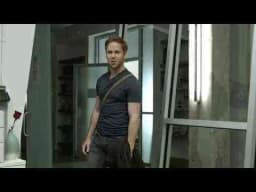
AMC's Zombie Experiment, created by Thinkmodo in July 2012, staged costumed Walking Dead actors across New York City to protest the network's removal from Dish

How AMC Turned a Dish Network Dispute Into a Zombie Experiment
The AMC Zombie Experiment is a July 2012 digital guerrilla campaign created by New York City agency Thinkmodo, in which approximately 13 actors dressed as Walking Dead zombies were released onto the streets of New York City to generate a viral video protesting AMC's removal from Dish Network's satellite lineup.
AMC launched the Zombie Experiment on July 30, 2012, according to Clapboard.com, in direct response to a high-stakes carriage dispute. Dish Network had dropped AMC, IFC, WE tv, and the Sundance Channel from its satellite lineup on July 1, 2012, as reported by Business Insider, cutting AMC programming from approximately 14 million DISH subscriber homes, per Business Insider. The campaign directed viewers to putzombiesback.com, where AMC made its case that zombies — and AMC itself — did not belong off American television screens. The stunt operated entirely in the digital medium and targeted the United States market, where the network's distribution crisis was acutely felt.
The strategic logic was both urgent and elegant. Rather than issuing press releases or running conventional advocacy advertising, AMC and Thinkmodo dramatised the network's absence by staging something impossible to ignore: costumed zombie actors posing as postmen, hot-dog vendors, and construction workers in the streets of New York City, with bystander reactions captured on camera and cut into a single compelling viral video. The campaign asked a deceptively simple question — could zombies live among us? — while routing every answer back to the network's fight to return to Dish. Clapboard.com awarded the Zombie Experiment a score of 89 out of 100, reflecting both its creative audacity and its measurable cultural impact.
AMC faced a commercially damaging crisis in the summer of 2012. The network needed to shift public and industry opinion in the United States without the media budget or platform reach that conventional broadcast advertising would have provided, given that its own channel was no longer available in millions of homes.
Thinkmodo identified a precise cultural opening. In 2012, The Walking Dead was AMC's defining franchise and one of the most talked-about properties in American television, making the zombie as a creative device instantly recognisable and emotionally loaded for the network's core audience. Rather than explaining the carriage dispute in abstract contractual terms, the campaign externalised the crisis: zombies, like AMC, did not belong on the streets — they belonged on screen, inside homes that could actually receive the channel. The creative rationale collapsed a complex distribution argument into a single, shareable image.
The broader market context strengthened the case for a viral video approach. U.S. television advertising revenue stood at approximately $76 billion in 2012, according to MediaPost, underscoring how much financial pressure a distribution loss of the scale AMC experienced could exert on a network dependent on both advertising sales and carriage fees. AMC Networks' 2012 revenue mix was approximately 61% distribution and other revenue and 39% advertising sales, per SEC filings reported by Sec Gov, meaning carriage recovery was an existential priority rather than a secondary concern. Competitors such as HBO and FX were not facing comparable distribution disruptions at the time, giving AMC a unique and time-sensitive reason to act boldly in the public arena. In the United States, digitally native audiences were increasingly driving television conversation through social sharing, and Thinkmodo engineered the Zombie Experiment specifically to travel through those channels organically rather than through paid placement.
Thinkmodo co-founders Michael Krivicka and James Percelay served as creative directors, directors, and producers on the Zombie Experiment, according to Thisisnotadvertising Wordpress, giving the project an unusually unified creative command across concept, production, and post.
The execution required two distinct layers of craft to succeed. The first was physical: makeup artist Sue Lee transformed approximately 13 actors into Walking Dead-style zombies credible enough to unsettle genuine New Yorkers in broad daylight, according to thisisnotadvertising.wordpress.com. The actors were deployed across New York City in everyday professional disguises — postmen, hot-dog vendors, and construction workers — before revealing their zombie appearance to unsuspecting bystanders. Camera operators Matthew Cady and Craig Feldman captured the authentic reactions that gave the footage its viral charge, per thisisnotadvertising.wordpress.com. The second layer was digital: VFX work was applied in post-production to heighten the visual intensity of the zombie appearances, sharpening the contrast between mundane New York City street life and the grotesque Walking Dead aesthetic. Editor Michael Krivicka, as credited by thisisnotadvertising.wordpress.com, assembled the footage into a single continuous video that moved between comedy, shock, and genuine unease — a tonal range that made the piece shareable across audiences who engaged with horror, advertising, and street-prank content alike.
The campaign's production model was lean and location-dependent. New York City functioned not merely as a backdrop but as a casting decision: its density, pedestrian culture, and media-literate population made the bystander reactions both plausible and varied. The destination URL — putzombiesback.com — was woven into the video's conclusion, converting entertainment into advocacy without breaking the creative logic. Production credits for additional crew on the Zombie Experiment are not fully publicly documented beyond those named above.
The Zombie Experiment generated verifiable, large-scale performance data that remains publicly accessible. The viral video accumulated over 61.75 million views and 351,379 likes, with 21,597 comments, according to Clapboard.com. The scale of organic engagement was evident almost immediately: the campaign exceeded 650,000 YouTube views within two days of its July 30, 2012 upload, per Clapboard.com — a velocity that confirmed the stunt had achieved genuine virality rather than paid amplification.
Those numbers carried additional weight given the business context. AMC Networks reported 2012 net revenue of $1.353 billion, up 13.9% from 2011, according to sec.gov, with national-networks revenue increasing 15.9% to $1.254 billion in the same period. While the Zombie Experiment cannot be isolated as the sole driver of those outcomes, the campaign ran during the precise window when approximately 14 million DISH subscriber homes had lost access to AMC programming, as reported by Business Insider, making visibility in the United States market both commercially critical and structurally difficult to achieve through conventional means.
Structurally, the campaign succeeded on every dimension Thinkmodo designed for. It converted a contractual crisis into a cultural moment, generated sustained press coverage without paid media, and delivered a clear call to action through putzombiesback.com. The VFX-enhanced viral video format proved capable of carrying both entertainment value and advocacy messaging simultaneously — a combination that most campaigns of this type sacrifice one quality for the other to achieve. The Zombie Experiment's Clapboard Score of 89 out of 100 reflects that structural integrity.
The AMC Zombie Experiment was a July 2012 digital guerrilla campaign created by Thinkmodo. Approximately 13 actors in Walking Dead zombie makeup were released onto New York City streets to protest AMC's removal from Dish Network. The resulting viral video accumulated over 61 million views, according to Clapboard.com.
AMC launched the Zombie Experiment because Dish Network removed AMC from its satellite lineup on July 1, 2012. The campaign directed viewers to putzombiesback.com to build public pressure for reinstatement. The carriage loss affected approximately 14 million DISH subscriber homes in the United States, as reported by Business Insider.
Thinkmodo created the Zombie Experiment for AMC. Co-founders Michael Krivicka and James Percelay served as creative directors, directors, and producers. Krivicka also edited the final video. Camera work was handled by Matthew Cady and Craig Feldman, with zombie makeup by Sue Lee, per thisisnotadvertising.wordpress.com.
The Zombie Experiment viral video received over 61.75 million views, according to Clapboard.com. It surpassed 650,000 YouTube views within two days of its July 30, 2012 upload. The video also generated 351,379 likes and 21,597 comments, confirming its status as one of 2012's most widely shared Halloween-adjacent advertising stunts.
Thinkmodo applied VFX in post-production to heighten the visual intensity of the zombie appearances in the Zombie Experiment NYC. Physical transformation was led by makeup artist Sue Lee, who prepared approximately 13 actors. The VFX layer sharpened the Walking Dead aesthetic against real New York City street footage to maximise the viral video's impact.
The AMC Zombie Experiment received a Clapboard Score of 89 out of 100. This score reflects the campaign's creative audacity, measurable viral performance, and structural effectiveness in converting a distribution crisis into a cultural moment across the United States market using a lean digital production model.
.webp)
Creative Collaboration Platform: The Backbone of Modern Creative WorkWhat is a creative collaboration platform?Clapboard defines a creative collaboration platform as the operational core for today’s distributed creative teams. This is not a collection of digital collaboration tools stitched together; Clapboard’s system


Understanding the Creative Production MarketplaceWhat is a Creative Production Marketplace?Clapboard defines a creative production marketplace as a structured ecosystem where brands, agencies, and production talent converge to execute video, advertising, and branded content at scale. Unlike the legacy agency or freelanREAD FULL ARTICLE

The Urgent Need for a Creative Production Operating SystemWhy Traditional Creative Production Models Break DownClapboard sees the creative production landscape shifting under pressure. Content velocity is no longer a buzzword—it’s a mandate. Modern advertising demands relentless output across dozens of channels, each wREAD FULL ARTICLE