 ARCHIVE
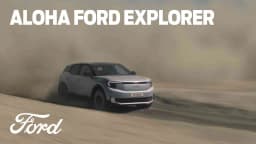
Exploring Reinvented - Ford, Ford UK | Clapboard Ad Archive
Exploring Reinvented from Ford and AMV BBDO positions the historic automotive brand at the...
Alpine Bets on Human Freedom to Launch the A390 Electric Fastback
Alpine's "Let's not be driven by technology. Let's drive it" is a 2025 brand film created by Maison BETC Paris to launch the A390, the marque's first fully electric sports fastback, positioning the act of driving as a deliberate human choice rather than a concession to automation, and premiering in France on December 24, 2025.
The campaign arrives at a decisive moment for the French automaker. The Alpine A390 represents a genuine expansion of the brand's model range, introducing a sports fastback body style powered by three electric motors, all-wheel drive, and Alpine Active Torque Vectoring, according to Media Alpinecars. In France, where Alpine's identity as a driver's brand carries more than seven decades of cultural weight, the launch demanded a creative argument as bold as the hardware beneath it. Maison BETC Paris responded by constructing that argument in cinematic, rather than conventional automotive, terms.
The film opens in a techno-futuristic and authoritarian world where robotisation and automation have consumed individual freedom entirely. Autonomous mobility governs every journey; standardised traffic flows without human intervention; no one sits behind a wheel. Into this ultra-regulated environment, a woman introduces an anomaly. She takes the wheel of the new Alpine A390. The gesture is treated as a subversive act, a rupture in the established order that releases something almost sensory: emotion, agility, and the lightness that have defined Alpine for over 70 years. The campaign announced on December 17, 2025, per media.alpinecars.com, with an international rollout planned for 2026. The A390 campaign follows Alpine's earlier 2025 electric launch work, "The Irresistible Attraction of Lightness," which introduced the A290 compact sports model to international markets from mid-February 2025, also created by Maison BETC Paris, according to media.alpinecars.com.
Alpine's strategic premise is direct. Technology should liberate humans, not replace them. That conviction, stated explicitly in the campaign's creative brief and echoed by Executive Creative Director Nicolas Lautier, is not merely a brand sentiment. It is a competitive positioning decision made within a fast-moving and increasingly crowded performance electric vehicle segment.
In France and across global markets, the electric performance category is expanding rapidly. The global electric performance car market was estimated at approximately 33.5 billion dollars in 2025 and is forecast to reach approximately 65.85 billion dollars by 2030, representing a compound annual growth rate of around 14.47 percent, according to marqstats.com. Performance sedans and fastbacks account for an estimated share of that volume, according to dataintelo.com, the precise segment in which the A390 competes directly. Against competitors such as Tesla, whose Model S and Model 3 fastback variants have established strong brand associations with autonomous capability and software-led driving, and Polestar, whose Scandinavian design-forward identity has positioned it as a premium rational choice, Alpine is staking its claim on emotional driving experience and driver primacy.
This is a deliberately human-centric strategy at a moment when most automotive communication defaults to specification recitation or technology celebration. The campaign's central thesis, that technology should serve the driver rather than supplant the driver, gives Alpine a differentiated rhetorical position that no pure-technology competitor can credibly occupy. In France specifically, where driving culture and engineering heritage converge in Alpine's brand story, this argument lands with particular resonance. The strategic intelligence of the campaign lies in transforming what might have been a product disadvantage, the anxiety that electrification strips driving of character, into a brand asset.
Director Nicolai Fuglsig brings the campaign's dystopian world to life with the discipline of a filmmaker rather than a commercials director. Fuglsig, whose director representation spans Wanda France and MJZ London, constructs a visual environment that Muse by Clio described as comparable in its world-building to George Orwell's 1984 and George Lucas's THX 1138, noting the film's authoritarian atmosphere and rigorous internal logic. Shots characterised the work as closer to a short film than a conventional car commercial, with particular praise directed at cinematographer Mattias Boucard's contribution, according to Shots.
Boucard's photography defines the film's tonal contrast. The automated world is rendered in mechanical, uniform visual language. The moment the woman takes the wheel of the Alpine A390 breaks that register entirely, introducing warmth, movement, and physical sensation. Additional cinematography credit goes to Bernd Wondollek, per adobomagazine.com. Visual effects work was handled by The Mill, whose restraint in deploying VFX was specifically noted by Shots as a creative strength. The production company was Wanda, with Wanda France coordinating the director's representation alongside MJZ London.
The creative team at Maison BETC Paris was led by Executive Creative Director Nicolas Lautier, with copywriting by Olivier Mille and art direction by Morgane Alexandre, according to media.alpinecars.com. The soundtrack choice is as deliberate as every visual decision. Gabriel Fauré's Requiem underpins the film, lending the dystopian world a formal, almost sacred solemnity that makes the protagonist's act of reclaiming the wheel feel genuinely transgressive. It is an unexpected musical selection for an automotive launch film and it works precisely because of that unexpectedness. Adobo magazine highlighted the campaign's central thesis that technology should liberate people rather than control them, citing the creative execution as the vehicle through which that argument is made viscerally felt rather than merely stated.
No verified performance data for the Alpine A390 "Let's not be driven by technology. Let's drive it" campaign is publicly available. No published sales lift, incremental vehicle orders, market-share change, or brand-tracking figures have been released by Alpine or Maison BETC Paris at the time of writing. No awards have been confirmed at Cannes Lions, Effies, The One Show, D&AD, Clios, Webby Awards, or WARC Awards, consistent with the campaign's December 2025 premiere date and the eligibility calendars of those bodies.
What critical reception exists is substantive. Muse by Clio and Shots both engaged with the film as a piece of craft rather than a press release, which is itself a meaningful signal of creative ambition achieved. The campaign's structural effectiveness rests on several compounding strengths. It establishes a clear and defensible brand philosophy that is native to Alpine's heritage. It deploys cinematic storytelling at a production level that commands attention in a category where most launch films default to specification-led formats. And it solves the central creative problem of electric vehicle advertising, namely how to argue for the emotional pleasure of driving a car that removes the traditional mechanical sensations of driving, by reframing the act of choosing to drive as the emotional core rather than the vehicle's powertrain.
Clapboard Score: 74 out of 100. The campaign earns strong marks for creative distinction, strategic clarity, and production craft. The score reflects the film's ambition and execution while acknowledging that measured business impact remains unverified at this stage of its release cycle.
Alpine's "Let's not be driven by technology. Let's drive it" is a launch film for the A390 electric sports fastback, created by Maison BETC Paris and directed by Nicolai Fuglsig. Set in a dystopian automated world, it frames a woman choosing to drive the A390 as a subversive act reclaiming human freedom. It premiered in France on December 24, 2025.
The Alpine A390 is Alpine's first fully electric sports fastback. It features three electric motors, all-wheel drive, and Alpine Active Torque Vectoring, according to media.alpinecars.com. The model marks a decisive expansion of Alpine's range into a new body style and customer segment, extending a brand heritage of more than 70 years into the electric performance era.
Nicolai Fuglsig directed the Alpine A390 campaign film. The production company was Wanda, with director representation handled by Wanda France and MJZ London. Cinematography was led by Mattias Boucard, with additional credit to Bernd Wondollek. Visual effects were produced by The Mill. Creative direction was by Nicolas Lautier at Maison BETC Paris, according to media.alpinecars.com.
Alpine chose a dystopian setting to argue that technology should serve drivers, not replace them. By depicting an authoritarian automated world where no one drives, the film makes choosing to take the wheel a subversive and emotional act. This positions the A390 against competitors like Tesla and Polestar by claiming driver primacy as Alpine's defining brand value.
The Alpine A390 campaign film uses Gabriel Fauré's Requiem as its soundtrack, according to media.alpinecars.com. The choice gives the dystopian world a formal solemnity that amplifies the emotional contrast when the protagonist reclaims the wheel. It is an unconventional selection for an automotive launch film, noted by critics as a deliberate and effective creative decision.
No awards for the Alpine A390 "Let's not be driven by technology. Let's drive it" campaign have been confirmed at Cannes Lions, Effies, The One Show, D&AD, Clios, Webby Awards, or WARC Awards. The campaign premiered in France on December 24, 2025, meaning most major awards cycles had not yet opened entries at the time of its release.
.webp)
Creative Collaboration Platform: The Backbone of Modern Creative WorkWhat is a creative collaboration platform?Clapboard defines a creative collaboration platform as the operational core for today’s distributed creative teams. This is not a collection of digital collaboration tools stitched together; Clapboard’s system


Understanding the Creative Production MarketplaceWhat is a Creative Production Marketplace?Clapboard defines a creative production marketplace as a structured ecosystem where brands, agencies, and production talent converge to execute video, advertising, and branded content at scale. Unlike the legacy agency or freelanREAD FULL ARTICLE

The Urgent Need for a Creative Production Operating SystemWhy Traditional Creative Production Models Break DownClapboard sees the creative production landscape shifting under pressure. Content velocity is no longer a buzzword—it’s a mandate. Modern advertising demands relentless output across dozens of channels, each wREAD FULL ARTICLE