1st for Women's 'My Body (Stand Up)' campaign rebooted a 1983 Peter Alsop educational song into a streaming fundraiser fighting gender-based violence in South

1st for Women Turns a 1983 School Song Into a Fight Against Gender-Based Violence
'My Body (Stand Up)' is a 2020 South African content campaign by insurer 1st for Women, created by Johannesburg agency Retroviral, which rebooted a 1983 educational song about consent and bodily autonomy into a fundraising music track designed to channel streaming and radio revenue directly to the 1st for Women Foundation's work against woman abuse.
1st for Women launched the campaign in November 2020, during a period when gender-based violence had become a defining public crisis in South Africa, widely described in domestic discourse as a second pandemic running parallel to COVID-19. The campaign's central mechanism was straightforward and structurally sound: every stream and every instance of radio needle time generated royalty income, and all of that income was directed to the 1st for Women Foundation. The brand positioned women abuse not as a peripheral social issue but as an emergency demanding the same financial seriousness as any funded public health response.
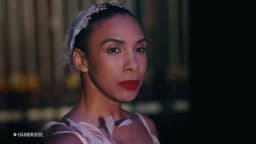
The original song was written by educational psychologist Peter Alsop in 1983 and had been used in schools across the world as part of sexual abuse prevention programmes, according to Retroviral Co Za. Retroviral sampled and reimagined that material with a contemporary South African cast, giving the campaign both cultural rootedness and immediate relevance. The track featured Lira, Juliet Harding of GoodLuck, Mariechan Luiters, and Gigi Lamayne — artists with established audiences across South African popular music. By operating as a public interest campaign within the finance category, 'My Body (Stand Up)' extended the 1st for Women brand far beyond its insurance product set, anchoring the insurer's identity to active, measurable advocacy for women's rights and gender equality in South Africa.
 ARCHIVE
Retroviral identified a precise strategic tension in South Africa's 2020 landscape. Gender-based violence had been declared a national crisis, yet public campaigns addressing it rarely created self-sustaining economic mechanisms that generated ongoing revenue for support organisations. 'My Body (Stand Up)' solved that problem by converting passive listening behaviour — streaming, radio consumption — into active fundraising for the 1st for Women Foundation, according to retroviral.co.za.
South Africa's short-term insurance market provided the competitive backdrop against which 1st for Women was operating. According to Fanews Co Za, the short-term insurance industry generated approximately R128 billion in gross written premiums in 2020, representing year-over-year growth of approximately 4.93 percent. The ten largest insurers accounted for approximately 73.8 percent of that gross written premium pool, per fanews.co.za, with Santam holding more than 20 percent of the market. In this concentrated competitive environment, 1st for Women — established in 2004 by Telesure as South Africa's first insurance product designed specifically for women, according to Themediaonline Co Za — needed differentiation that went beyond product features. Two of its most direct competitors in the women-focused insurance space, Santam and OUTsurance, compete on price and breadth of cover. 1st for Women's strategic answer has consistently been values-led positioning.
The brand had already shifted its advertising philosophy in 2016, moving away from a competitive gender narrative toward a #weputyoufirst positioning, with Publicis Machine creating that television campaign, as reported by marklives.com. 'My Body (Stand Up)' extended that logic further: rather than claiming to put women first, the campaign enacted it through a financial donation model tied directly to audience behaviour. In South Africa's 2020 context, where women's rights and gender equality were subjects of urgent national debate, that enactment carried considerably more credibility than a brand promise alone.
Retroviral made a deliberate creative decision in anchoring 'My Body (Stand Up)' to South African musical talent with genuine cross-generational reach. The campaign's creative execution centred on the recorded track itself as the primary media asset, making the song both the message and the mechanism.
Lira is one of South Africa's most internationally recognised vocalists, with a career spanning jazz, soul, and Afropop. Juliet Harding, known as a member of Cape Town-based duo GoodLuck, brought a younger, festival-circuit audience into the project. Mariechan Luiters, who rose to prominence as a member of the girl group Jamali, added a dimension of identity closely aligned with the campaign's themes of women's collective voice. Gigi Lamayne contributed the sharp, direct energy that characterises her broader work in South African hip-hop and social commentary, according to retroviral.co.za and bizcommunity.com. The combination was not accidental: each artist extended the campaign's reach into a distinct segment of South African popular culture, ensuring that the track could earn genuine radio play rather than existing solely as a branded content exercise.
The source material — Peter Alsop's 1983 educational song, created as part of a sexual abuse prevention programme — gave the creative a layer of established meaning that Retroviral did not need to manufacture. The themes of consent and bodily autonomy were already embedded in the original work. The agency's contribution was to translate those themes into a contemporary South African idiom, giving them narrative currency for 2020 audiences confronting gender-based violence as an immediate, lived reality. The decision to release the track through standard distribution channels, making it eligible for streaming royalties and broadcast needle time, was itself a creative and structural choice that made the campaign's impact self-compounding over time.
Radio stations across South Africa played 'My Body (Stand Up)' more than 1,000 times over a three-month period following its November 2020 launch, according to retroviral.co.za. City Press reported more than 1.9 million total audience impressions generated by the campaign, as cited by bizcommunity.com. Each of those plays generated needle time revenue directed to the 1st for Women Foundation, meaning the broadcast performance of the track functioned simultaneously as reach metric and fundraising mechanism.
The campaign earned recognition at the Prism Awards 2021, where it received one Gold, one Silver, and one Bronze award, and was named a Campaign of the Year finalist, according to retroviral.co.za. The Prism Awards, South Africa's benchmark for public relations excellence, evaluate strategic intent, execution quality, and measurable outcomes — making this recognition a credible third-party validation of the campaign's effectiveness across all three dimensions.
'My Body (Stand Up)' earns a Clapboard Score of 79 out of 100, reflecting strong strategic coherence, a genuinely differentiated mechanism, and creative execution that served both public interest and brand objectives with equal discipline. The self-funding architecture — where audience engagement directly produced charitable income — represents a structural model that few campaigns in the South African finance category have replicated.
'My Body (Stand Up)' is a 2020 South African music campaign by 1st for Women and agency Retroviral. It rebooted a 1983 educational song by Peter Alsop about consent and bodily autonomy, featuring artists Lira, Juliet Harding, Mariechan, and Gigi Lamayne, with all streaming and radio proceeds directed to the 1st for Women Foundation to combat woman abuse.
The track featured four South African artists: Lira, Juliet Harding of GoodLuck, Mariechan Luiters, and Gigi Lamayne. Each artist brought a distinct audience within South African popular music, extending the campaign's reach across multiple listener demographics and radio formats simultaneously.
Retroviral structured the campaign so all streaming royalties and radio needle time fees generated by the track were donated to the 1st for Women Foundation. Radio stations played the song more than 1,000 times in three months, according to retroviral.co.za, making broadcast play itself a fundraising mechanism tied directly to audience behaviour.
'My Body (Stand Up)' won one Gold, one Silver, and one Bronze at the 2021 Prism Awards, South Africa's benchmark for public relations excellence, and was named a Campaign of the Year finalist, according to retroviral.co.za. These awards validate the campaign's strategic intent, execution quality, and measurable outcomes across the public interest and finance categories.
Gender-based violence had been declared a national crisis in South Africa before COVID-19 emerged, and the two crises converged in 2020. The campaign used the second pandemic framing to position women abuse with the same urgency as a public health emergency, anchoring 1st for Women's brand to active financial advocacy for gender equality rather than symbolic awareness messaging.
The track samples a song by educational psychologist Peter Alsop, written in 1983 and used in schools worldwide as part of sexual abuse prevention programmes. Retroviral reimagined the material with contemporary South African artists, preserving its core themes of consent and bodily autonomy while updating it for a 2020 South African audience and cultural context.
.webp)
Creative Collaboration Platform: The Backbone of Modern Creative WorkWhat is a creative collaboration platform?Clapboard defines a creative collaboration platform as the operational core for today’s distributed creative teams. This is not a collection of digital collaboration tools stitched together; Clapboard’s system


Understanding the Creative Production MarketplaceWhat is a Creative Production Marketplace?Clapboard defines a creative production marketplace as a structured ecosystem where brands, agencies, and production talent converge to execute video, advertising, and branded content at scale. Unlike the legacy agency or freelanREAD FULL ARTICLE

The Urgent Need for a Creative Production Operating SystemWhy Traditional Creative Production Models Break DownClapboard sees the creative production landscape shifting under pressure. Content velocity is no longer a buzzword—it’s a mandate. Modern advertising demands relentless output across dozens of channels, each wREAD FULL ARTICLE