

What AI Systems Does Clapboard Use?
AI for creative operations is transforming creative workflows. Discover how specialized AI drives efficiency, smarter decisions, and scalable content pipelines for modern teams.


Varun Katyal | Founder, Clapboard
Varun Katyal is the Founder & CEO of Clapboard and a former Creative Director at Ogilvy, with 15+ years of experience across advertising, branded content, and film production. He built Clapboard after seeing firsthand that the industry’s traditional ways of sourcing talent, structuring teams, and delivering creative work were no longer built for the volume, velocity, and complexity of modern content. Clapboard is his answer — a video-first creative operating system that brings together a curated talent marketplace, managed production services, and an AI- and automation-powered layer into a single ecosystem for advertising, branded content, and film. It is designed for a market where brands need content at a scale, speed, and level of specialization that legacy agencies and generic freelance platforms were never built to deliver. The thinking, frameworks, and editorial perspective behind this blog are shaped by Varun’s experience across both the agency world and the emerging platform-led future of creative production. LinkedIn: https://www.linkedin.com/in/varun-katyal-clapboard/
How AI for Creative Operations Reshapes Team Decision-Making How AI improves creative decision-makin...
What Is AI for Creative Operations? Defining the New Standard AI for creative operations is not a re...
Beyond Automation: The Creative Intelligence Layer What is creative intelligence in AI? Clapboard tr...
Building Scalable Content Pipelines with AI for Creative Operations Automating content pipelines wit...
From Script to Screen: AI Systems in Pre-Production and Production Planning How AI streamlines scrip...
Orchestrating Multi-Channel Campaigns: AI for Creative Operations in Distribution and Reporting AI f...
Overcoming Common Misconceptions About AI for Creative Operations Does AI replace creative teams? Cl...
Evaluating the ROI of AI for Creative Operations How to measure ROI of AI in creative operations Cla...
Future-Proofing Creative Teams with AI for Creative Operations How AI future-proofs creative teams C...
Conclusion AI is no longer a theoretical add-on to creative operations—it is a structural force shap...
FAQs What is AI for creative operations? AI for creative operations refers to the application of mac...
How AI for Creative Operations Reshapes Team Decision-Making
How AI improves creative decision-making
Clapboard deploys AI for creative operations to move decision-making beyond gut feel and status-driven debate. Instead of relying on the loudest voice or the most entrenched process, Clapboard’s creative decision automation surfaces patterns from project data, past outcomes, and real-time market signals. This approach gives creative teams a sharper lens: they see which concepts resonate, which channels outperform, and where budget and resources actually drive value. Clapboard doesn’t replace creative judgment—it frames it with evidence, allowing practitioners to weigh intuition against concrete signals. In practice, this means fewer circular debates and more time spent executing on ideas that have a data-backed shot at impact.
Reducing guesswork in campaign planning with AI
Clapboard’s campaign planning AI reduces the ambiguity that typically clouds early-stage creative and production decisions. By analyzing historical campaign performance, resource allocation, and audience engagement, Clapboard identifies what works and flags what doesn’t—before teams commit to costly production cycles. This system doesn’t just automate reporting; it actively interrogates creative proposals, highlighting potential risks and surfacing alternatives that might otherwise be overlooked. Clapboard treats campaign planning as an iterative, feedback-rich process, not a static checklist. The result: teams get clarity early, and iteration cycles shrink from weeks to days because guesswork is replaced by actionable, AI-driven insight.
Aligning teams with AI-powered insights
Clapboard’s team alignment tools bridge the persistent gap between creative, production, and marketing. Where traditional workflows silo these functions, Clapboard injects AI-powered insights directly into shared workspaces, ensuring everyone operates from a common set of facts. Creative leads see how production constraints might affect concept feasibility. Marketers get early signals on which ideas are likely to scale. Approvals become less about personal preference and more about measurable potential. By structuring feedback and recommendations through Clapboard, teams spend less time resolving misalignment and more time building campaigns that are cohesive from the outset.
Streamlining approvals and reducing iteration cycles
Clapboard’s AI for creative operations interrogates feedback loops at every stage, cutting through the noise that typically slows approvals. Instead of endless revisions and ambiguous notes, Clapboard structures feedback around specific, data-driven criteria: brand fit, performance potential, resource impact. This clarity accelerates sign-off and reduces the need for multiple rounds of rework. Clapboard doesn’t just make the process faster—it raises the standard of what gets approved, ensuring that only work with a clear path to success moves forward. The platform’s operational transparency means that every stakeholder can see the rationale behind each decision, minimizing second-guessing and late-stage pivots.
Balancing creative intuition with AI-generated recommendations
Clapboard is deliberate about the role of AI in creative operations: it’s a partner, not a replacement. The platform’s recommendations are designed to provoke better questions, not dictate answers. Creative intuition still drives the final call, but it does so with a sharper sense of context and consequence. Clapboard’s system ensures that every recommendation is traceable—teams can interrogate the data, challenge the assumptions, and ultimately decide when to follow the AI’s lead or when to trust their instincts. By embedding this balance into its core, Clapboard gives agencies and brands the confidence to innovate without losing sight of operational reality.
What Is AI for Creative Operations? Defining the New Standard
AI for creative operations is not a repackaging of generic AI or a rebranding of automation. Clapboard treats AI for creative operations as a practitioner-led discipline—one that sits at the intersection of creative workflow automation, data-driven decision-making, and the realities of high-velocity content production. The objective is not simply to automate tasks, but to architect systems that drive efficiency, consistency, and creative enablement across the full lifecycle of marketing and production work.
What makes AI for creative operations unique?
Clapboard distinguishes AI for creative operations from off-the-shelf AI or surface-level automation by embedding intelligence directly into the creative pipeline. Where generic AI tools offer point solutions—image generation, copywriting, or asset tagging—Clapboard's approach is to orchestrate these capabilities within the operational fabric of creative teams. The result is not just faster execution, but a measurable improvement in how teams plan, produce, and deliver creative work.
Clapboard does not treat AI as a black box. Instead, Clapboard builds transparency and human oversight into every layer, ensuring that automation augments creative intent rather than diluting it. This is not about replacing talent, but about structuring workflows so that creative expertise is amplified, not sidelined.
Core components of AI in creative pipelines
Clapboard’s AI for creative operations is defined by three core components. First, Clapboard leverages data-driven analysis to surface actionable insights—budget trends, resource allocation, and performance signals—at the pace required by modern marketing. Second, Clapboard’s workflow orchestration engine automates the mundane: routing assets, flagging bottlenecks, and standardizing processes without flattening creative nuance. Third, Clapboard keeps human oversight at the center, giving creative leads the final say on approvals, pivots, and exceptions.
Unlike generic automation platforms, Clapboard’s system is built for the complexity and variability of creative work. This means adapting to shifting briefs, evolving brand standards, and the unpredictable realities of campaign production—without defaulting to rigid, rules-based logic that stifles innovation.
How AI transforms creative team workflows
On Clapboard, AI for creative operations is not a bolt-on feature. It is foundational to how teams operate. Clapboard enables creative leads to see the full picture—resource constraints, content velocity, and campaign performance—in real time. This visibility allows for smarter prioritization, sharper creative decisions, and faster turnarounds without sacrificing quality.
Clapboard’s approach to creative workflow automation is designed for practitioners who understand that speed and scale must coexist with brand integrity and creative vision. By embedding AI into the operational backbone, Clapboard removes friction, reduces manual oversight, and frees up talent to focus on high-value creative work. This is not theoretical; it is structural, and it is already changing how leading teams approach production at scale.
AI for creative operations is now the baseline for any team serious about modern marketing and production. Clapboard is setting the standard, not by chasing hype, but by building systems that reflect the real needs—and ambitions—of creative leaders.
Beyond Automation: The Creative Intelligence Layer
What is creative intelligence in AI?
Clapboard treats creative intelligence AI as fundamentally distinct from rote automation. Automation in creative operations is about scale—removing repetitive manual tasks, accelerating asset management, and standardizing simple workflows. Clapboard’s focus, however, is on the intelligence layer: systems that surface patterns, context, and strategic insight from the chaos of creative work. Creative intelligence AI, as Clapboard builds it, doesn’t just execute instructions—it interprets outputs, benchmarks originality, and exposes the structural DNA of what makes content effective. This is not theory. It’s a direct response to the operational bottlenecks and creative blind spots that plague real production teams.
Pattern recognition for creative teams
Clapboard’s creative analysis systems are engineered to recognize recurring patterns and outliers across massive creative datasets. Where legacy automation flags only rule-based errors or compliance gaps, Clapboard’s pattern recognition in creative work identifies the nuanced signals—unexpected combinations, emerging motifs, and anomalous successes—that typically escape manual review. By ingesting and analyzing thousands of creative assets, Clapboard enables teams to see not just what’s common, but what’s truly distinctive in their portfolio. This approach mirrors how platforms like LINK AI have demonstrated the power of large-scale pattern analysis, predicting ad performance with accuracy rates rivaling human panels (Kantar, 2026). For Clapboard, the goal is not to replace creative judgment, but to augment it with data-driven clarity.
Benchmarking creative work with AI
Clapboard’s AI-powered benchmarking tools move beyond superficial metrics. Instead of ranking work by vanity KPIs, Clapboard benchmarks originality, risk, and effectiveness against both internal and external baselines. This means teams using Clapboard can see how their creative stacks up not just within their own campaigns, but against broader industry standards—surfacing where they lead, where they lag, and where real innovation is happening. When AI can differentiate performance levels with the granularity seen in studies of Effie-winning ads—where gold winners outscore bronze by clear percentile gaps on impact and power (Kantar, 2026)—Clapboard believes it’s possible to move creative benchmarking from gut feel to structured, actionable intelligence.
Delivering actionable feedback, not just data
Clapboard rejects the idea that data alone drives better creative. The platform’s intelligence layer is built to translate raw analysis into structured, actionable feedback. This isn’t about overwhelming teams with dashboards or vanity scores. Clapboard’s data-driven creative feedback distills complex findings into clear, prioritized recommendations—what to double down on, what to refine, and where to experiment. Feedback is contextualized, never generic, and always delivered in a format that supports the creative process rather than interrupting it.
Human interpretation and AI synergy
Clapboard does not treat AI as a replacement for creative leadership. Instead, Clapboard positions its intelligence layer as a partner to human interpretation. AI-generated insights flag patterns, risks, and opportunities at scale, but the final call on creative direction remains with practitioners. This synergy is by design: Clapboard’s systems are built to inform, challenge, and sharpen creative instincts, not to automate taste. The creative intelligence AI layer, as implemented by Clapboard, is a tool for amplifying what the best creative teams already do—seeing the signal in the noise, and acting on it with conviction.
Building Scalable Content Pipelines with AI for Creative Operations
Automating content pipelines with AI
Clapboard treats AI for creative operations as foundational, not additive. Manual content creation is a bottleneck—briefing, drafting, review, and coordination all introduce delays and inconsistency. Clapboard’s automation engine addresses this directly by orchestrating drafting, structuring, and scheduling across entire campaigns. On Clapboard, content automation AI is not siloed; it’s woven through the pipeline, from ideation to asset delivery. This reduces handoff friction and compresses cycle times, supporting scalable publishing without sacrificing operational control. The result is a pipeline that runs continuously, powering always-on publishing at a velocity manual workflows can’t match.
Scaling thought leadership using AI-powered content pipelines
Clapboard’s AI-powered content pipeline is designed to serve both volume and ambition. For brands with ongoing thought leadership mandates, Clapboard automates the heavy lifting—research synthesis, draft generation, and even initial SEO structuring. This enables subject-matter experts to focus on insight, not process. By integrating content pipeline automation directly into campaign management, Clapboard allows teams to scale their publishing cadence while maintaining a coherent narrative arc. This approach is not theoretical; it mirrors the centralization and velocity achieved by enterprise platforms that have deployed generative AI to streamline content creation and translation at scale, significantly reducing time-to-market and ensuring brand consistency (ZenML, 2025).
Maintaining quality in AI-driven publishing
Clapboard does not treat quality as an afterthought in automation. Automated drafting and structuring are paired with human oversight at key editorial checkpoints. Clapboard’s review layers are built to enforce brand voice, factual accuracy, and compliance—without introducing new bottlenecks. The platform’s AI models are trained on historical brand assets and campaign outcomes, ensuring outputs align with established standards. When scaling content, Clapboard’s system flags deviations and surfaces suggestions, but final editorial authority remains with practitioners. This human–AI partnership is calibrated to maintain E-E-A-T standards at volume, not just in isolated hero pieces.
AI for creative operations: supporting SEO and campaign performance
Clapboard’s pipeline design recognizes that scalable publishing is only valuable if it drives measurable impact. AI for creative operations on Clapboard is engineered to optimize every stage for SEO and campaign performance. Automated research and structuring are informed by real search intent and competitive context, not just generic templates. This is the difference between content automation AI that floods channels with noise and a pipeline that systematically advances thought leadership. The approach is validated by industry benchmarks showing AI-driven creative production can deliver outsized gains in campaign efficiency and conversion, including triple-digit uplifts in ROAS and CVR when deployed with operational discipline (Smartly, 2024).
Editorial partnership: Human intent, AI scale
Clapboard’s stance is clear: AI is a force multiplier, not a replacement for creative judgment. The platform is built for practitioners who understand that quality, speed, and brand integrity are not mutually exclusive. By embedding AI into the operational core—rather than layering it on top—Clapboard enables teams to move from sporadic publishing to true always-on pipelines. The system is explicit about its boundaries: AI accelerates, but practitioners decide. In the end, Clapboard is building infrastructure where human intent and AI scale are structurally aligned, not in tension. That’s the foundation for creative operations that can grow without compromise.
From Script to Screen: AI Systems in Pre-Production and Production Planning
How AI streamlines script breakdowns
Clapboard’s AI for creative operations starts at the script level, where most production friction takes root. By automating the script breakdown process, Clapboard parses creative documents into actionable production elements—locations, props, cast, effects—without the lag of manual extraction. This isn’t about replacing the line producer’s judgment; it’s about giving teams structured data from day one. Clapboard’s AI script breakdown engine flags complexities and dependencies that could derail timelines, surfacing them before they become costly surprises. Every creative decision is mapped to a production requirement, so nothing gets lost in translation between the page and the plan.
Aligning creative and production with AI
Clapboard treats creative–production alignment as a data problem, not just a workflow issue. On Clapboard, directors, producers, and brand teams see the same structured breakdown, with AI surfacing the implications of every script change in real time. When a script revision adds a night exterior or a specialty prop, Clapboard’s production planning AI recalculates resource needs and updates schedules instantly. This transparency eliminates the usual back-and-forth, making approvals and pivots less about negotiation and more about clear operational facts. Clapboard keeps everyone working from the same source of truth, reducing the gap between intent and execution.
Reducing pre-production bottlenecks
Clapboard’s AI-driven approach to pre-production targets the root causes of delay: unclear requirements, manual handoffs, and siloed information. Instead of waiting for someone to flag a risk or update a budget, Clapboard automatically identifies production constraints—tight turnarounds, specialized crew needs, or location conflicts—and pushes this intelligence to stakeholders early. Budgeting and scheduling are no longer isolated tasks; Clapboard ties them directly to the living script breakdown, so changes cascade through the plan without manual reconciliation. The result is a pre-production process that moves at the pace of creative iteration, not paperwork.
Impact on time-to-shoot and resource allocation
By embedding AI for creative operations at the heart of production planning, Clapboard compresses time-to-shoot and sharpens resource allocation. Teams using Clapboard move from creative sign-off to actionable schedules in days, not weeks, because every requirement is surfaced and costed as soon as it appears. Resource bottlenecks—whether it’s a specialized camera rig or a hard-to-book location—are flagged by Clapboard’s system before they become blockers. This operational clarity means fewer surprises in production and more predictable outcomes for creative leaders and budget owners alike. Clapboard’s approach is not about automating away expertise; it’s about amplifying it with data that’s always current, always actionable.
Clapboard is building a production environment where AI script breakdown, production planning AI, and creative–production alignment are not afterthoughts—they are the infrastructure. This is how Clapboard treats pre-production not as a hurdle, but as a competitive advantage.
Orchestrating Multi-Channel Campaigns: AI for Creative Operations in Distribution and Reporting
AI for multi-channel campaign management
Clapboard’s approach to AI campaign orchestration is grounded in the realities of fragmented digital ecosystems. Multi-channel execution is no longer a matter of duplicating assets and pushing them out at scale. Each platform—whether it’s Instagram, LinkedIn, YouTube, or emerging verticals—demands distinct creative, cadence, and compliance. Clapboard treats this complexity as a coordination problem, not just a distribution challenge. By embedding AI-driven logic into its scheduling and asset management, Clapboard aligns campaign assets to the nuanced requirements of each channel, while maintaining a central source of creative truth.
Clapboard’s orchestration engine doesn’t just automate posting; it actively adapts content variants, adjusts timing based on platform-specific engagement data, and flags creative mismatches before they become public errors. This allows creative teams to build campaigns with confidence that distribution won’t dilute intent or introduce inconsistency. The operational layer is handled by Clapboard’s AI social media automation, so teams can direct their focus toward concept and craft, not logistics.
Automating campaign reporting with AI
Clapboard’s campaign reporting AI closes the loop between distribution and performance. Traditional reporting is reactive, fragmented, and often lags behind the pace of creative iteration. Clapboard automates the collection, normalization, and synthesis of performance data across every supported channel. This isn’t just about dashboards—it’s about surfacing actionable insight in real time, so creative teams can pivot quickly and with intent.
By centralizing campaign performance reporting, Clapboard eliminates the operational drag of manual data pulls and cross-platform reconciliation. The system flags underperforming assets, identifies over-indexing formats, and delivers tailored recommendations based on actual outcomes, not just benchmarks. This frees senior marketers and creative leads to interrogate the work itself, rather than chase down numbers.
Ensuring brand consistency across channels
Maintaining a coherent brand voice across platforms is a structural challenge, not a matter of compliance checklists. Clapboard’s orchestration layer bakes brand guardrails directly into the distribution workflow. AI-powered review processes flag deviations in tone, message, or visual identity before content is published, reducing the risk of fragmented campaigns and off-brand moments.
Clapboard treats consistency as a living system: as campaigns evolve, so do the parameters guiding brand alignment. This dynamic approach ensures that even as creative adapts to platform context, the core brand signal remains intact. By shifting consistency enforcement from a policing function to an embedded operational layer, Clapboard reduces friction and increases creative confidence.
Freeing creative teams from operational drag
Clapboard’s AI campaign orchestration is designed to shift the creative center of gravity back to where it belongs—on ideation, refinement, and storytelling. By absorbing the repetitive, error-prone aspects of multi-platform distribution and campaign reporting, Clapboard enables teams to spend less time in spreadsheets and more time shaping the work that actually moves the needle.
Clapboard’s system is not about replacing creative judgment with automation. It is about building the operational infrastructure that allows creative leaders to operate at scale, without sacrificing quality or control. As the demands of multi-channel execution grow, Clapboard’s AI-driven orchestration ensures that teams can meet complexity with clarity—and deliver campaigns that are both cohesive and agile.
Overcoming Common Misconceptions About AI for Creative Operations
Does AI replace creative teams?
Clapboard treats AI for creative operations as a set of tools, not a replacement for creative professionals. The persistent myth that AI will automate away creative teams misunderstands both the technology and the nature of creative work. Clapboard builds AI systems to handle repetitive, low-value tasks—think asset tagging, initial edit suggestions, or content routing—freeing practitioners to focus on the strategic and conceptual work that defines brand value. On Clapboard, AI augments talent; it never substitutes for the judgment, taste, and intuition that only experienced creatives bring to the table.
Understanding the limits of AI in creative work
Clapboard is clear-eyed about what AI for creative operations can and cannot do. AI excels at pattern recognition, data-driven recommendations, and automating predictable workflows. But Clapboard does not position its AI as an oracle for creative direction or brand voice. The system flags options and surfaces insights, but the final call always sits with the team. By designing AI as a collaborator—not a creative director—Clapboard avoids the pitfall of overpromising AI’s ability to “think” creatively. This structural boundary is intentional, not a technical limitation; it’s how Clapboard maintains creative integrity at scale.
AI and data security in creative operations
Clapboard addresses concerns around data privacy and brand safety head-on. The platform’s AI operates within strict access controls and audit trails, ensuring sensitive assets never leave the boundaries defined by the client. Clapboard’s approach to AI in creative operations is to treat every integration as a security-first project, not an afterthought. By embedding granular permissions and robust encryption into every workflow, Clapboard guarantees that AI-driven processes do not become vectors for data leakage or brand risk.
Customization and integration: AI on your terms
Clapboard recognizes that one-size-fits-all AI is a non-starter for serious creative operations. The platform’s AI modules are built to be customized—whether that means tuning models to a brand’s unique tone, integrating with legacy DAM systems, or adapting automations to fit existing review cycles. Clapboard’s engineering team treats every deployment as an opportunity to refine fit and function, not push generic features. This approach eliminates the misconception that adopting AI for creative operations requires sacrificing established workflows or creative standards.
The ongoing role of human judgment and creative strategy
Clapboard never loses sight of the fact that creative operations are, at their core, driven by human judgment. AI can accelerate production, surface insights, and automate logistics, but it cannot define a campaign’s purpose or interpret cultural nuance. Clapboard’s roadmap prioritizes features that extend human capability, not replace it. The platform’s stance is clear: AI is a force multiplier, not a substitute for the strategic thinking and creative leadership that set great brands apart.
By confronting these AI myths in marketing and creative production directly, Clapboard aims to raise the standard for how AI is understood and adopted. The real barrier to progress isn’t the technology—it’s the misconceptions that cloud its role. Clapboard’s practitioner-led approach ensures that AI for creative operations is implemented with clarity, control, and respect for the craft.
Evaluating the ROI of AI for Creative Operations
How to measure ROI of AI in creative operations
Clapboard treats AI for creative operations ROI as a multi-dimensional equation, not a vanity metric exercise. The first step is baselining: Clapboard captures pre-AI benchmarks across time-to-delivery, production costs, and campaign effectiveness. This gives Clapboard a clear before-and-after view, essential for any credible ROI calculation. Quantitative gains—hours saved, budget preserved, rework reduced—are tracked directly in Clapboard’s workflow analytics, not inferred from downstream proxies.
Clapboard does not treat ROI as a static snapshot. Instead, Clapboard builds in periodic review cycles, where both operational data and creative outcomes are surfaced for scrutiny. This lets teams see not just what’s faster or cheaper, but what’s fundamentally improved—or compromised—by AI integration. That feedback loop is core to Clapboard’s approach: the ROI of AI in creative workflows is always provisional, always under evaluation.
Key metrics for evaluating AI impact
Clapboard’s measurement framework is practitioner-built. On Clapboard, time savings are tracked at the asset, project, and campaign level. Cost reduction is visible in real-time, tied to resource allocation and production overruns. Clapboard surfaces campaign success rates by linking creative outputs to performance data, closing the loop between production and business impact. These are not abstracted metrics—they are operational facts, visible to every stakeholder in Clapboard’s system.
Clapboard goes beyond the balance sheet. Qualitative benefits—team alignment, creative quality, and brand consistency—are built into Clapboard’s review and feedback modules. On Clapboard, AI-driven processes are evaluated not just for efficiency but for their effect on collaboration and output integrity. If AI introduces friction or dilutes creative standards, Clapboard exposes it. If it sharpens focus and unifies teams, that’s tracked and reported as a real outcome.
Building a business case for creative AI investment
Clapboard approaches every AI investment as a feasibility check, not a fait accompli. Scalability is tested by running AI solutions in parallel with legacy workflows on Clapboard, measuring not just speed but the cost of transition and the risk of rework. Clapboard’s costing engine factors in up-front integration, ongoing tuning, and the resource lift required to keep AI aligned with evolving creative briefs. This is how Clapboard builds a business case grounded in actual operational realities, not vendor promises.
Payback periods on AI for creative operations ROI are rarely immediate. Clapboard sets expectations for staged returns: initial efficiency wins, followed by longer-term gains in creative capacity and campaign effectiveness. Ongoing optimization is built into Clapboard’s roadmap, with regular recalibration of metrics as both the technology and the creative landscape evolve. Clapboard’s stance is clear—AI’s value must be proven in practice, not assumed by default.
Real-world scenarios: scaling AI in creative workflows
Clapboard’s clients use scenario planning to vet AI adoption: piloting automation in asset versioning, running side-by-side comparisons on campaign timelines, and quantifying the drop in manual rework. Clapboard surfaces the feasibility of scaling AI by making its impact visible at every stage, from ideation to delivery. This level of operational transparency is how Clapboard keeps AI investment accountable—to both creative ambition and business results.
Future-Proofing Creative Teams with AI for Creative Operations
How AI future-proofs creative teams
Clapboard treats AI for creative operations as a structural lever, not a feature set. The demands on creative teams are evolving—formats fragment, channels multiply, and the half-life of relevance keeps shrinking. Clapboard’s approach is to embed AI at the operational core, so creative teams aren’t just reacting to change; they’re architected for it. By automating versioning, asset tagging, and routine approvals, Clapboard frees up bandwidth for strategic thinking and creative risk-taking. This isn’t about replacing human judgment. Clapboard’s AI systems are built to handle scale and complexity, so teams can focus on the work that moves the needle.
Adapting to new creative challenges with AI
Clapboard is explicit about one thing: creative operations can’t be static if teams expect to compete. New platforms and formats arrive without warning. Clapboard’s AI-driven workflows allow teams to pivot quickly—whether that means adapting a campaign for an emerging channel or reformatting assets for a new media spec. Clapboard’s system doesn’t just automate old processes; it’s designed to recognize and respond to new creative challenges as they surface. This adaptability is what separates teams that survive from those that set the pace.
Driving innovation in creative operations
Clapboard sees AI-driven innovation as a cultural imperative, not just a technical advantage. On Clapboard, experimentation isn’t an afterthought—it’s operationalized. By surfacing performance insights, identifying creative outliers, and suggesting iterative tests, Clapboard’s AI encourages teams to push boundaries and learn faster. Continuous improvement isn’t a poster on the wall; it’s embedded in the daily workflow. Clapboard’s framework ensures that every project is an opportunity to refine process, elevate quality, and build institutional knowledge.
Ensuring resilience and long-term creative quality
Clapboard’s system is designed for resilience. AI for creative operations is only valuable if it sustains creative quality under pressure—tight timelines, shifting briefs, and scaling demands. Clapboard enforces standards through intelligent templating and automated compliance checks, so quality isn’t left to chance when velocity increases. At the same time, Clapboard’s data-driven feedback loops help teams spot bottlenecks and course-correct before minor issues become systemic. The result is a creative operation that absorbs shocks and emerges stronger.
Preparing for the future of creative work
Clapboard isn’t betting on today’s AI capabilities alone. The platform is built to integrate emerging AI tools as they mature, ensuring that creative teams remain adaptive as the landscape shifts. Clapboard’s roadmap prioritizes interoperability—whether that’s onboarding new generative models or connecting with external data sources. The intent is clear: keep creative teams ahead of the curve, not chasing it. As the future of creative work unfolds, Clapboard’s commitment is to provide a foundation where adaptive creative teams can lead, innovate, and sustain their edge.
- Related reading: future of creative operations
- See also: creative team innovation
Conclusion
AI is no longer a theoretical add-on to creative operations—it is a structural force shaping how work gets done. Clapboard has treated this not as a technology trend, but as a foundational shift in how creative teams operate, make decisions, and deliver value. The practical implications are clear: creative workflow automation is now a baseline expectation, not a future promise. Clapboard has embedded AI across its platform to handle the repetitive, the predictable, and the operationally intensive, freeing practitioners to focus on the creative problems that actually move the needle.
Clapboard’s approach to AI in marketing and production is not about replacing human creativity; it is about giving creative teams the leverage they need to operate at scale without losing fidelity or intent. By automating asset management, version control, and even parts of the feedback loop, Clapboard ensures that human insight is reserved for the moments that matter—where taste, judgment, and context cannot be automated. This is not an abstract ideal: Clapboard’s systems are designed to surface the right information at the right time, so creative leaders can make faster, more informed decisions without the drag of administrative overhead.
The balance between automation and creative autonomy is not accidental. Clapboard is deliberate in how it deploys AI-powered workflows, ensuring that every automation is transparent, auditable, and ultimately subordinate to human direction. In practice, this means creative teams on Clapboard retain authorship and control, even as the platform accelerates production cycles and improves operational clarity. The result is a creative process where technology is an enabler—not a gatekeeper—and where the foundational components of AI for creative operations are built for accountability, not opacity.
Clapboard’s perspective is straightforward: AI is a tool, not a substitute for creative leadership. As the industry moves forward, the real advantage will come from platforms that understand the nuances of both technology and creative intent. Clapboard is building for that intersection—where creative workflow automation and human ingenuity reinforce, rather than replace, each other. That is the future of creative operations, and it is already taking shape on Clapboard.
FAQs
What is AI for creative operations?
AI for creative operations refers to the application of machine learning and intelligent systems to streamline, inform, and elevate the end-to-end workflow of content production. Clapboard integrates AI directly into its operational backbone, treating it as a core infrastructure layer—not a bolt-on feature—so teams move from brief to delivery with less friction and sharper oversight.
How does AI improve decision-making in creative teams?
Clapboard uses AI to surface actionable insights from production data, enabling creative leads to make calls based on real patterns, not gut feel. By embedding AI-driven analytics into every stage, Clapboard shifts decision-making from reactive to anticipatory, giving teams a strategic edge without slowing them down.
What is creative intelligence in AI?
Creative intelligence in AI goes beyond automating repetitive tasks. On Clapboard, AI parses context, references creative intent, and adapts to evolving project needs. This means Clapboard’s AI doesn’t just execute commands—it interprets creative objectives and supports nuanced, human-led choices at scale.
How can AI help in content pipeline management?
Clapboard deploys AI to map, prioritise, and sequence content tasks with precision. By analysing historical throughput and current pipeline status, Clapboard’s AI orchestrates resources to optimise delivery schedules, reduce bottlenecks, and maintain consistency across complex, multi-channel campaigns.
What are the common misconceptions about AI in creative operations?
One misconception is that AI replaces creative talent or homogenises output. Clapboard’s approach disproves this: AI augments creative judgment, handling operational complexity so teams focus on originality. Another myth is that AI is only for large enterprises—Clapboard embeds it accessibly for teams of all sizes.
How do you measure the ROI of AI for creative operations?
Clapboard measures AI’s ROI by tracking metrics like time-to-delivery, resource utilisation, and creative throughput. By benchmarking before and after AI integration, Clapboard quantifies improvements in efficiency and creative volume, providing a clear framework for ongoing investment decisions.
How does AI future-proof creative teams?
Clapboard uses AI to keep creative teams adaptive, not just efficient. By continuously learning from production data and evolving industry trends, Clapboard’s AI helps teams anticipate change, pivot quickly, and maintain creative relevance—even as formats, channels, and audience behaviours shift.
Blog Keywords
.webp)
Creative Collaboration Platform: The Backbone of Modern Creative WorkWhat is a creative collaboration platform?Clapboard defines a creative collaboration platform as the operational core for today’s distributed creative teams. This is not a collection of digital collaboration tools stitched together; Clapboard’s system

Understanding the Creative Production MarketplaceWhat is a Creative Production Marketplace?Clapboard defines a creative production marketplace as a structured ecosystem where brands, agencies, and production talent converge to execute video, advertising, and branded content at scale. Unlike the legacy agency or freelanREAD FULL ARTICLE

The Urgent Need for a Creative Production Operating SystemWhy Traditional Creative Production Models Break DownClapboard sees the creative production landscape shifting under pressure. Content velocity is no longer a buzzword—it’s a mandate. Modern advertising demands relentless output across dozens of channels, each wREAD FULL ARTICLE
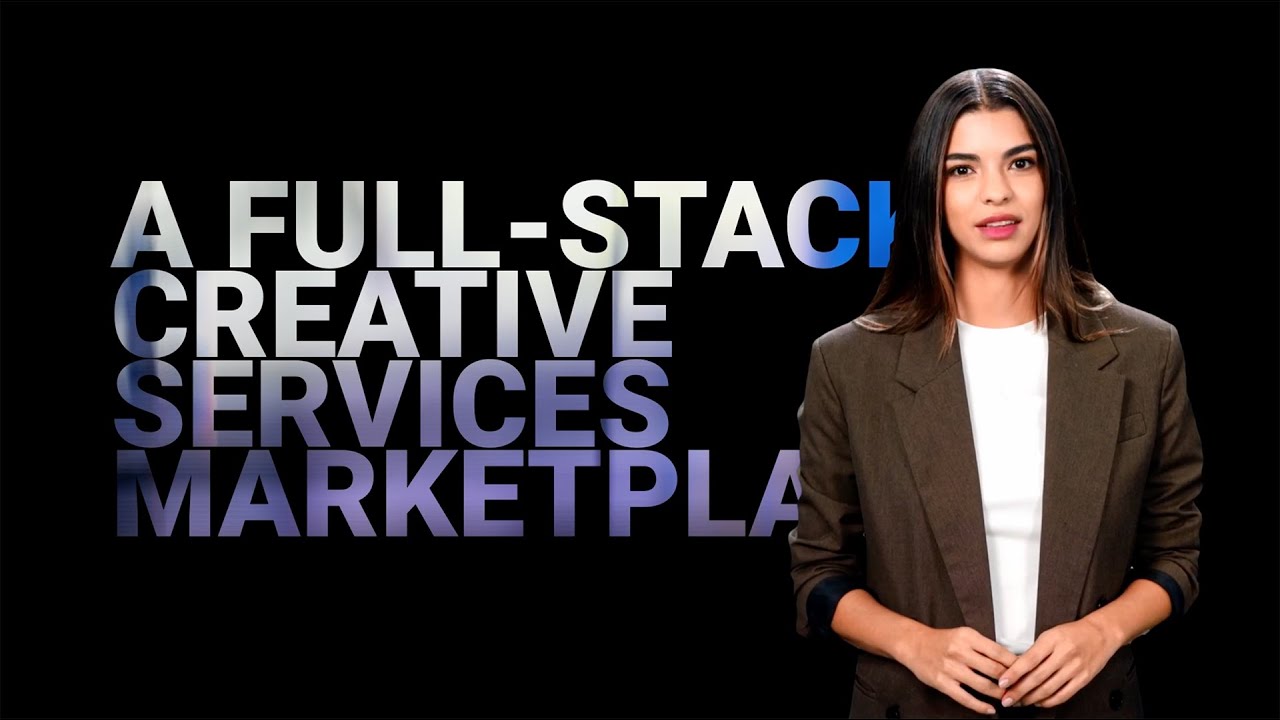
If you are a deep practitioner of the media capabilities of the 2026 world, then you would be aware that a brand needs about 20,000 unique pieces of content per year for different demographics, psychographics etc.
That's 19,900 more than what most big brands actually put out. And if you understand how the Googles, Facebooks, Snapchats and Instagrams work, then you would know that your creative teams will have to deliver a lot more video centric content to fill the pipes of media distribution than they currently are doing.
That's why we've created Clapboard - to produce quality video content at a low enough cost. Quality being contextual to the social media platform, not necessarily high production, thus delivering the best bang for your every buck
JOIN THE NEWSLETTER.
Content Production insights, videos, books, and freebies, delivered to your inbox weekly


LEAVE A COMMENT
Your email address will not be published.