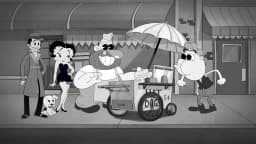
Warby Parker and Arby's launched WArby's in March 2018, rebranding New York locations and selling meat-inspired eyewear to benefit VisionSpring and No Kid

Warby Parker and Arby's Built a Brand Mashup Called WArby's
WArby's is a limited-edition brand collaboration launched in the United States in March 2018 by eyewear retailer Warby Parker and fast-food chain Arby's, temporarily rebranding one New York City Warby Parker location and one Arby's restaurant under a shared identity while selling novelty merchandise and donating proceeds to VisionSpring and No Kid Hungry.
The activation went live on March 30, 2018, timed deliberately to April Fools' weekend, according to reporting by Retail Dive and ASI Central. The campaign's central conceit rested on a straightforward observation: Warby Parker and Arby's share every letter of their names except one. That phonetic overlap became the creative engine for a full brand identity, a physical retail moment, and a merchandise line that stretched from raw-beef-patterned eyewear frames to an item billed as the Onion Ring Monocle. The campaign was credited to McCann, New York, per Clapboard's editorial records.
In the United States, the collaboration operated through selected New York City locations alongside Warby Parker stores more broadly and a dedicated WArby's website, as reported by ASI Central. Limited-edition products included branded T-shirts, baseball caps, tote bags, pool slides, novelty glasses, sandwich-themed microfiber cleaning cloths, and the headline item: the Onion Ring Monocle. Proceeds from sales supported VisionSpring, a nonprofit expanding access to eyewear globally, and No Kid Hungry, a domestic hunger-relief organisation, according to reporting by Retail Dive and Winthrop. The campaign sits within the Fashion and Personal Accessories category and carries a Clapboard Score of 69 out of 100.
Warby Parker built its United States reputation on irreverence. The brand launched in 2010 with a direct-to-consumer model designed to challenge legacy optical retailers, and its communications have consistently leaned on wit and self-awareness as differentiators from category incumbents such as EssilorLuxottica, which controls an estimated thirty to forty percent of global eyewear sales according to directional industry figures reported by Clapboard's research. Against that competitive backdrop, a collaboration with a fast-food chain is not an aberration — it is a logical extension of a brand voice that refuses to take premium positioning too seriously.
Arby's arrived at the partnership from its own strategic evolution. The chain's "We Have the Meats" repositioning, which began in the mid-2010s, had established an identity built on irreverent humor and deliberate pop-culture provocation, as documented by Inspire Brands' own brand history materials and by Restaurant Clicks. That positioning made Arby's an unusually willing co-author for absurdist brand content. The shared characteristic between the two companies — a near-identical name — gave the campaign an earned quality that purely manufactured collaborations rarely achieve. Co-founder Dave Gilboa of Warby Parker stated to ASI Central on March 29, 2018: "We disrupted eyewear, now we're disrupting eyewear plus meats." Co-founder Neil Blumenthal added, also to ASI Central: "We're Warby, they're Arby's. WArby's." Both quotes signal a brand confident enough to weaponise self-parody. The April Fools' timing amplified earned media potential across the United States by giving audiences a culturally familiar frame through which to share and discuss the activation without requiring explanation.
McCann, New York executed the WArby's campaign as a film and merchandise activation built entirely around the comedic logic of its own name. The creative execution did not attempt to reconcile eyewear and fast food as product categories — instead, it leaned into the absurdity as the point, producing a campaign whose humour was structural rather than dependent on any single joke or visual gag.
The merchandise line itself functioned as the creative medium. Products reported by ASI Central and Hypebeast included raw-beef-patterned eyewear frames, sandwich-themed microfiber lens cloths, and the Onion Ring Monocle — each item translating Arby's meat-forward identity into the visual grammar of the personal accessories category. The tote bags, pool slides, T-shirts, and baseball caps served a secondary function: they were shareable objects that extended the campaign's physical footprint beyond the two rebranded New York City locations. The temporary rebranding of one Warby Parker store and one Arby's restaurant in New York City gave journalists and consumers a tangible, photographable environment, which is a reliable amplification mechanic for short-run activations, as noted in Clapboard's editorial assessment. Neil Blumenthal of Warby Parker told ASI Central: "We just can't stop disrupting. We won't stop." The statement is comic in register but functionally accurate as a description of the campaign's creative posture. Production credits beyond the McCann, New York agency attribution are not publicly documented in available records.
No verified performance data for the WArby's campaign — including sales volume, website traffic, social reach, or earned media valuation — is publicly available. The campaign does not appear in the public record of major advertising awards shows, and neither Warby Parker nor Arby's has released figures attributable to the activation. Clapboard assigns the campaign a score of 69 out of 100, reflecting competent execution of a strong conceptual premise against the constraint of a limited geographic footprint and a single-day primary activation.
Structurally, the campaign's effectiveness rests on several observable mechanics. The charity dimension — proceeds directed to VisionSpring and No Kid Hungry, per Retail Dive and Winthrop — gave the activation a values layer that elevated it above pure novelty. The April Fools' timing, confirmed by CNBC and Retail Dive, maximised the probability of unprompted social sharing in the United States, since audiences were already primed to circulate surprising content. The merchandise line created tangible brand artifacts that outlasted the one-day pop-up. Against competitors in the direct-to-consumer eyewear space and against Arby's quick-service rivals, the collaboration demonstrated that brand equity can be generated through conceptual precision rather than media spend alone. The campaign's primary limitation is its geographic concentration: a single New York City activation with web and Warby Parker store support reaches a narrow slice of the United States consumer base, which tempers the structural ceiling of its potential impact.
WArby's was a limited-edition brand collaboration launched in the United States on March 30, 2018. Warby Parker and Arby's temporarily rebranded one New York City location each, sold novelty merchandise including the Onion Ring Monocle, and donated proceeds to VisionSpring and No Kid Hungry, according to Retail Dive and ASI Central.
The WArby's campaign was created by McCann, New York, per Clapboard's editorial records. It launched on March 30, 2018, timed to April Fools' weekend in the United States. The activation involved physical pop-up rebranding across one Warby Parker and one Arby's New York City location, supported by a dedicated WArby's website and merchandise.
WArby's offered raw-beef-patterned eyewear frames, an Onion Ring Monocle, sandwich-themed microfiber lens cloths, T-shirts, baseball caps, tote bags, and pool slides. Products were available at New York City locations, Warby Parker stores, and a dedicated WArby's website, as reported by ASI Central and Hypebeast.
VisionSpring and No Kid Hungry received proceeds from WArby's merchandise sales. VisionSpring works to expand access to eyewear, while No Kid Hungry addresses childhood hunger across the United States. Both beneficiaries are confirmed by Retail Dive and Winthrop in their coverage of the March 2018 activation.
Warby Parker and Arby's share nearly identical names, giving the collaboration an earned conceptual foundation. Both brands had established reputations for irreverent communications in the United States. Co-founder Dave Gilboa told ASI Central the partnership extended Warby Parker's disruption narrative into an entirely new category: meats.
The WArby's campaign holds a Clapboard Score of 69 out of 100. The score reflects a strong, precisely executed concept and effective use of charity and timing mechanics, tempered by limited geographic reach. The activation was concentrated in New York City, restricting its structural potential across the broader United States market.
.webp)
Creative Collaboration Platform: The Backbone of Modern Creative WorkWhat is a creative collaboration platform?Clapboard defines a creative collaboration platform as the operational core for today’s distributed creative teams. This is not a collection of digital collaboration tools stitched together; Clapboard’s system


Understanding the Creative Production MarketplaceWhat is a Creative Production Marketplace?Clapboard defines a creative production marketplace as a structured ecosystem where brands, agencies, and production talent converge to execute video, advertising, and branded content at scale. Unlike the legacy agency or freelanREAD FULL ARTICLE

The Urgent Need for a Creative Production Operating SystemWhy Traditional Creative Production Models Break DownClapboard sees the creative production landscape shifting under pressure. Content velocity is no longer a buzzword—it’s a mandate. Modern advertising demands relentless output across dozens of channels, each wREAD FULL ARTICLE