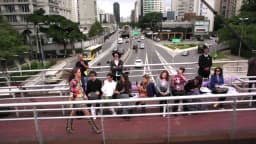
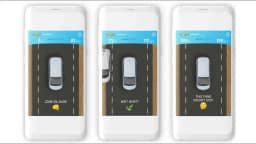
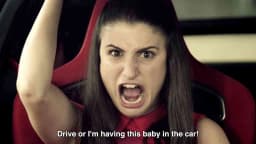
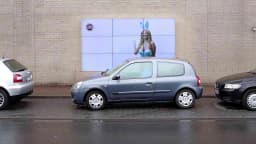
The Volkswagen "Human Crossing" campaign, launched in the UAE in 2016, addresses a critical social issue: pedestrian safety. Recognizing that drivers frequently overlook zebra crossings—contributing to 20% of road accidents involving pedestrians—the campaign strategically humanizes pedestrians to shift driver behavior. By emphasizing that pedestrians are not anonymous obstacles but individuals with names and stories, the campaign seeks to foster empathy and greater caution on the road. This narrative-driven approach leverages the ambient medium to create a tangible, memorable interaction between drivers and pedestrians, reinforcing Volkswagen’s commitment to safety and responsible driving.
The market strategy hinges on a deep insight into local road safety challenges and societal attitudes in the UAE. Rather than relying solely on technical features or traditional automotive appeals, the campaign takes a socially conscious stance, targeting both drivers and the broader community with a message centered on shared humanity and mutual respect in traffic environments. The creative angle of making pedestrians "visible" through storytelling disrupts habitual driving patterns by emotionally engaging the audience, encouraging behavioral change. This aligns Volkswagen’s brand proposition with a promise of care and responsibility not only in vehicle design but also in promoting safer road culture, differentiating the brand within the automotive market in the region.
FORMAT#3 SYMBOLIZE THE PROBLEM — Uses symbols or analogies to represent the problem instead of showing it literally.
The Volksagen 'Human Crossing' campaign fits Format #3 because, rather than showing literal footage of accidents or inattentive drivers, it employs a symbolic device (the "Human Crossing") to represent the neglected humanity of pedestrians. The campaign reframes the zebra crossing as a metaphor for the overlooked individuals—emphasizing their personhood with phrases like "each with their own name and story." The concept humanizes the invisible threat, making the driver see pedestrians as real people. This symbolic analogy lies at the creative core, highlighting the problem of disregarded pedestrians in a visually and emotionally resonant way rather than a straightforward demonstration or narrative-driven story.
ADVERTISING FORMATS EXPLAINED: https://www.clapboard.com/blog/branding-and-advertising/brand-strategy/12-advertising-creative-formats
1. Toyota – Market Positioning
Toyota focuses on reliability, fuel efficiency, and strong resale value, positioning itself as a practical and dependable choice in the UAE automotive market. Their broad range of vehicles targets both family and commercial segments, emphasizing innovation in hybrid technology and a reputation for long-term durability.
2. Nissan – Market Positioning
Nissan positions itself as a value-for-money brand offering stylish, technologically advanced vehicles with strong performance. In the UAE, it targets younger and tech-savvy customers through innovative design and features while maintaining affordability across sedans, SUVs, and electric vehicle segments.
3. Honda – Market Positioning
Honda is positioned as a manufacturer of reliable, efficient, and affordable vehicles with a sporty edge. It appeals to customers seeking a balance of performance, safety, and fuel economy, leveraging Japanese engineering and innovation, particularly in compact and mid-sized models.
4. Ford – Market Positioning
Ford emphasizes ruggedness, power, and advanced driving technology, with a strong presence in SUVs and pickups. In the UAE, it appeals to consumers seeking robust vehicles suitable for both urban and desert terrain, offering a mix of performance, comfort, and American brand heritage.
5. Hyundai – Market Positioning
Hyundai differentiates itself through affordable pricing, modern design, and extensive warranty programs. It targets value-conscious buyers in the UAE by offering feature-rich vehicles with contemporary styling and fuel efficiency, positioning itself as a smart, reliable alternative to more established Japanese and Western brands.
Q: What is Human crossing about?
A: Human crossing is a professional campaign launched by Volkswagen in partnership with Soho Square in the United Arab Emirates in 2016. The campaign was developed in response to the high rate of pedestrian-related road accidents in the region, aiming to address the issue by humanizing the interaction between drivers and pedestrians. Through an innovative ambient execution, Human crossing transformed zebra crossings into powerful visual reminders that pedestrians are individuals with names and stories, not anonymous figures. The campaign leveraged strong Arabic-language messaging and social media engagement to foster empathy and promote safer driving behaviors within the UAE’s automotive landscape.
Q: What creative device does Human crossing use?
A: Human crossing employs the creative technique classified as FORMAT#3 SYMBOLIZE THE PROBLEM in Clapboard’s 12-format taxonomy. Instead of depicting literal accidents or inattentive drivers, the campaign uses the zebra crossing as a symbolic device to represent the overlooked humanity of pedestrians. By reframing the crossing as a metaphor for real people with identities and stories, the campaign creates an emotionally resonant analogy that highlights the problem of disregarded pedestrians. This symbolic approach is central to the campaign’s creative impact, making the issue visible and urgent without resorting to direct demonstration.
Q: What is the campaign proposition for Human crossing?
A: The campaign proposition for Human crossing centers on Volkswagen’s commitment to road safety by addressing a critical social issue in the UAE: the frequent neglect of pedestrian rights at zebra crossings. By positioning pedestrians as individuals rather than anonymous obstacles, the campaign seeks to foster empathy among drivers and encourage more attentive, responsible behavior. This strategy targets both motorists and the broader community, leveraging the ambient medium to create a memorable and tangible reminder of shared humanity on the roads. The approach aligns Volkswagen’s brand values with a promise of care, responsibility, and leadership in promoting safer driving culture in the automotive market.
Q: How does Human crossing rank in Clapboard's archive?
A: Human crossing holds a Clapboard Campaign Score of 71/100 in Clapboard’s global ad archive. This score reflects the campaign’s creative ambition, execution quality, and cultural relevance within the context of the UAE’s automotive and road safety landscape.
Q: Who are the competitors in Volkswagen's category?
A: In the UAE automotive market, Volkswagen competes with brands such as Toyota, which is known for its reliability, fuel efficiency, and strong resale value across family and commercial segments. Nissan targets younger, tech-savvy customers with stylish, technologically advanced vehicles at accessible price points. Honda appeals to those seeking a blend of reliability, efficiency, and sporty performance, leveraging its reputation for Japanese engineering. Ford emphasizes ruggedness, power, and advanced driving technology, catering to consumers who value robust vehicles for both urban and desert environments. Hyundai positions itself as a smart, reliable alternative, offering modern design, affordability, and extensive warranty programs to value-conscious buyers.


 ARCHIVE
.webp)