Vodafone's Pro self employees campaign, created by Tango in Spain in July 2011, used ambient advertising and parkour to honour the daily acrobatics of

Vodafone Spain Pays Tribute to the Self-Employed with Pro Autónomos
Vodafone's Pro self employees campaign is an ambient advertising activation created by Tango and launched in Spain in July 2011, honouring self-employed workers by staging parkour and free-running performances as a physical metaphor for the daily acrobatics of sustaining an independent business.
The campaign operates from a single, clear proposition: that the self-employed do not simply work — they improvise, adapt, and contort their professional lives in ways that resemble athletic feats. In the United States and across much of Europe, the freelance economy had been growing steadily in the years following the 2008 financial crisis, and Spain was no exception. In Spain, the autónomo — the self-employed individual — was a defining figure of the national economy, navigating bureaucratic complexity, irregular income, and the constant pressure of running a business without institutional support. Vodafone, recognising this as both a cultural truth and a commercial opportunity, commissioned Tango to translate that reality into an ambient campaign that would meet its audience in public space rather than on a screen.
The creative mechanics centre on one media asset, a film directed by Antonio Mendez and produced by Daniel Terry, in which the parkour and free-running specialists of 3RUN perform sequences that mirror the leaps, pivots, and recoveries of entrepreneurial working life. The campaign positions Vodafone not as a network provider selling connectivity by the gigabyte, but as a partner that understands the specific pressures of self-employed professional life in Spain. The creative territory is tribute rather than sales pitch, and the ambient medium is chosen deliberately: self-employed workers encounter the work where they live and operate, on streets and in public spaces, rather than inside media environments they may not routinely occupy.
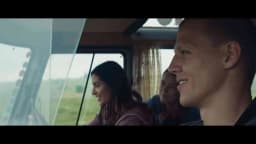
Spain's self-employed sector represented a significant and underserved audience for telecommunications brands in 2011. According to data cited by expansion.com, the autónomo workforce was a substantial contributor to Spanish economic activity even as broader employment contracted during the post-crisis period, making this segment both commercially attractive and emotionally resonant for a campaign built around professional resilience. Vodafone Spain's mobile-line market share stood at 28.2 percent in 2011, having declined by 1.3 percentage points that year, according to available market records, placing competitive pressure on the brand to deepen its relevance with specific audience segments rather than competing on network scale alone.
The competitive environment in Spain at that time was defined principally by Movistar, the dominant operator under the Telefónica group, which held the largest share of mobile connections in the country, and by Orange Spain, which competed aggressively on price. Against these rivals, Vodafone's strategic logic with Pro self employees was differentiation through emotional identification rather than tariff comparison. Tango, the Madrid-based agency responsible for the campaign, recognised that self-employed workers in Spain occupied a cultural position distinct from salaried employees — one defined by self-reliance, improvisation, and a specific kind of professional pride that mainstream telecommunications advertising rarely acknowledged.
According to GSMA Intelligence, Vodafone Group held 367.4 million connections globally in Q2 2011, representing fifteen percent year-on-year growth and the second-largest operator-group position worldwide, behind China Mobile's 616.8 million connections. In Spain specifically, translating that global scale into locally meaningful emotional territory was the strategic challenge Tango addressed by anchoring the campaign in a universal human truth — the physical and psychological effort required to sustain a business — and rendering it through the kinetic language of parkour.
Antonio Mendez directs Pro self employees with a discipline shaped by the ambient medium itself. The film, produced by Daniel Terry, does not rely on dialogue or conventional narrative structure. Instead, it builds meaning through movement: the performers of 3RUN, a parkour and free-running group, execute sequences that are choreographed to parallel the professional improvisations of independent workers — the pivot around an obstacle, the leap across a gap, the recovery from an unexpected drop.
The creative direction is credited to Jhota Juliá and Adrián Vall, with filmmaker Iván Mena Tinocco contributing to the visual execution and client services led by Idoia Moisen. The decision to cast 3RUN, rather than actors or generic stunt performers, is significant: parkour carries its own existing cultural language of urban self-reliance, of finding routes through environments not designed for the person moving through them. That language maps directly onto the autónomo experience, and the campaign earns its metaphor by committing to it physically rather than illustrating it through animation or voiceover abstraction.
The ambient medium amplifies the creative logic. By situating the work in public space in Spain rather than in broadcast or digital environments, the campaign places its tribute where self-employed workers actually are — on streets, in commercial districts, in the urban fabric of professional daily life. The single media asset concentrates the creative argument into one sustained visual statement, avoiding the dilution that comes from adapting a physical, kinetic concept across formats it was not designed to occupy. The result is a piece of ambient craft that respects both the medium and its audience, treating the self-employed not as a demographic target but as protagonists deserving of a genuinely striking public gesture.
No verified performance data for Pro self employees is publicly available. No campaign-specific sales lift, market-share change, customer acquisition figure, or brand-tracking result has been documented across public sources, and no awards recognition for this campaign has been confirmed across Cannes Lions, the Effies, One Show, D&AD, the Clios, the Webby Awards, or WARC.
Assessed on structural grounds, the campaign demonstrates several characteristics associated with effective ambient work. The creative concept — parkour as metaphor for self-employed professional effort — is legible without contextual explanation, which is a fundamental requirement for ambient advertising operating in contested public space. The choice to work with 3RUN grounds the metaphor in authentic physical culture rather than manufactured spectacle, reducing the risk of the tribute reading as condescending or superficial.
The campaign's limitation, structurally, is its concentration in a single media asset. Ambient campaigns that generate the widest reach typically combine in-situ performance or installation with documentary content distributed through press, digital, or broadcast channels. Without evidence of that secondary distribution layer, it is not possible to assess how far beyond its immediate physical audience the work travelled in Spain in July 2011. The absence of awards recognition across major international shows suggests the campaign did not achieve the kind of industry visibility that would have extended its reach retroactively through trade press coverage in markets beyond Spain.
Clapboard scores Pro self employees 63 out of 100, reflecting a conceptually coherent and emotionally grounded ambient piece that is constrained by limited documented reach and the absence of a verifiable results layer.
Pro self employees is an ambient advertising campaign created by Tango for Vodafone in Spain, launched in July 2011. It honours self-employed workers by using parkour and free-running performers from 3RUN as a physical metaphor for the daily acrobatics of sustaining an independent business in Spain.
Tango, a Madrid-based advertising agency, created Pro self employees for Vodafone in Spain. The campaign was directed by Antonio Mendez, with creative direction by Jhota Juliá and Adrián Vall, production by Daniel Terry, and client services led by Idoia Moisen, as documented in campaign records.
3RUN is a parkour and free-running specialist group whose performers appear in the Pro self employees film. Vodafone and Tango selected 3RUN because parkour carries an established cultural language of urban self-reliance and improvisation, which maps directly onto the experience of Spain's self-employed workforce.
No awards recognition for Pro self employees has been confirmed. A review of Cannes Lions, the Effies, One Show, D&AD, the Clios, the Webby Awards, and WARC found no documented recognition for this Vodafone Spain campaign from Tango, launched in July 2011.
Vodafone Spain held a 28.2 percent mobile-line market share in 2011, a decline of 1.3 percentage points that year, according to available market records. Its principal competitors in Spain were Movistar, operated by Telefónica, and Orange Spain, both of which competed strongly on scale and price.
Clapboard scores Pro self employees 63 out of 100. The score reflects a conceptually coherent ambient campaign grounded in an authentic metaphor, constrained by a single documented media asset and the absence of verified performance data or major industry awards recognition for this 2011 Vodafone Spain work.
.webp)
Creative Collaboration Platform: The Backbone of Modern Creative WorkWhat is a creative collaboration platform?Clapboard defines a creative collaboration platform as the operational core for today’s distributed creative teams. This is not a collection of digital collaboration tools stitched together; Clapboard’s system


Understanding the Creative Production MarketplaceWhat is a Creative Production Marketplace?Clapboard defines a creative production marketplace as a structured ecosystem where brands, agencies, and production talent converge to execute video, advertising, and branded content at scale. Unlike the legacy agency or freelanREAD FULL ARTICLE

The Urgent Need for a Creative Production Operating SystemWhy Traditional Creative Production Models Break DownClapboard sees the creative production landscape shifting under pressure. Content velocity is no longer a buzzword—it’s a mandate. Modern advertising demands relentless output across dozens of channels, each wREAD FULL ARTICLE