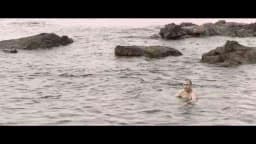
Neuroth's Hearing Test Concert, created by FCB Zürich in May 2015, used the Swiss Youth Symphony Orchestra to screen 1,100 attendees for hearing loss in a

Neuroth Turned a Symphony Concert Into a Hearing Test for Switzerland
Neuroth's Hearing Test Concert is an ambient advertising campaign created by FCB Zürich and launched in Switzerland in May 2015, in which a live performance by the Swiss Youth Symphony Orchestra was engineered to function simultaneously as a clinical hearing examination, screening audience members for hearing loss through carefully sequenced musical frequencies and volume variations.
Neuroth is a hearing-aid retailer and audiological service provider operating across a fragmented hearing-care market in Switzerland and neighbouring European territories. The brief given to FCB Zürich centred on a deeply documented behavioural problem: according to clapboard.com, the average person waits approximately seven years before agreeing to undergo a hearing test, a delay driven by social stigma, denial, and the clinical associations of traditional screening environments. The campaign's central objective was to collapse that resistance by removing every visual and procedural cue associated with a medical appointment and replacing them with the experience of attending an orchestral concert.
The mechanics were precise. The Swiss Youth Symphony Orchestra performed a programme in which musical passages were composed and conducted to traverse a range of frequencies and amplitude levels directly corresponding to those used in audiological screening. Audience members who found themselves straining to follow certain passages, or who missed specific tonal sequences entirely, were effectively receiving diagnostic information without submitting to the institutional setting of a clinic. In Switzerland, where high cultural familiarity with classical music made an orchestral venue a credible and aspirational destination, the choice of format was strategically exact. The campaign was classified as an ambient medium execution and was documented as containing one core media asset, as noted by clapboard.com.
Neuroth entered the campaign with a clearly defined strategic problem. The seven-year delay between the onset of hearing loss and a first clinical appointment, reported across the hearing-care sector and cited in campaign documentation on clapboard.com and adsoftheworld.com, is not primarily a product problem or an awareness problem. It is a behaviour problem rooted in the psychological friction of self-identification as someone with diminished hearing. FCB Zürich's strategic answer was to sidestep that friction entirely by making the diagnostic moment indistinguishable from a leisure activity.
In Switzerland, the hearing-care retail market sits within a competitive landscape shaped by both manufacturers and service networks. Neuroth competes indirectly with Sonova, the Stäfa-based group that identifies itself as the largest global manufacturer of hearing instruments, operating the Phonak and Unitron brands among others. According to Report Sonova, Sonova reported group sales of CHF 2.035 billion in its 2014/15 fiscal year, with hearing-instrument revenues reaching CHF 1.841 billion over the same period. On the retail and dispensing side, Neuroth competes directly with networks including Amplifon and AudioNova, both of which pursue consumer acquisition through conventional advertising and clinical promotional strategies. Against this backdrop, a campaign that generated no clinical associations whatsoever represented a genuinely differentiated strategic position. WirzFraefelPaal, the creative production partner noted in campaign credits, contributed to the overall execution, reinforcing FCB Zürich's capacity to deliver experiential work at a production standard befitting a live orchestral venue. The insight — that the environment of the test was the barrier, not the test itself — gave the campaign its structural coherence and separated it from category conventions entirely.
FCB Zürich constructed the creative execution around a single, uncompromising idea: a symphony concert that was also a calibrated hearing examination. The Swiss Youth Symphony Orchestra performed live, with the musical programme designed so that its frequency range and dynamic variation would expose hearing deficiencies that a casual listener might not otherwise attribute to a medical condition. Audience members who experienced difficulty following certain passages were, in the language of the creative concept, receiving their results in real time, without paperwork, clinical lighting, or the social weight of a scheduled appointment.
Dennis Lück served as Executive Creative Director and Chief Creative Officer at FCB Zürich, providing creative leadership across the campaign, as documented by clapboard.com, adsoftheworld.com, and mediapost.com. Art direction was led by Marcin Baba and Flavio Meroni, both credited as Art Directors at FCB Zürich, with copywriting responsibilities held by Sören Schröder and Mateo Sacchetti, both Senior Copywriters, according to clapboard.com and adsoftheworld.com. Manuela Tappe contributed as Creative Technologist and Editor, while account management was led by Marie-Theres Ott as Client Service Director and Mark Becher as Strategy Director, with Elodie Caucigh serving as Account Manager, per clapboard.com. Nina Wirth and Stefan Fraefel are associated with WirzFraefelPaal, the production partner connected to the campaign's execution, as referenced in production documentation. Levente Paal is also credited within the WirzFraefelPaal collaboration noted in available records.
The craft decision to use a live youth orchestra rather than a recording or a digital simulation was not incidental. It preserved the social legitimacy of the event as a genuine cultural occasion, which was the precise condition required for the concept to function. A recording would have been a demonstration. A live performance was an experience, and the distinction determined whether the diagnostic mechanic landed with emotional credibility or registered as a gimmick.
Neuroth's Hearing Test Concert produced verified and publicly documented performance outcomes. According to mediapost.com, 1,100 people attended the live event. Of those attendees, 428 subsequently scheduled follow-up appointments with Neuroth audiologists, representing a conversion rate of approximately 38.9 percent from a single ambient activation. For a category in which the average consumer delays clinical engagement by seven years, as cited across clapboard.com and adsoftheworld.com, a conversion yield of that scale from a single live event is structurally significant.
The campaign earned recognition across multiple industry award bodies. According to adceurope.org, it received a nomination from the Art Directors Club of Europe in the Promotions and New Media, Events category in 2015. Per clapboard.com, it was shortlisted at the Cannes Lions Media track in 2015 under the title The Hearing Test Concert. FCB Zürich won a Silver Eurobest Award in the Healthcare category, Health and Wellness, Consumer Products, OTC Products and Devices, in 2015, as documented by clapboard.com. No verified Effie, One Show, D&AD, Clio, or Webby Award recognition for this campaign is available in public sources.
Clapboard's editorial assessment places the campaign at a Clapboard Score of 64 out of 100. The score reflects a concept of genuine strategic intelligence — the diagnostic-as-entertainment mechanic is original and the conversion data is credible — while also acknowledging that the campaign's reach was bounded by its single live-event format and that no documented sustained media amplification has been verified in available sources. The structural effectiveness of the creative idea outpaces the breadth of its documented dissemination.
Neuroth's Hearing Test Concert was an ambient advertising campaign created by FCB Zürich and launched in Switzerland in May 2015. The Swiss Youth Symphony Orchestra performed a live concert engineered to function as a hearing examination, using musical frequencies and volume changes to reveal hearing difficulties in audience members without clinical framing.
According to mediapost.com, 1,100 people attended the Neuroth Hearing Test Concert in Switzerland. Of those, 428 subsequently scheduled follow-up appointments with Neuroth audiologists. That figure represents a conversion rate of approximately 38.9 percent from a single live ambient event, a notably high yield for the hearing-care category.
The campaign earned a Silver Eurobest Award in Healthcare in 2015, per clapboard.com, and received a Cannes Lions Media shortlist the same year. adceurope.org documents a nomination from the Art Directors Club of Europe in the Events category. No Effie, D&AD, One Show, or Clio recognition for the campaign is publicly verified.
Dennis Lück served as Executive Creative Director at FCB Zürich, with Marcin Baba and Flavio Meroni as Art Directors, and Sören Schröder and Mateo Sacchetti as Senior Copywriters, according to clapboard.com and adsoftheworld.com. Levente Paal, Nina Wirth, and Stefan Fraefel of WirzFraefelPaal are also associated with the campaign's production execution.
The campaign addressed a documented behavioural barrier: people delay hearing tests by approximately seven years on average, according to clapboard.com and adsoftheworld.com. A classical concert removed clinical associations entirely, making the diagnostic moment socially acceptable. In Switzerland, high cultural familiarity with orchestral music made the format credible and aspirational rather than medical or stigmatising.
Clapboard assigns the Neuroth Hearing Test Concert a score of 64 out of 100. The rating recognises the campaign's original diagnostic-as-entertainment mechanic and its verified conversion data, while reflecting the bounded reach of a single live-event format and the absence of documented sustained media amplification beyond the initial Switzerland activation.
.webp)
Creative Collaboration Platform: The Backbone of Modern Creative WorkWhat is a creative collaboration platform?Clapboard defines a creative collaboration platform as the operational core for today’s distributed creative teams. This is not a collection of digital collaboration tools stitched together; Clapboard’s system


Understanding the Creative Production MarketplaceWhat is a Creative Production Marketplace?Clapboard defines a creative production marketplace as a structured ecosystem where brands, agencies, and production talent converge to execute video, advertising, and branded content at scale. Unlike the legacy agency or freelanREAD FULL ARTICLE

The Urgent Need for a Creative Production Operating SystemWhy Traditional Creative Production Models Break DownClapboard sees the creative production landscape shifting under pressure. Content velocity is no longer a buzzword—it’s a mandate. Modern advertising demands relentless output across dozens of channels, each wREAD FULL ARTICLE