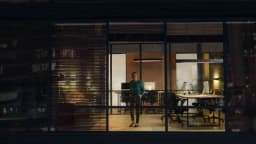
Visa's 'Walla Visa?' campaign, created by Saatchi & Saatchi MEA in Egypt, uses AI voice detection to turn everyday speech into sponsored media for small

Visa Egypt Turns a Street Question Into a Small Business Engine
Visa's 'Walla Visa?' campaign, launched in Egypt in April 2025 by Saatchi & Saatchi MEA, uses AI-enabled in-store listening devices to detect spoken mentions of the brand name and convert each mention into sponsored media placements for participating small businesses across social platforms.
In Egypt, the phrase 'Cash walla Visa?' — meaning 'Cash or Visa?' — has become the standard way merchants and customers negotiate payment at the point of sale. The expression is so embedded in daily commerce that Visa has functionally become a generic trademark for any card payment in the market. The campaign begins from that cultural truth and redirects it. Rather than treating the phrase as a consumer-facing asset, Visa positions it as an act of reciprocity: the small businesses whose countertops made the expression ubiquitous now receive the spotlight in return.
The campaign operates across direct, experiential, and OOH outdoor media channels, with TikTok and Instagram serving as the primary distribution platforms for the sponsored content, as reported by Contagious and Adgully. Each time an AI listening device detected a spoken mention of 'Visa' inside a participating merchant's premises, that mention triggered a sponsored media placement that drove footfall back to the same business. The mechanic closes a loop that previously only benefited the network brand. In Egypt, where small and micro-enterprises form a substantial layer of the retail economy, that gesture carries strategic weight beyond awareness. The campaign contains one documented media asset and registered 1,191 views and 16 likes on Clapboard within approximately two months of publication. Clapboard scores the campaign 64 out of 100, reflecting strong cultural insight and a functional experiential mechanic set against limited documented creative range.
Visa occupies a rare position in the Egyptian market: its brand name functions as a common noun. According to Clapboard's editorial analysis, this kind of generic-trademark status — comparable to how certain tissue or adhesive brands operate in other markets — represents both a ceiling and an opportunity. The 'Walla Visa?' campaign recognises that ceiling and attempts to convert passive linguistic dominance into active commercial utility for the merchants who created it.
The strategic insight rests on a deliberate inversion of the typical payment-network growth model. Visa operates as a two-sided payments market participant, selling network access and processing capabilities to banks, fintechs, governments, and merchants rather than cards directly to consumers, according to Mordor Intelligence. In Egypt, that model means small businesses are not merely endpoints — they are infrastructure. By designing a campaign that rewards merchants for every spoken mention of the brand, Visa aligns its marketing investment with the businesses that sustain its own colloquial dominance.
The competitive landscape in Egypt places Visa alongside Mastercard as the dominant international card networks at the point of sale, while local digital-payment initiatives and mobile-wallet platforms have expanded consumer choice in recent years. According to the Nilson Report, Visa held an estimated 52.22% provider share of the global credit-card market in 2025, a position that makes localised merchant-loyalty plays like 'Walla Visa?' strategically important for defending network volume at the grassroots level rather than only at the institutional level. Ahmed Younis, known as Fizo, Chief Creative Officer at Publicis Communications Egypt and KSA, described the campaign to Campaign Brief Asia as 'a powerful example of how culture shapes commerce.' That framing signals a deliberate move away from transactional messaging toward a brand-as-economic-partner positioning that is increasingly common among global payment networks competing for merchant affinity in emerging markets.
Ahmed Bakir directs the 'Walla Visa?' campaign, with production handled by Good People, a Cairo-based production house, as documented on Clapboard and Ads of the World. The production infrastructure behind the campaign is notably technical for an outdoor and experiential execution: AI-enabled in-store listening devices, installed at participating merchant locations across Egypt, form the operational backbone of the entire creative mechanic.
The devices detect spoken instances of the word 'Visa' during real checkout interactions — the natural occurrence of 'Cash walla Visa?' — and convert those detections into triggered media placements on TikTok and Instagram. The creative logic is self-reinforcing: the more a merchant's customers ask the question, the more sponsored content that merchant receives, and the more visibility drives new customers to ask the question again. Karim Marold serves as Director of Photography and Cinematographer on the project, with Omar Khalil as Executive Producer, Nour Abdel Latif as Producer, Omar Hindi as Line Producer, and Omar Gamal as Senior Producer, per credits documented on Clapboard. Shereen Mostafa serves as Head of Production, and Adel Imam is credited as Assistant Producer.
The wider creative team at Saatchi & Saatchi MEA includes Yuste de Lucas, Rudy Zulkifly, Nicolas Geahchan, Vitor Palma, Alia Elwi, and Farishte Irani, as documented on Clapboard and Ads of the World. Hussein Kandil, Senior Marketing Director for MENA and South Asia at Visa, is the senior client lead on the campaign, as reported by LinkedIn and Campaign Brief Asia. The campaign's creative economy is tight: one documented media asset, one cultural phrase, and one AI mechanism carry the full weight of the brief. That constraint is itself a creative decision — it mirrors the simplicity of the transaction it celebrates and keeps the merchant at the centre of every executional choice rather than subordinating the business owner to a brand story about payments infrastructure.
Contagious reported on May 8, 2025, that agency-claimed results for the 'Walla Visa?' campaign included a 4.2% increase in brand recall and a 48% increase in merchant participation interest, figures the publication attributed to Saatchi & Saatchi MEA. These metrics are agency-sourced and have not been independently verified by a third-party auditor, and Clapboard treats them as directional rather than definitive.
The structural effectiveness of the campaign's mechanic is easier to assess than its measured outcomes. By anchoring media spend to the physical presence of spoken brand mentions, the campaign creates a performance-linked outdoor and experiential model that is self-optimising: high-traffic merchants receive proportionally more media support, which drives further traffic, compounding the value of participation. In Egypt's retail environment, where small-business visibility is rarely supported by formal advertising budgets, that dynamic has genuine utility beyond brand storytelling.
Coverage from Campaign Middle East, Campaign Brief Asia, and Contagious, all published in April and May 2025, indicates strong trade-press reception across the Middle East and broader industry press. The campaign registered 1,191 views and 16 likes on Clapboard within two months of publication, modest engagement numbers consistent with a niche trade submission rather than a consumer-viral property. The Clapboard Score of 64 out of 100 reflects the campaign's genuine creative intelligence and culturally grounded mechanic, tempered by its limited executional breadth — a single media asset and a geographic footprint confined to Egypt limit the evidence base for broader effectiveness claims.
'Walla Visa?' is a 2025 Visa campaign created by Saatchi & Saatchi MEA in Egypt. It uses AI-enabled in-store listening devices to detect spoken mentions of the brand name and convert each mention into sponsored social media placements for participating small businesses on TikTok and Instagram, as reported by Contagious and Campaign Middle East.
AI-enabled listening devices installed at merchant locations detect the spoken phrase 'Cash walla Visa?' during real checkout interactions. Each detection triggers a sponsored media placement on TikTok or Instagram that promotes the participating merchant, turning everyday customer speech into advertising inventory for small businesses, per reporting by Contagious and Adgully.
Saatchi & Saatchi MEA created the campaign for Visa. Director Ahmed Bakir and production house Good People executed the production. Hussein Kandil, Senior Marketing Director for MENA and South Asia at Visa, is the senior client lead, as documented on Clapboard and reported by Campaign Brief Asia.
Agency-claimed results reported by Contagious on May 8, 2025, include a 4.2% increase in brand recall and a 48% increase in merchant participation interest. These figures are sourced from Saatchi & Saatchi MEA and have not been independently verified. The campaign received positive trade coverage from Campaign Middle East, Campaign Brief Asia, and Contagious.
Visa chose small businesses because they are the source of the brand's generic-trademark status in Egypt. The phrase 'Cash walla Visa?' became ubiquitous through millions of merchant interactions. The campaign treats that linguistic dominance as a debt to the retail community and repays it through sponsored media that drives footfall back to participating merchants.
The 'Walla Visa?' campaign receives a Clapboard Score of 64 out of 100. The score reflects the campaign's strong cultural insight and functional experiential mechanic — anchoring media to real spoken brand mentions — set against a limited executional footprint of one documented media asset and a single geographic market in Egypt.
.webp)
Creative Collaboration Platform: The Backbone of Modern Creative WorkWhat is a creative collaboration platform?Clapboard defines a creative collaboration platform as the operational core for today’s distributed creative teams. This is not a collection of digital collaboration tools stitched together; Clapboard’s system


Understanding the Creative Production MarketplaceWhat is a Creative Production Marketplace?Clapboard defines a creative production marketplace as a structured ecosystem where brands, agencies, and production talent converge to execute video, advertising, and branded content at scale. Unlike the legacy agency or freelanREAD FULL ARTICLE

The Urgent Need for a Creative Production Operating SystemWhy Traditional Creative Production Models Break DownClapboard sees the creative production landscape shifting under pressure. Content velocity is no longer a buzzword—it’s a mandate. Modern advertising demands relentless output across dozens of channels, each wREAD FULL ARTICLE