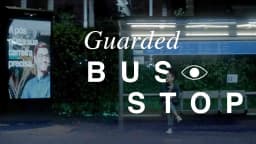
Urban Vision's Break the Fake campaign placed a 3D anamorphic billboard in central Milan to debunk COVID-19 vaccine misinformation directly at anti-vaccine

Urban Vision Break the Fake Fights COVID-19 Vaccine Misinformation
Urban Vision's "Break the Fake" campaign is a December 2021 out-of-home public interest initiative that deployed a large anamorphic 3D LED billboard in central Milan, Italy, to display prominent anti-vaccine misinformation claims and immediately rebut them with factual messaging drawn from Italian health authorities.
Urban Vision, one of the most significant publishers of advertising space in Europe, made the decision to proactively dedicate its own media inventory to the fight against COVID-19 vaccine misinformation at a moment when anti-vaccine protests were a visible and recurring presence in Italian public life. The campaign was developed in collaboration with three agencies: The Big Now, Dentsu mcgarrybowen, and Isobar. Rather than commissioning a conventional awareness advertisement, the agencies identified the most widely circulated and emotionally charged fake news circulating in anti-vaccine channels and made those claims the centrepiece of the creative — placing them in enormous type on a format that commands attention through its three-dimensional illusory depth before countering each claim with verified scientific fact.
The billboard was installed on a central street in Milan, Italy, chosen specifically because it was a known site of large-scale anti-vaccine demonstrations. The campaign's logic was confrontational by design: by meeting misinformation at the exact geographic and psychological location where it was most actively spreading, Urban Vision positioned factual correction not as a remote institutional message but as an immediate, unavoidable presence. The campaign generated spontaneous press coverage and became, according to Urban Vision's own documentation, a concrete instrument of support for Italian health institutions engaged in the national vaccination drive. "Break the Fake" carries a Clapboard Score of 63 out of 100, reflecting its strategic coherence and genuine civic ambition within the broader category of COVID-19 ads and anti-Covid19 public interest media.
Urban Vision identified a precise strategic gap in Italy's public health communication landscape during the winter of 2021. Official vaccine messaging from Italian health institutions was reaching audiences already broadly sympathetic to vaccination, while the most resistant segments were being reinforced by a closed ecosystem of anti-vaccine social channels operating largely beyond the reach of institutional media. The insight driving "Break the Fake" was that the physical street — specifically the streets of Milan where anti-vaccine protests were concentrating — represented the one environment where those resistant audiences could not opt out of exposure.
The out-of-home advertising sector provided the structural means to act on that insight. According to JCDecaux's published financial results, global digital out-of-home revenue increased by a substantial margin in full-year 2021, with JCDecaux reporting digital out-of-home represented a significant share of its total 2021 revenue as the medium rebounded strongly from pandemic-period restrictions. Italy's OOH market, served by major operators including IGPDecaux — the Italian subsidiary of JCDecaux operating across Italian cities — and Urban Vision itself, was recovering momentum at precisely the moment the campaign launched, according to reporting from igpdecaux.it. The competitive context matters: where a company such as IGPDecaux or a global network operator might treat inventory primarily as a commercial asset, Urban Vision's decision to convert premium space to civic use was a deliberate act of brand differentiation as well as public service.
The strategic architecture of "Break the Fake" also reflected a broader understanding, documented in Urban Vision's own platform communications, that fake news about anti-Covid19 vaccines remained acutely dangerous in late 2021 precisely because the epidemic's uneven global trajectory meant vaccine hesitancy in countries like Italy carried real public health consequences. The campaign's placement in Milan, Italy's most media-scrutinised city, amplified its likelihood of generating the earned press coverage that ultimately extended its reach far beyond the billboard's immediate footprint.
"Break the Fake" is built on a single, precisely calibrated creative decision: to make anti-vaccine misinformation the most visually prominent element of the execution before dismantling it. The campaign's executive creative directors at The Big Now and Dentsu mcgarrybowen, Stefano Battistelli and Francesco Epifani, structured the creative around the rhetorical technique of direct confrontation rather than conventional counter-messaging, which typically ignores the specific claims made by the opposing side and risks leaving those claims unaddressed in the audience's mind.
Creative Strategy Director Silvia Cannata shaped the campaign's strategic framing, while Creative Directors Domenico de Musso and Roberto Giardinelli oversaw the translation of that strategy into a visual language suited to the anamorphic 3D LED billboard format. The choice of format was not incidental. Anamorphic 3D digital out-of-home, of the type Urban Vision operates in central Milan, Italy, generates a perceptual jolt — a momentary suspension of disbelief — that standard flat billboards cannot produce. That moment of arrested attention is exactly the window the campaign needed to land the contrast between sensational misinformation and factual rebuttal.
Graphic Designer Stefano Trolese and Motion Graphic Designer Matteo Milone executed the production, designing the motion sequences that gave the billboard's 3D illusion its kinetic force. The decision to source fake news directly from active anti-vaccine channels gave the creative a documentary quality — the claims displayed were not invented for dramatic effect but were the actual language circulating in the communities whose beliefs the campaign sought to challenge. The overall production approach treated the medium as argument: the sheer scale and technological spectacle of the billboard implicitly made the case that institutional truth commands resources and visibility that misinformation, however viral, cannot match on the physical street of a major Italian city.
"Break the Fake" generated more than four million impressions within its first twenty-four hours of deployment in Milan, Italy, according to Urban Vision's own campaign documentation. That figure is particularly significant given that the result was achieved through a single large-format out-of-home installation without a paid media amplification budget appended to the outdoor placement — the impressions reflect a combination of physical footfall, spontaneous social sharing, and the earned press coverage the campaign attracted.
The campaign received editorial coverage from multiple outlets, as reported by ivanlitv.com, ooh.urbanvision.com, and urbanvision.com, which documented the campaign's reception among Italian media and public health stakeholders. Urban Vision described the campaign as becoming a concrete support mechanism for Italian health institutions engaged in the national vaccination effort, a characterisation that situates the earned-media outcome within a measurable public utility framework rather than purely commercial metrics.
No independently verified third-party audience measurement or brand-lift data for "Break the Fake" is publicly available beyond the impression figure supplied by Urban Vision. What the structural evidence does confirm is that the campaign's creative architecture — placing misinformation centre-frame on a format commanding involuntary attention, then rebutting it in the same visual space — was well suited to generating the kind of surprising, shareable encounter that drives organic press coverage. For a campaign whose explicit objective was to support Italian health institutions during the COVID-19 period, earned media prominence in Italy's national press represented a meaningful secondary distribution channel. The Clapboard Score of 63 out of 100 reflects the campaign's genuine strategic originality and civic relevance, tempered by the limited independent verification of its measurable outcomes.
"Break the Fake" is a December 2021 public interest campaign by Urban Vision in Milan, Italy. Created by The Big Now, Dentsu mcgarrybowen, and Isobar, it placed a 3D anamorphic LED billboard displaying anti-vaccine fake news claims and rebutting each with verified health information, generating more than four million impressions in its first twenty-four hours, according to Urban Vision.
Urban Vision selected a central Milan street because it was a known site of anti-vaccine protests in Italy. The placement was deliberate: by positioning factual correction at the geographic location where vaccine misinformation was most visibly spreading, the campaign reached resistant audiences who would not voluntarily seek out institutional health messaging through conventional media channels.
Three agencies collaborated on "Break the Fake." The Big Now, Dentsu mcgarrybowen, and Isobar jointly developed the campaign for Urban Vision. Executive Creative Directors Stefano Battistelli and Francesco Epifani led the creative team, with Creative Strategy Director Silvia Cannata shaping the strategic framework and Creative Directors Domenico de Musso and Roberto Giardinelli overseeing visual execution.
"Break the Fake" used an anamorphic 3D LED billboard format to create a perceptual jolt that arrested passerby attention. The three-dimensional illusion gave the display an immediate visual impact unavailable on standard flat formats, providing the critical window of attention needed to contrast sensational anti-vaccine claims with factual rebuttal in a single, sustained creative sequence in central Milan.
"Break the Fake" recorded more than four million impressions within its first twenty-four hours in Milan, Italy, according to Urban Vision. The campaign also generated spontaneous press coverage documented by ivanlitv.com and ooh.urbanvision.com, and Urban Vision described it as direct support for Italian health institutions during the national COVID-19 vaccination campaign. Its Clapboard Score is 63 out of 100.
Urban Vision has a documented history of dedicating media space to public causes in Italy. The company previously supported Anlaids for a cross-media art and fundraising campaign at Palazzo Doria Pamphilj in 2018, according to urbanvision.com. "Break the Fake" extended that lineage into the COVID-19 era, applying Urban Vision's premium out-of-home inventory to counter anti-Covid19 vaccine misinformation across Milan.
.webp)
Creative Collaboration Platform: The Backbone of Modern Creative WorkWhat is a creative collaboration platform?Clapboard defines a creative collaboration platform as the operational core for today’s distributed creative teams. This is not a collection of digital collaboration tools stitched together; Clapboard’s system


Understanding the Creative Production MarketplaceWhat is a Creative Production Marketplace?Clapboard defines a creative production marketplace as a structured ecosystem where brands, agencies, and production talent converge to execute video, advertising, and branded content at scale. Unlike the legacy agency or freelanREAD FULL ARTICLE

The Urgent Need for a Creative Production Operating SystemWhy Traditional Creative Production Models Break DownClapboard sees the creative production landscape shifting under pressure. Content velocity is no longer a buzzword—it’s a mandate. Modern advertising demands relentless output across dozens of channels, each wREAD FULL ARTICLE