 ARCHIVE
Opel Turns the Corsa Into the First Car Named by Its Owner
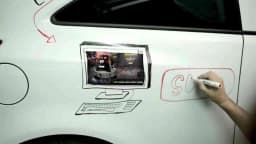
How Opel Made the Corsa the First Car Model Named After Its Owner Opel's 2013 Israeli digital...
How Toyota and Good Rebels Built The Impossible Gym in Spain
Toyota's 2019 digital campaign The Impossible Gym, created by Madrid-based agency Good Rebels and published in Spain in September 2019, uses the metaphor of a gym transformed into an arena of impossible challenges to position Toyota as an enabler of human potential, extending the brand's global Start Your Impossible platform into the Spanish market through five media assets and a roster of four elite Spanish athletes.
The campaign carries the tagline "No hay mayor entrenamiento que un imposible" — translated as "There is no greater training than an impossible" — according to the Toyota España newsroom. This proposition moves Toyota's brand identity well beyond vehicle specifications, anchoring it instead in perseverance, transformation, and the psychology of overcoming limits. The Impossible Gym presents the gym not as a place of routine exercise but as a symbolic proving ground where the boundary between possible and impossible dissolves.
In Spain, the campaign arrived at a moment of genuine commercial momentum for the brand. According to Prensa Toyota, Toyota and Lexus sold 89,379 vehicles in Spain in 2019, with combined market share reaching 5.9 percent, up from 5.6 percent the prior year. The Impossible Gym operates as a digital-first initiative, deliberately targeting a connected, younger demographic in Spain likely to engage with motivational storytelling that reflects personal aspiration rather than product specification. The campaign earns a Clapboard Score of 56 out of 100, reflecting its coherent strategic architecture and authentic creative choices, tempered by limited documented reach data and the absence of verified award recognition from major industry bodies including Cannes Lions, the Effies, D&AD, and the Clio Awards.
Toyota's Start Your Impossible platform originated as a global corporate initiative in October 2017, according to Pressroom Toyota, framing the brand's evolution around the principle of mobility for all. Good Rebels localised this global architecture for the Spanish market by grounding it in four athletes whose life stories make the concept of the impossible viscerally real rather than abstractly motivational.
The featured athletes, identified by the Toyota España newsroom as Carolina Marín in badminton, Eva Moral in Paralympic triathlon, Martín de la Puente in wheelchair tennis, and Niko Sherazadishvili in judo, collectively represent a range of disciplines, abilities, and personal narratives that reflect the diversity of challenge itself. This casting choice is strategically deliberate. By including a Paralympic triathlete and a wheelchair tennis player alongside Olympic-level competitors, Good Rebels signals that the impossible is not a single category of ambition but a condition shared across every kind of human endeavour. In Spain, where sports culture carries deep social resonance and elite athletes command genuine public admiration, this selection builds credibility rather than simply lending celebrity.
The automotive category in Spain operates in a competitive landscape that includes Volkswagen Group, which according to motorpasion.com held an estimated global market share of approximately 12 percent in 2019, placing it ahead of Toyota Group's approximately 11.4 percent share as reported by Global Toyota. Within Spain specifically, Toyota's 5.9 percent combined share with Lexus in 2019, per prensa.toyota.es, positions the brand as a meaningful but not dominant player, making brand differentiation through values-led storytelling a rational strategic lever. Choosing a digital medium concentrates spend where the target audience is most reachable and where motivational content has proven organic amplification potential.
The Impossible Gym delivers its argument through five media assets, a compact but focused suite that disciplines the campaign to do more with less. Good Rebels constructed the campaign around the gym as a universal cultural shorthand — a space everyone associates with effort, repetition, and the negotiation between comfort and growth — then systematically reloaded that space with the specific, documented impossibles faced by each of the four featured athletes.
The creative approach blends authenticity with aspirational storytelling, a combination that is harder to execute than it appears. Authenticity in this context means the athletes' stories are not dramatised reconstructions but present-tense portraits of ongoing effort. The campaign does not ask viewers to imagine overcoming the impossible in the future; it shows them people who are already inside that process. This structural decision shifts the emotional register from inspiration at a distance to recognition of something real. According to controlpublicidad.com, the campaign was officially announced on 30 September 2019 via the Toyota España newsroom, giving it a precise and documented public launch moment in Spain.
The tagline — "No hay mayor entrenamiento que un imposible" — functions as both a philosophical statement and a reframing of Toyota's product identity. The word entrenamiento, meaning training, ties the campaign's athletic world back to the automotive context without forcing a mechanical connection. It implies that Toyota, like the athletes it features, is itself in a process of continuous development and challenge. Production credits for The Impossible Gym are not publicly documented beyond the confirmed agency attribution to Good Rebels, the Madrid-based digital and social agency responsible for the campaign's strategic and creative development.
No campaign-specific effectiveness data for The Impossible Gym is publicly available across verified sources including WARC, Effie case databases, or Toyota's own published results. No verified recognition for the campaign appears in the Cannes Lions, D&AD, The One Show, Clio Awards, or Webby Awards databases. What is documented provides useful structural context for assessing the campaign's likely impact.
According to prensa.toyota.es, Toyota sales in Spain increased 8 percent in 2019, a year in which the brand and Lexus combined reached 5.9 percent market share, up from 5.6 percent the year before. These figures do not attribute growth to any single campaign, but they confirm that The Impossible Gym launched into a period of genuine commercial momentum, and that the broader marketing activity supporting Toyota in Spain during 2019 coincided with measurable business progress. According to zenithmedia.com, the global automotive advertising environment was navigating significant pressure in 2019 as overall light-vehicle volumes declined, which makes Toyota's Spanish growth during this period structurally notable.
The campaign's documented asset count of five media items is modest, and the available view data — 1,642 views with three likes recorded against the campaign's primary video — suggests limited organic reach relative to the production's evident ambition. This gap between creative quality and documented distribution is the principal factor bearing on the Clapboard Score of 56 out of 100. The Impossible Gym demonstrates a clear and coherent brand argument, credible athlete selection, and disciplined thematic focus, but the absence of performance data and award recognition prevents a higher structural assessment.
The Impossible Gym is a 2019 digital campaign created by Good Rebels for Toyota in Spain. It uses four elite Spanish athletes to extend Toyota's global Start Your Impossible platform, framing the gym as a metaphor for confronting and overcoming impossible challenges. The campaign launched in September 2019 and comprises five media assets.
Four athletes featured in The Impossible Gym, according to the Toyota España newsroom. They are Carolina Marín in badminton, Eva Moral in Paralympic triathlon, Martín de la Puente in wheelchair tennis, and Niko Sherazadishvili in judo. Their selection reflects a deliberate range of disciplines and personal challenges relevant to the Spanish sports audience.
Good Rebels, a Madrid-based digital and social agency, created The Impossible Gym for Toyota. The campaign was published in Spain in September 2019 as a digital medium initiative. Good Rebels developed both the strategic localisation of Toyota's global Start Your Impossible platform and the campaign's creative execution across five media assets.
Toyota and Lexus sold 89,379 vehicles in Spain in 2019, according to prensa.toyota.es. Their combined market share reached 5.9 percent, up from 5.6 percent in 2018. Toyota sales rose 8 percent that year. The Impossible Gym launched into this period of measurable commercial momentum in the Spanish automotive market.
No verified award recognition for The Impossible Gym has been found. Searches across the Cannes Lions, D&AD, The One Show, Clio Awards, Effies, and Webby Awards databases return no entries for this campaign. The absence of award documentation is one factor reflected in the campaign's Clapboard Score of 56 out of 100.
The campaign's tagline is "No hay mayor entrenamiento que un imposible," meaning there is no greater training than an impossible, according to the Toyota España newsroom. The line connects the athletic world of training and effort directly to Toyota's Start Your Impossible brand platform, anchoring product identity in human perseverance rather than vehicle performance.
.webp)
Creative Collaboration Platform: The Backbone of Modern Creative WorkWhat is a creative collaboration platform?Clapboard defines a creative collaboration platform as the operational core for today’s distributed creative teams. This is not a collection of digital collaboration tools stitched together; Clapboard’s system


Understanding the Creative Production MarketplaceWhat is a Creative Production Marketplace?Clapboard defines a creative production marketplace as a structured ecosystem where brands, agencies, and production talent converge to execute video, advertising, and branded content at scale. Unlike the legacy agency or freelanREAD FULL ARTICLE

The Urgent Need for a Creative Production Operating SystemWhy Traditional Creative Production Models Break DownClapboard sees the creative production landscape shifting under pressure. Content velocity is no longer a buzzword—it’s a mandate. Modern advertising demands relentless output across dozens of channels, each wREAD FULL ARTICLE