The National Lottery's Project Celt, created by The Wild in the United Kingdom in 2019, used documentary storytelling to humanise Good Causes funding for 18–34

The National Lottery Project Celt Brings Good Causes to Life
Project Celt is a branded-content documentary campaign created by The Wild for The National Lottery in the United Kingdom, published in March 2019, designed to show younger audiences how National Lottery funding reaches real beneficiaries through Good Causes grants.
The campaign marked The National Lottery's 25th anniversary with a multi-part content series rather than a conventional television advertisement. According to archive records, The Wild — a creative agency operating in partnership with Jungle Creations — produced a two-part documentary series alongside three social mini-documentaries and editorial articles, all distributed through Jungle Creations' youth-oriented video channel VT. The first film in the series, titled Project Celt, follows Beth Lewis, a beneficiary of Project CELT, a centre for equine learning and therapy that receives National Lottery Good Causes support. As reported by The Drum, the work landed publicly in April 2019 as The Wild's first creative output, positioning the agency immediately within purpose-led, social-first content.
The campaign's central objective was to communicate that approximately £30 million per week is directed to Good Causes by The National Lottery, a figure cited in campaign materials, while speaking directly to an 18–34 demographic that standard lottery advertising has historically struggled to engage. In the United Kingdom, where The National Lottery operates as the dominant draw-based lottery under Camelot, shifting brand perception among younger audiences required a format that felt editorial rather than promotional. Project Celt answered that brief by leading with a human story — equine therapy, personal transformation, community impact — rather than jackpot values or prize mechanics. The Clapboard Score for this campaign stands at 59 out of 100, reflecting its structural ambition and audience relevance, while also pointing to limited public documentation of its measurable outcomes.
The National Lottery faced a documented audience gap in 2019. Younger adults across the United Kingdom were engaging with digital-native video content — short-form social video, documentary series, editorial storytelling — at a rate that traditional lottery advertising formats could not match. The Wild's strategic answer was to meet that audience on the channels they already used, distributing Project Celt through Jungle Creations' VT channel, which was specifically built around youth-oriented video content.
The competitive landscape for lottery and gaming entertainment in the United Kingdom was broadening significantly at the time. The National Lottery, operated by Camelot, competed not only with EuroMillions, instant-win products, and charity lotteries, but also with a wider entertainment economy for discretionary attention and spend, according to Gambling Commission reporting. Charity lotteries in the UK operated under statutory sales limits per draw and per year, a regulatory constraint that The National Lottery did not face, according to the Gambling Commission. That structural advantage gave Camelot room to invest in brand-building content rather than pure acquisition advertising. In March 2019, Camelot also launched its Set For Life product, offering a top prize of £10,000 per month for 30 years, as reported by The Drum, signalling a broader period of product and brand innovation.
Against this backdrop, The Wild chose a strategy grounded in social proof and emotional resonance rather than prize aspiration. Showing how Good Causes funding materially improves individual lives — as embodied by Beth Lewis and Project CELT's equine therapy programme — offered The National Lottery a narrative that competitors in the charity lottery and commercial gaming sectors could not credibly replicate. The approach also aligned with a broader industry movement, documented across UK campaigns, toward purpose-led content as a primary brand-building vehicle for audiences who are resistant to direct promotional messaging.
The Wild built Project Celt around a single, sustained human narrative. The first film follows Beth Lewis and her relationship with Project CELT, a centre for equine learning and therapy operating with National Lottery Good Causes support in the United Kingdom. The creative decision to lead with a named individual and a named organisation gave the campaign a specificity that distinguishes effective branded documentary work from generic corporate social responsibility content.
The format itself was a deliberate craft choice. A two-part documentary series, supported by three shorter social mini-documentaries and editorial articles, allowed The Wild to serve different consumption contexts across a single coherent narrative arc. The longer documentary films suited an audience willing to invest time in a story; the mini-documentaries were engineered for the scroll-and-stop behaviour that defines social video viewing on the platforms where Jungle Creations' VT channel operates. Editorial articles extended the story into text-based environments, reaching audiences who engage with journalism-style content. This three-format architecture reflects a production approach shaped by distribution strategy from the outset rather than adapted for social after the fact.
Production credits for Project Celt are not fully and publicly documented beyond the agency attribution to The Wild and its Jungle Creations partnership. As reported by The Drum, Project Celt represented The Wild's first creative work following the agency's formation, which places the production within a startup creative environment rather than an established production infrastructure. That context makes the documentary ambition of the campaign notable — a new agency, on its debut project, delivering a multi-part content series for one of the United Kingdom's most recognisable brands. The visual and editorial grammar of the film, centred on equine therapy and personal testimony, follows the conventions of British social documentary, a format with strong credibility among the 18–34 audiences the campaign targeted.
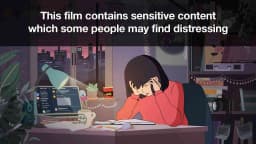
No verified performance data for Project Celt is publicly available. Neither The National Lottery, Camelot, The Wild, nor Jungle Creations have published view counts, engagement rates, brand-lift figures, or audience-reach metrics in relation to this campaign in any source accessible to this analysis. The absence of public metrics is not unusual for branded-content commissions of this type in the United Kingdom, where social documentary series are frequently evaluated through proprietary brand-tracking tools rather than disclosed publicly.
Structural analysis of the campaign, however, points to several effectiveness indicators. The multi-format distribution model — documentary series, social mini-documentaries, and editorial articles deployed through VT — addressed the awareness, engagement, and consideration stages of a purchase and perception funnel simultaneously. The decision to ground the campaign in a named beneficiary, Beth Lewis, and a named institution, Project CELT, provided the Good Causes narrative with the concreteness that abstract figures alone cannot achieve. Communicating that approximately £30 million per week reaches Good Causes in the United Kingdom is a statistic; showing what that funding does for one person inside one equine therapy programme is a story.
According to Lottery Good Causes reporting via Lotterygoodcauses Org Uk, National Lottery funding has supported more than 670,000 projects across the United Kingdom since 1994, a cumulative record that Project Celt was designed to make tangible rather than statistical. The campaign's Clapboard Score of 59 out of 100 reflects genuine strategic and creative coherence — a purpose-led documentary format matched to a clear audience objective — while the score's midrange position acknowledges the limited public footprint the campaign generated relative to its broadcast-era predecessors in The National Lottery's advertising history, including AMV BBDO's 2016 campaign Please Not Them.
Project Celt is a branded-content documentary campaign created by The Wild for The National Lottery in the United Kingdom in 2019. It follows Beth Lewis, a beneficiary of equine therapy funding through Good Causes grants, and formed the first film in a multi-part documentary series marking The National Lottery's 25th anniversary.
The Wild created Project Celt. The Wild is a creative agency formed in partnership with Jungle Creations, the UK digital video publisher. Project Celt was The Wild's first piece of creative work, as reported by The Drum, and was distributed through Jungle Creations' youth-oriented VT channel alongside social mini-documentaries and editorial articles.
Beth Lewis is a beneficiary of Project CELT, a centre for equine learning and therapy that receives National Lottery Good Causes funding in the United Kingdom. The Wild chose her story to humanise the approximately £30 million per week The National Lottery directs to Good Causes, giving the campaign a named individual rather than an abstract statistic.
Project Celt targeted adults aged 18 to 34 in the United Kingdom. The National Lottery and The Wild used Jungle Creations' VT channel and social-first video formats to reach a younger demographic that conventional lottery advertising struggled to engage, positioning Good Causes storytelling as editorially credible content rather than direct promotional messaging.
Project Celt holds a Clapboard Score of 59 out of 100. The score reflects the campaign's genuine strategic coherence — a documentary format matched to a clearly defined 18–34 audience objective in the United Kingdom — while its midrange position acknowledges the limited public performance data and relatively contained distribution footprint compared to The National Lottery's broader advertising history.
Project Celt differs from earlier National Lottery advertising such as AMV BBDO's 2016 campaign Please Not Them, which used celebrity talent including James Blunt and Laurence Llewelyn-Bowen in a broadcast-first format. Project Celt shifted toward social-first documentary storytelling, prioritising emotional authenticity and platform-native distribution over mass-reach television placement.
.webp)
Creative Collaboration Platform: The Backbone of Modern Creative WorkWhat is a creative collaboration platform?Clapboard defines a creative collaboration platform as the operational core for today’s distributed creative teams. This is not a collection of digital collaboration tools stitched together; Clapboard’s system


Understanding the Creative Production MarketplaceWhat is a Creative Production Marketplace?Clapboard defines a creative production marketplace as a structured ecosystem where brands, agencies, and production talent converge to execute video, advertising, and branded content at scale. Unlike the legacy agency or freelanREAD FULL ARTICLE

The Urgent Need for a Creative Production Operating SystemWhy Traditional Creative Production Models Break DownClapboard sees the creative production landscape shifting under pressure. Content velocity is no longer a buzzword—it’s a mandate. Modern advertising demands relentless output across dozens of channels, each wREAD FULL ARTICLE