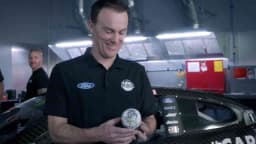
Tequila Tromba's 2013 Tromba Journey campaign, produced by MPC New York, used cinematic storytelling to reframe premium tequila perception in the United States.

Tequila Tromba Bets on Cinematic Myth to Redefine Premium Tequila
Tromba Journey is a 2013 film campaign created for Tequila Tromba by The Sherry Company and produced by MPC New York, designed to establish the brand's identity in the United States by translating its artisanal highland heritage into cinematic myth.
Tequila Tromba launched as an independent premium tequila brand in 2012, founded by Eric Brass, Nick Reid, James Sherry, Marco Cedano, and Rodrigo Cedano. By June 2013, when Tromba Journey was published, the brand was barely a year old and entering a United States market already crowded with established tequila names. The campaign's singular media asset — a single film — reflects a focused strategic bet: rather than spreading a modest budget across multiple executions, the brand concentrated its creative resources on one authorial piece of moving image work intended to do the heavy lifting of brand-building from first principles.
The campaign's objective was not promotional in a conventional sense. James Sherry, founding partner and campaign producer, stated the strategic intent was to change how consumers in the United States perceived tequila by foregrounding the highlands origins and authentic production process that distinguish Tromba from mass-market competitors. The Sherry Company, acting as agency, shaped a brief that placed storytelling above product demonstration, treating the brand's backstory as the primary creative asset. The result is a campaign that sits closer to documentary filmmaking than to conventional spirits advertising, using world-building and narrative mythology to earn attention rather than demand it. Clapboard assigns Tromba Journey a score of 63 out of 100, reflecting genuine creative ambition that is partially constrained by the limited reach of a single-asset, independent launch campaign.
Tequila Tromba entered the United States at a moment of measurable category momentum. According to bevinfogroup.com, the top ten tequila brands sold approximately 11 million nine-liter cases in the United States in 2013, representing year-over-year growth of around 4.4 percent, with total tequila volumes rising approximately 5.2 percent across the same period. For an independent brand launching its first campaign, this rising tide offered opportunity alongside intensified competition.
The strategic challenge was differentiation within a category dominated by scale. According to bevinfogroup.com, the top four tequila brands held approximately half of all United States tequila volume in 2013. Brands such as Jose Cuervo and Patron commanded both shelf presence and consumer familiarity that Tequila Tromba could not match through media spend. The Sherry Company's response was to compete on narrative depth rather than reach, constructing a brand world rooted in the specificity of Tromba's highland production — a provenance story that larger, more genericised competitors could not credibly replicate.
James Sherry's stated aim, as reported by The Drum, was to shift the category conversation away from celebration-occasion drinking and toward craft and origin. This positions Tromba Journey within the broader premiumisation trend that was reshaping the United States spirits market in the early 2010s, as consumers — particularly in urban millennial demographics — began treating spirits with the same provenance literacy previously reserved for wine and single-malt whisky. The Tromba Journey film did not sell a product occasion; it argued for a category of maker, asking American consumers to extend their existing craft-beverage curiosity into tequila.
Andrew Montague served as creative director at MPC for the Tromba Journey campaign. His approach, as reported by The Drum in June 2013, was grounded in a tension between intimacy and mythology: he sought to capture the small operational scale of Tequila Tromba's production while simultaneously constructing a brand universe large enough to carry emotional weight. That dual ambition — the intimate and the epic held together — defines the film's creative register.
MPC New York, the production company behind Tromba Journey, brought high-end post-production capability to what was structurally an independent brand launch. MPC's involvement lent the single film an aesthetic quality that punched above the brand's then-modest market footprint. The decision to execute through film rather than print or digital display was itself a creative statement: moving image allowed the campaign to render landscape, process, and human gesture in ways that still photography or copy-led formats could not achieve with equivalent emotional density.
Montague stated, as quoted in The Drum by journalist Jennifer Faull, that the project was "an exciting opportunity to tell the Tromba story and create a world and mythology around the brand itself," with an explicit commitment to preserving the authenticity of Tromba's approach to tequila-making. The craft sensibility running through that statement is visible in the campaign's structural choice: a single, carefully composed film rather than a campaign system of multiple assets. In advertising terms, this is a director's approach — prioritising the integrity of one complete expression over the scalability of a modular creative platform. For a brand entering the United States at Tromba's stage of development in 2013, that choice carries both creative conviction and commercial risk.
No verified performance data for Tromba Journey is publicly available. No entries or recognition for this campaign appear in the records of Cannes Lions, the Effie Awards, the One Show, D&AD, the Clio Awards, the Webby Awards, or WARC programs. Trade press coverage was limited to a single article published by The Drum on June 13, 2013, written by deputy editor Jennifer Faull, under the headline "Tromba Tequila unveils new campaign ad from MPC New York." No coverage has been verified in Campaign, Ad Age, Adweek, or Contagious.
Structural analysis offers a more instructive frame than absent metrics. Tromba Journey demonstrates the coherent logic of a brand-building first act: a single film, a clearly articulated point of difference, and a production partner — MPC New York — capable of rendering that difference with cinematic credibility. The campaign's weakness, structurally, is the same as its strength: the single-asset format concentrates creative authority but limits distribution surface. A film of this nature requires either paid media scale or earned media momentum to reach beyond early adopters, and without evidence of either, the campaign's effectiveness likely remained bounded to trade and bar-trade audiences in the United States rather than penetrating mainstream consumer consciousness.
What Tromba Journey establishes is a coherent brand DNA — artisanal, highland-sourced, mythologised — that a growing brand could build on over subsequent years. As a creative foundation rather than a performance vehicle, the film earns its 63 out of 100 Clapboard Score: genuinely considered craft in service of a real strategic idea, held back by the structural limitations of independent scale in a category dominated by significantly larger competitors.
Tromba Journey is a 2013 film campaign created for Tequila Tromba by The Sherry Company and produced by MPC New York. Published in June 2013 in the United States, the single-film campaign used cinematic storytelling to introduce the brand's highland heritage and artisanal tequila-making credentials to American audiences.
Andrew Montague served as creative director at MPC New York for the Tromba Journey campaign. As reported by The Drum in June 2013, Montague aimed to build a world and mythology around Tequila Tromba while preserving the intimate, authentic scale of the brand's tequila production in the Mexican highlands.
Tequila Tromba launched in 2012 as an independent premium brand, making concentrated creative investment the logical approach. The Sherry Company and MPC New York prioritised depth over breadth, producing one authorial film intended to establish brand mythology rather than spreading limited resources across multiple formats in the United States market.
The United States tequila category was growing when Tromba Journey launched. According to bevinfogroup.com, the top ten brands sold approximately 11 million nine-liter cases in 2013, up around 4.4 percent year over year. The top four brands held roughly half of all US volume, creating a highly competitive landscape for new independent entrants.
Tromba Journey won no verified awards. No entries or recognition for the campaign appear in the records of Cannes Lions, the Effie Awards, the One Show, D&AD, the Clio Awards, or the Webby Awards. Trade coverage was limited to a single article in The Drum, published in June 2013, by journalist Jennifer Faull.
Tromba Journey received a Clapboard Score of 63 out of 100. The score reflects genuine creative ambition and coherent brand strategy, executed with high production quality by MPC New York, while acknowledging structural limitations imposed by the single-asset format and the independent brand's constrained reach in the United States market at launch.
.webp)
Creative Collaboration Platform: The Backbone of Modern Creative WorkWhat is a creative collaboration platform?Clapboard defines a creative collaboration platform as the operational core for today’s distributed creative teams. This is not a collection of digital collaboration tools stitched together; Clapboard’s system


Understanding the Creative Production MarketplaceWhat is a Creative Production Marketplace?Clapboard defines a creative production marketplace as a structured ecosystem where brands, agencies, and production talent converge to execute video, advertising, and branded content at scale. Unlike the legacy agency or freelanREAD FULL ARTICLE

The Urgent Need for a Creative Production Operating SystemWhy Traditional Creative Production Models Break DownClapboard sees the creative production landscape shifting under pressure. Content velocity is no longer a buzzword—it’s a mandate. Modern advertising demands relentless output across dozens of channels, each wREAD FULL ARTICLE