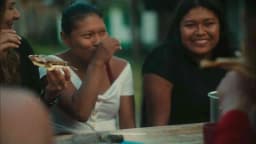
Telkom Drive thru Waffle Hospital Puts FreeMe on the Street
Telkom's "Drive thru, Waffle, Hospital" campaign is a three-film South African advertising series created by DDB and published in July 2016, designed to demonstrate the practical value of the Telkom FreeMe data offering through recognisable, friction-filled everyday scenarios.
Each of the three films — titled "Drive thru," "Waffle," and "Hospital" — isolates a single social situation in which reliable mobile connectivity becomes the deciding factor between frustration and ease. The campaign does not reach for metaphor or emotional grandeur. Instead, it places ordinary South Africans inside moments of mild chaos and lets the product resolve the tension. That structural simplicity is the campaign's central creative bet: that demonstration is more persuasive than aspiration when the audience already understands the problem being solved.
In South Africa, where competition among mobile and fixed-line operators intensified sharply across the 2015 to 2016 period, Telkom's FreeMe proposition needed to be communicated with speed and clarity. The campaign's film format — three discrete assets rather than one extended narrative — allowed the brand to reach different audience segments with situations calibrated to their daily experience. DDB's approach treats the three films as a unified campaign identity rather than standalone executions, binding them through consistent visual grammar and a shared strategic logic of situational product demonstration. Clapboard's archive records the campaign as comprising exactly three media assets, all in the film medium. The Clapboard Score for this campaign sits at 51 out of 100, reflecting a competent but conventionally structured creative package that prioritises legibility over distinctiveness.
Telkom entered the 2016 South African mobile market as a challenger to two dominant operators. According to Mybroadband Co Za, Vodacom held approximately 42.1% of mobile subscriptions in South Africa by December 2016, while MTN South Africa held approximately 34.9% of mobile subscriptions over the same period. Telkom, historically anchored in fixed-line infrastructure, was actively repositioning its mobile offer to compete for a consumer base that mybroadband.co.za reports had reached approximately 88.2 million mobile subscriptions by December 2016 — a figure that exceeded the country's population due to widespread multiple-SIM ownership.
The FreeMe offering itself was a data-centric package designed to shift consumer perception of Telkom from a legacy fixed-line provider to a credible mobile connectivity brand. DDB's strategic choice to anchor the campaign in everyday situational comedy rather than technical specifications reflects a reading of the South African consumer that prioritised emotional accessibility over feature-level persuasion. The three scenarios — a drive-thru order gone wrong, an absurd conversation about waffles, and a hospital scene — each function as a compression of a familiar frustration, with FreeMe presented as the rational resolution.
This approach positions the campaign in direct contrast to the more aspirational, lifestyle-driven advertising that competitors such as Vodacom and MTN were deploying in the same market during this period. By grounding the message in mundane reality rather than elevated aspiration, DDB and Telkom made a calculated argument that FreeMe's value is not about who you can become with connectivity, but about what you can stop enduring without it. According to Telkom-Reports Co Za, Telkom's 2016 integrated report identified two Telkom advertisements ranked in Millward Brown's South African Top 10 during the reporting year, indicating that the brand's advertising was achieving measurable consumer recall in a competitive environment.
DDB South Africa executed the campaign as three self-contained comedic films, each built around a single location and a single social predicament. The creative approach is one of disciplined economy: no voiceover narration, no product demonstration footage, and no celebrity endorsement. The humour emerges from situation and character behaviour rather than scripted punchlines, which demands precise casting, timing, and directorial control to sustain the comedic register without drifting into broad farce.
The production company credited on DDB's earlier Telkom work for the South African market is instructive as context. The 2014 Telkom campaign "Connected office, Why cry," also created by DDB South Africa, was produced by Platypus Productions and directed by Ian Chuter, according to Clapboard's archive. The creative team on that earlier campaign included executive creative director Liam Wielopolski, creative director and copywriter Matthew Berge, and art director Hital Pandya, per Clapboard's records. Production credits for the "Drive thru, Waffle, Hospital" campaign are not publicly documented in available trade press or archive sources. However, the visual consistency between the 2014 and 2016 Telkom campaigns produced under DDB South Africa's creative leadership suggests continuity in both production standards and strategic intent.
Clapboard describes the creative approach of the campaign as direct and situational product demonstration, a characterisation that captures both the campaign's strength and its creative ceiling. The films are well-constructed vehicles for a functional message, and the choice of three distinct scenarios gives the campaign breadth across audience contexts. The execution of the "Hospital" and "Drive thru" films in particular relies on social recognition — the audience must see themselves in the situation for the comedy and the product argument to land simultaneously. According to Egg Films, one of South Africa's most active production companies for advertising during this period, high-quality comedic advertising in the South African market requires directors with strong command of naturalistic performance, a standard that the "Drive thru, Waffle, Hospital" films appear structured to meet.
No verified performance data for the "Drive thru, Waffle, Hospital" campaign is publicly available in trade press, brand disclosures, or awards submissions. The campaign did not receive confirmed recognition at Cannes Lions, the Effies, The One Show, D&AD, the Clios, the Webby Awards, or WARC Awards, according to Clapboard's research. No trade press reviews of the campaign appear in Campaign, Ad Age, Adweek, The Drum, or Contagious, per available records.
What the structural evidence does support is that the campaign was built for reach and recall rather than cultural disruption. Three discrete film assets, each anchored in a different scenario, give a media planner flexibility to rotate executions and sustain audience engagement across a campaign flight without creative wear-out. For a brand in Telkom's market position in 2016 — competing against Vodacom and MTN with significantly larger subscriber bases, as reported by mybroadband.co.za — advertising that generates consistent recall across a broad South African audience is a rational objective, even if it does not produce award-winning distinctiveness.
Telkom's 2016 integrated report, cited by telkom-reports.co.za, recorded two Telkom advertisements in Millward Brown's South African Top 10, a data point that establishes the brand's advertising was performing at a high recall level during the same year this campaign ran. Whether "Drive thru, Waffle, Hospital" contributed to that ranking cannot be confirmed from available sources. The campaign's Clapboard Score of 51 out of 100 positions it as a functionally competent piece of work — clear in message, consistent in execution, and appropriately scaled to its strategic brief — without achieving the creative elevation that distinguishes category-defining advertising.
Telkom's "Drive thru, Waffle, Hospital" is a three-film South African advertising campaign created by DDB and published in July 2016. It promoted the Telkom FreeMe data offering by placing characters in relatable everyday situations where connectivity resolves a moment of social friction or mild chaos.
DDB South Africa created the campaign for Telkom. DDB had an established relationship with the brand, having also produced the 2014 Telkom campaign "Connected office, Why cry," which featured a creative team led by executive creative director Liam Wielopolski, according to Clapboard's archive.
The campaign advertised Telkom FreeMe, a data-centric mobile connectivity offering. The three films each dramatised a different everyday scenario to demonstrate FreeMe's practical utility, targeting South African consumers in a market where Vodacom and MTN held dominant subscriber shares, according to mybroadband.co.za.
The campaign did not receive confirmed recognition at Cannes Lions, the Effies, The One Show, D&AD, the Clios, the Webby Awards, or WARC Awards, according to Clapboard's research. No trade press reviews of the campaign appear in major industry publications such as Campaign, Ad Age, or Adweek.
Clapboard assigned the campaign a score of 51 out of 100. The score reflects a competent, clearly structured creative execution that prioritises message legibility and situational product demonstration over the kind of distinctive creative ambition that produces higher archive and awards performance.
South Africa had approximately 88.2 million mobile subscriptions by December 2016, according to mybroadband.co.za, in a market dominated by Vodacom and MTN. Telkom used three situational comedy films to position FreeMe as a practical everyday solution, differentiating through functional clarity rather than aspirational lifestyle messaging common among competitors.
.webp)
Creative Collaboration Platform: The Backbone of Modern Creative WorkWhat is a creative collaboration platform?Clapboard defines a creative collaboration platform as the operational core for today’s distributed creative teams. This is not a collection of digital collaboration tools stitched together; Clapboard’s system


Understanding the Creative Production MarketplaceWhat is a Creative Production Marketplace?Clapboard defines a creative production marketplace as a structured ecosystem where brands, agencies, and production talent converge to execute video, advertising, and branded content at scale. Unlike the legacy agency or freelanREAD FULL ARTICLE

The Urgent Need for a Creative Production Operating SystemWhy Traditional Creative Production Models Break DownClapboard sees the creative production landscape shifting under pressure. Content velocity is no longer a buzzword—it’s a mandate. Modern advertising demands relentless output across dozens of channels, each wREAD FULL ARTICLE