 ARCHIVE
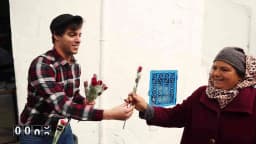
Haval Loves You Brings Roses to the Streets of Tunis
How Haval Turned Saint Valentine's Day Into a Street-Level Brand Moment in Tunisia Haval's 'Haval...
Subaru Outdoor Protection Brings Emberá Sun Culture to Panama
Subaru's Outdoor Protection campaign, created by Independiente and launched in Panama in February 2019, used jagua fruit ink traditionally applied by the Emberá community as a two-week temporary sun protection solution for outdoor sports participants, positioning the fifth-generation Subaru Forester as the vehicle that made accessing that indigenous knowledge possible.
The campaign operated as a single experiential activation rooted in a deceptively simple premise. Rather than advertising sun protection products in a conventional sense, Subaru enlisted the Emberá community's centuries-old body-painting practice — applied using ink derived from the jagua fruit — and brought it directly to clients engaged in outdoor leisure and sport across Panama. The markings, which fade naturally over approximately two weeks, served as functional protection against sun exposure rather than purely decorative art. The Subaru Forester, in its 2019 fifth-generation form, played the literal role of expedition vehicle, used to travel to and from the Emberá community to source the jagua fruit and its traditional practitioners.
This activation, archived on Adsoftheworld, sits at the intersection of automotive experiential marketing, skin cancer awareness, and cultural storytelling. In Panama, where outdoor activity is a consistent feature of daily and recreational life, the campaign spoke directly to a demographic for whom the Forester's all-terrain credentials carry real relevance. The creative approach gave Subaru an earned, functional role in the outdoor lifestyle it was advertising rather than simply associating with it. Clapboard scores this campaign 63 out of 100, recognising its conceptual originality while noting its limited documented reach as a single-asset experiential execution.
Independiente grounded the Outdoor Protection campaign in a precise consumer insight. Outdoor sports participants in Panama face sustained sun exposure, and conventional sun protection — chemical creams and sprays — carries its own set of concerns around efficacy, reapplication, and environmental impact. The jagua fruit tradition of the Emberá community offered a culturally resonant, locally sourced alternative that the agency positioned as both authentic and practical.
The strategic move was to make the Subaru Forester the enabler of that solution rather than the subject of the advertisement itself. This approach reflects a broader pattern in experiential automotive marketing: the vehicle becomes a supporting character in a human story, earning brand affinity through utility rather than specification. According to focus2move.com, the global light-vehicle market declined in 2019, making differentiated local storytelling an increasingly important tool for brands seeking to hold or grow share in competitive regional markets. In Panama, Subaru del Canal reported what Subaru Com Pa described as a historical growth record of fifteen percent in 2019 — context that positions the Outdoor Protection campaign within a genuinely strong commercial year for the brand in this market.
Competitors such as Toyota and Volkswagen commanded significantly larger global production volumes in 2019 — Toyota Group at 10.74 million vehicles and Volkswagen Group at 10.97 million, according to focus2move.com — giving them structural advantages in media spend and distribution that a locally originated experiential campaign could not match on volume. Independiente's answer was depth over reach: one powerful cultural idea, anchored in Panama's indigenous heritage, delivered to a precisely targeted outdoor audience rather than broadcast at scale.
Creative directors Jonathan Lasso Rocha and Dennis de Ycaza, working with art director Luis Alvarado at Independiente, built the campaign around a material truth: jagua fruit ink stains skin for approximately two weeks and has been used by the Emberá community in Panama for generations as both ceremonial decoration and practical body marking. The creative team chose not to dramatise this fact but to demonstrate it, designing an experiential event in which outdoor sports participants received traditional Emberá body paint applications as genuine sun protection.
Photographer Pierre Rios documented the activation, capturing both the application process and the resulting body art on participants, producing the single media asset that forms the campaign's archive record. Production was handled by Demencia Film. The resulting imagery is the primary record of the campaign's existence — which, as archived on Adsoftheworld and adruby.com, suggests the execution was deliberately intimate in scale, prioritising the quality of each participant's experience over mass dissemination.
The Subaru Forester's role in the production is not incidental. The fifth-generation 2019 model was used as the expedition vehicle to travel to the Emberá community and return with jagua fruit and practitioners — a decision that embedded the vehicle into the campaign's narrative logic rather than appending it as a logo. This structural choice elevates the creative beyond conventional automotive sponsorship of outdoor events. The Forester does not appear at the margins; it is the mechanism by which the campaign's central promise — outdoor protection — becomes physically deliverable. As documented by Indies Agency, the campaign represents Independiente's ability to find culturally grounded creative solutions for automotive clients operating in specific Latin American markets.
No verified performance data for the Outdoor Protection campaign — including reach figures, event attendance numbers, or sales attribution — is publicly available. The campaign's single archived media asset, as documented on Adsoftheworld and clapboard.com, reflects an experiential format that generates its primary value in the lived experience of participants rather than in measurable digital impressions.
Structural effectiveness, however, is legible from the campaign's design. The jagua fruit application is not a metaphor for sun protection — it is sun protection, which means every participant left the activation carrying the brand's message on their skin for up to two weeks. That organic amplification mechanism, in which treated participants become walking evidence of the campaign's promise, is a classic strength of well-constructed experiential work. The Forester's integration as the vehicle that sourced the jagua fruit reinforces the brand's outdoor credentials in a manner that no billboard or television spot could replicate with the same credibility.
Subaru del Canal's reported fifteen-percent growth in 2019 — described by subaru.com.pa as a historical record — cannot be attributed to this campaign in isolation, but it establishes that the brand's overall strategy in Panama during the period of the campaign's launch was commercially effective. The Clapboard Score of 63 out of 100 reflects a campaign that achieves genuine conceptual originality and cultural integrity but is constrained by its limited scale and the absence of any documented amplification strategy beyond the in-person experiential event.
Subaru's Outdoor Protection campaign is an experiential activation created by Independiente and launched in Panama in February 2019. It used jagua fruit ink from the Emberá community as temporary sun protection for outdoor sports participants, with the fifth-generation Subaru Forester serving as the vehicle used to source the fruit and its traditional practitioners.
Jagua fruit produces a natural ink used by the Emberá community in Panama for traditional body painting. Subaru's Outdoor Protection campaign applied this ink as temporary sun protection for outdoor sports participants. The markings, documented by photographer Pierre Rios, fade naturally after approximately two weeks, as established in the campaign archive on Adsoftheworld.
Independiente, a Panama-based agency, created the Outdoor Protection campaign for Subaru. Creative directors Jonathan Lasso Rocha and Dennis de Ycaza led the concept, with art director Luis Alvarado, photographer Pierre Rios, and production house Demencia Film completing the core team, as documented by the campaign's archived credits.
The fifth-generation 2019 Subaru Forester was the featured vehicle. It played an active narrative role in the campaign, used to travel to the Emberá community in Panama to source jagua fruit and bring traditional practitioners to outdoor sports participants, embedding the vehicle in the campaign's core logic rather than using it as a backdrop.
Clapboard scores the Subaru Outdoor Protection campaign 63 out of 100. The score recognises the campaign's conceptual originality, its authentic use of Emberá cultural heritage, and the Forester's integrated narrative role, while reflecting the campaign's limited scale as a single-asset experiential execution without documented amplification or publicly verified performance data.
The Outdoor Protection campaign addressed sun exposure risk for outdoor sports participants in Panama by offering jagua fruit body paint — a traditional Emberá practice — as a two-week temporary sun protection solution. By framing the Subaru Forester as the vehicle enabling access to this indigenous knowledge, the campaign embedded skin cancer awareness within an automotive experiential context.
.webp)
Creative Collaboration Platform: The Backbone of Modern Creative WorkWhat is a creative collaboration platform?Clapboard defines a creative collaboration platform as the operational core for today’s distributed creative teams. This is not a collection of digital collaboration tools stitched together; Clapboard’s system


Understanding the Creative Production MarketplaceWhat is a Creative Production Marketplace?Clapboard defines a creative production marketplace as a structured ecosystem where brands, agencies, and production talent converge to execute video, advertising, and branded content at scale. Unlike the legacy agency or freelanREAD FULL ARTICLE

The Urgent Need for a Creative Production Operating SystemWhy Traditional Creative Production Models Break DownClapboard sees the creative production landscape shifting under pressure. Content velocity is no longer a buzzword—it’s a mandate. Modern advertising demands relentless output across dozens of channels, each wREAD FULL ARTICLE