 ARCHIVE
Visible Emergency - Pfizer | Clapboard Ad Archive
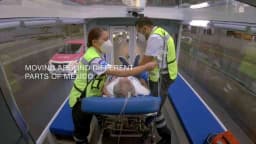
Pfizer’s Visible Emergency campaign, created by Ogilvy Argentina for the healthcare market in 2022...
Stop Shingles Thailand Turns Shingles Pain Into a Story About Family
Stop Shingles Thailand's 2025 film campaign, created by GREYnJ United and published in January 2025 in Thailand, uses the metaphor of pain as a physical wall to show how a shingles eruption can separate people from family, joy, and life's most important moments — positioning vaccination as the act that keeps that wall from ever being built.
The campaign carries both an English title, "Don't let pain get in the way of your happiness in life," and a Thai-language title, อย่าให้ความเจ็บขวางความสุขในชีวิต, signalling a creative strategy rooted in local emotional resonance rather than clinical messaging. The film is the campaign's sole media asset, making it a single-execution, film-first push in the Thai healthcare market. The brand proposition is built around a specific and uncomfortable truth: shingles erupts without warning, and its pain is severe enough to deny people participation in the relationships and rituals that give life meaning. Rather than foregrounding vaccine efficacy data or medical authority, the campaign chooses emotional consequence as its primary persuasion engine, asking Thai audiences to imagine which moment — a grandchild's birthday, a family meal, a quiet afternoon with a loved one — they would be willing to miss. The campaign's hashtag, referencing adults aged fifty and above, anchors the target audience clearly: older Thais for whom family connection is a central life value and for whom shingles risk is clinically meaningful, according to Bangkok Hospital's published guidance on shingles risk factors in adults over fifty, as reported by bangkokhospital.com. In the Thai healthcare advertising landscape of 2025, narrative-led health communication of this kind represents a meaningful creative choice, one that GREYnJ United executes within a category — shingles prevention — that has historically defaulted to awareness-led, symptom-focused messaging.
GREYnJ United identifies a fundamental tension at the heart of shingles communication in Thailand. The condition is painful and preventable, yet vaccination rates among eligible adults remain a function of perceived urgency rather than clinical recommendation alone. The strategic insight the campaign exploits is that fear of physical pain alone is insufficient to drive action in a culture where stoicism toward personal discomfort is common, but fear of failing one's family is a powerful and immediate motivator. By reframing shingles pain not as something that happens to an individual body but as something that happens to a family's shared happiness, GREYnJ United shifts the stakes from personal health management to interpersonal duty.
Thailand's private vaccination market is characterised as a high-value, access-constrained segment, with no reliable public market-size figure available for the Thai shingles vaccine segment specifically, according to research compiled by Mordor Intelligence and Grand View Research. Globally, the shingles vaccine market is estimated to reach between five and six billion US dollars in 2025, according to Fortune Business Insights, and is expected to grow at an annual rate in the range of thirteen to sixteen percent, according to combined estimates from mordorintelligence.com and grandviewresearch.com. GSK's Shingrix dominates the global shingles vaccine market and is identified as a key product available through private hospital networks in Thailand, according to Ktc Co Th. In the Thai market, Bumrungrad International Hospital, one of the country's most prominent private healthcare providers, lists shingles vaccination among its adult immunisation services, as documented by bumrungrad.com, placing Stop Shingles Thailand's campaign in a competitive environment that includes both institutional health providers and pharmaceutical marketing. The campaign's emotional register — family separation, missed moments, invisible walls — is a direct strategic counter to the product-forward, clinic-first communication style that dominates this competitive set.
The creative device at the centre of this campaign is precise and memorable. Shingles pain is rendered not as a symptom but as a wall — a physical, visual metaphor that separates a person from the family and moments they love. This is not a rhetorical flourish; it is the structural engine of the entire film, and it asks the audience to map an abstract, internal experience onto something concrete and relational. The wall does not just hurt — it excludes. That distinction is the campaign's sharpest creative insight.
The film operates within a narrative tradition common to Southeast Asian healthcare advertising in 2025: the domestic tableau, the interrupted family scene, the close-up on human cost rather than medical consequence. GREYnJ United, as documented by brandinginasia.com and marketech-apac.com within its regional portfolio, has developed a recognisable approach to health and social-impact briefs that prioritises emotional truth over clinical authority. The agency's work in Thailand consistently positions prevention as an act of love rather than a medical transaction, and this campaign fits that lineage precisely. The Thai-language execution, with its original title อย่าให้ความเจ็บขวางความสุขในชีวิต, ensures that the metaphor lands in the cadences of the Thai language, where the phrase for pain and the phrase for obstruction carry emotional weight that a direct English translation would dilute. Production credits for the "Don't let pain get in the way of your happiness in life" campaign are not publicly documented. The film's single-asset structure suggests a focused, controlled deployment rather than a broad cross-platform campaign, which is consistent with targeted health communication aimed at a defined demographic — adults over fifty in Thailand — for whom a single, well-crafted film viewed in a trusted context may carry more persuasive weight than a fragmented multi-channel approach.
No verified performance data for the Stop Shingles Thailand "Don't let pain get in the way of your happiness in life" campaign is publicly available. No sales lift, no vaccine booking uplift attributable to the campaign, and no market-share movement have been confirmed in any public source. The campaign's archive listing on Clapboard records 445 views, zero likes, and zero comments at the time of documentation, which reflects archival engagement rather than media performance and should not be interpreted as a measure of the campaign's real-world effectiveness. No awards for this campaign are verified across Cannes Lions, the Effies, The One Show, D&AD, the Clios, the Webbys, or WARC databases.
The Stop Shingles Thailand campaign receives a Clapboard Score of 54 out of 100. This mid-range score reflects a campaign that demonstrates strategic clarity and emotional coherence — the wall metaphor is single-minded, the family-separation narrative is culturally legible in Thailand, and the target audience is well-defined — but is constrained by its single-asset format, absence of documented production craft, and an engagement profile that suggests limited organic amplification. The campaign's structural strength lies in its insight: shingles pain is a relational problem, not merely a physical one. That reframe is the kind of creative thinking that earns the campaign its score above the midpoint, even in the absence of measurable outcomes. For a healthcare category in Thailand where the default is symptom enumeration and clinical authority, choosing narrative and emotional consequence as the primary persuasion tools represents a meaningful, if modestly executed, creative ambition.
Stop Shingles Thailand's 2025 film campaign uses the metaphor of shingles pain as a wall separating people from family and happiness. Created by GREYnJ United and published in Thailand in January 2025, the campaign targets adults over fifty and positions shingles vaccination as a way to protect family connection and quality of life.
GREYnJ United created the Stop Shingles Thailand campaign. The Bangkok-based agency developed the film, which carries both an English title and a Thai-language title, อย่าให้ความเจ็บขวางความสุขในชีวิต. GREYnJ United is documented across brandinginasia.com and marketech-apac.com as a regional agency with a track record in health and social-impact briefs.
The campaign uses pain as a wall — a concrete visual and narrative metaphor. Shingles eruption is shown not as a personal medical event but as a barrier that physically separates a person from family, important moments, and joy, making the emotional cost of not vaccinating the campaign's central argument rather than clinical symptom detail.
The campaign targets Thai adults aged fifty and above. This is signalled through the campaign's own hashtag referencing that age group. Bangkok Hospital's published guidance, as reported by bangkokhospital.com, identifies adults over fifty as the primary risk group for shingles, making this demographic the clinically and strategically logical audience for vaccination communication in Thailand.
The Stop Shingles Thailand campaign receives a Clapboard Score of 54 out of 100. The score reflects strategic clarity and a well-chosen emotional insight — shingles pain as a relational barrier — alongside constraints including a single-asset format and an absence of verified production credits or publicly documented performance outcomes from the Thai market.
No awards for the Stop Shingles Thailand campaign are verified. A review of Cannes Lions, the Effies, The One Show, D&AD, the Clios, the Webbys, and WARC databases finds no documented recognition for this campaign. The film was published in Thailand in January 2025 and contains one media asset as recorded on Clapboard.
.webp)
Creative Collaboration Platform: The Backbone of Modern Creative WorkWhat is a creative collaboration platform?Clapboard defines a creative collaboration platform as the operational core for today’s distributed creative teams. This is not a collection of digital collaboration tools stitched together; Clapboard’s system


Understanding the Creative Production MarketplaceWhat is a Creative Production Marketplace?Clapboard defines a creative production marketplace as a structured ecosystem where brands, agencies, and production talent converge to execute video, advertising, and branded content at scale. Unlike the legacy agency or freelanREAD FULL ARTICLE

The Urgent Need for a Creative Production Operating SystemWhy Traditional Creative Production Models Break DownClapboard sees the creative production landscape shifting under pressure. Content velocity is no longer a buzzword—it’s a mandate. Modern advertising demands relentless output across dozens of channels, each wREAD FULL ARTICLE