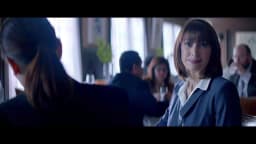
State Farm's 2014 'Running' TV commercial, created by alma, uses narrative film to build insurance brand trust across the United States finance market.

How State Farm and alma Made Running a Finance Story in 2014
State Farm's "Running" is a finance-category TV commercial produced by alma and published in the United States in November 2014, using a single narrative film asset to communicate the brand's protective role in everyday American life.
State Farm is the United States' largest personal lines property and casualty insurer by market share, according to data reported by Carrier Management. The brand's advertising strategy across this period operated under the long-running "Get to a Better State" platform, a campaign that launched around 2011 and ran for approximately five years before a 2016 rebrand, as documented by Clapboard. That platform used exaggerated rescue scenarios — buffalo attacks, car accidents, sudden disasters — to dramatise the moment when a State Farm agent steps in and moves a customer toward a better outcome. "Running" sits within that creative lineage, extending its logic through a tightly constructed film narrative aimed at a specific audience segment.
The commercial was created by alma, a Miami-headquartered agency with deep roots in multicultural advertising across the United States. Alma brought a culturally specific sensibility to the assignment, one that distinguishes the spot from the broader State Farm broadcast roster produced during the same period by other agency partners. The campaign consists of a single media asset, a film, which signals a focused, channel-specific deployment rather than an integrated multi-platform rollout. In the United States finance advertising landscape of 2014, where insurance brands competed intensely for emotional resonance and top-of-mind recall, the decision to anchor a campaign in a single, well-crafted narrative film reflected a disciplined creative strategy rather than a production constraint.
State Farm held 19% top-of-mind awareness among US insurance consumers around this period, according to data reported by Carrier Management, a position that demanded maintenance advertising as much as acquisition messaging. Sustaining that share required consistent emotional reinforcement across demographic segments, and alma's appointment as agency for this specific work reflected State Farm's recognition that multicultural audiences in the United States represented a critical growth vector. Alma's strategic value was visible in its track record: Ad Age named alma its Multicultural Agency of the Year on January 26, 2015, an honour whose eligibility period covered the same 2014 television work in which "Running" was produced.
The competitive context in US insurance advertising during 2014 was notably intense. GEICO, a persistent challenger brand, had spent years compressing the category's emotional register with humour-first creative, while Allstate's "Mayhem" campaign, running since 2010, occupied the dramatised-risk territory with considerable effectiveness, as documented by Ad Age. Against these two distinct poles — comedy and disaster-threat — State Farm's creative approach under "Get to a Better State" carved a middle path: empathetic, character-driven narrative that prioritised relational trust over spectacle. "Running" extends that positioning into a culturally specific register, where the relationship between a customer and their insurer carries weight beyond transactional utility.
The broader US finance sector provided additional strategic context. McKinsey reported that global banking industry market capitalisation rose from a reported figure in 2010 to reach approximately the levels observed by 2017, reflecting sustained consumer engagement with financial services brands. In the United States, insurance remained one of the most emotionally complex categories within finance advertising, where trust, not price, determined long-term brand preference, a dynamic that made narrative film an especially rational creative vehicle for State Farm's objectives in this campaign.
"Running" deploys the grammar of narrative film rather than the grammar of product demonstration. The spot relies on character identification and forward momentum — both literal and emotional — to carry the viewer toward a resolution that implicitly positions State Farm as the stabilising force in an unstable situation. This structural choice aligns with the broader "Get to a Better State" creative system, which, as Clapboard documents, used exaggerated or heightened scenarios to make the insurer's intervention feel earned rather than incidental.
Alma's creative direction brings a cultural specificity to the execution that distinguishes it from State Farm's mainstream broadcast work produced during the same period by DDB Chicago, the agency behind the brand's longer-running general-market campaigns. Where DDB Chicago's "True Stories" work, which launched in 2004 and used humorous dramatisations of unusual situations according to Clapboard, leaned into broad comedic incident, alma's work for the multicultural US market tends toward emotional interiority — a storytelling register where the stakes feel personal rather than absurdist.
Production credits for "Running" are not publicly documented across available trade press records, including Campaign, Ad Age, Adweek, The Drum, and Contagious. No director, cinematographer, or creative director is attributable to this specific spot from publicly available sources. What the film's single-asset structure does confirm is a production philosophy oriented around coherence and singular impact: one film, one audience, one emotional journey. In the United States finance category, where advertising clutter was substantial in 2014, that restraint carries its own strategic argument. The choice to invest fully in a single narrative piece rather than fragment the creative across formats suggests alma and State Farm prioritised depth of impression over breadth of reach for this particular deployment.
No verified performance data for "Running" is publicly available. No sales lift, market-share change, brand-tracking shift, conversion figure, or media spend has been disclosed or reported by State Farm, alma, or any third-party source across trade publications including Ad Age, Adweek, Campaign, Contagious, or WARC. The campaign carries no recorded awards recognition across Cannes Lions, the Effies, The One Show, D&AD, the Clios, the Webby Awards, or WARC Awards.
Structural analysis provides a more productive evaluative frame. The spot's deployment as a single film in November 2014 places it in the pre-holiday window, a period when US consumers are emotionally receptive and insurance brands compete for salience heading into year-end policy renewal cycles. Alma's multicultural positioning gives the creative a defined audience rather than a diffuse one, which typically improves relevance metrics even when aggregate reach is lower than general-market equivalents. The "Get to a Better State" platform within which "Running" sits had demonstrated sustained brand equity value across a five-year run, as documented by Clapboard, lending this execution an established narrative context that reduces the cognitive load required for audience comprehension.
The Clapboard Score for "Running" is 63 out of 100. That rating reflects a campaign with competent strategic foundations and culturally specific creative intent, offset by limited public documentation, an absence of awards recognition, and a single-asset scope that constrains the breadth of evaluable creative output.
State Farm's "Running" is a TV commercial produced by alma and published in the United States in November 2014. It is a single narrative film within the finance category, operating under State Farm's broader "Get to a Better State" creative platform, which used character-driven scenarios to dramatise the insurer's role in customers' lives.
Alma created the State Farm "Running" commercial. The Miami-based multicultural agency produced the spot for the United States market in 2014. Ad Age named alma its Multicultural Agency of the Year in January 2015, an honour covering the same period of television work in which "Running" was produced.
"Running" belongs to State Farm's "Get to a Better State" platform, according to Clapboard. That platform launched around 2011 and ran for approximately five years, using exaggerated rescue scenarios to show State Farm agents helping customers reach better outcomes. Alma's execution brought a multicultural sensibility to this established creative framework.
No awards are recorded for State Farm's "Running" campaign. No recognition has been identified across Cannes Lions, the Effies, The One Show, D&AD, the Clios, the Webby Awards, or WARC Awards. No trade press reviews of the specific spot have been found in Ad Age, Adweek, Campaign, The Drum, or Contagious.
The Clapboard Score for State Farm's "Running" is 63 out of 100. The rating reflects solid multicultural strategic intent and narrative film craft, balanced against limited public documentation, no recorded awards, and a single-asset scope that restricts the range of creative output available for comprehensive evaluation.
.webp)
Creative Collaboration Platform: The Backbone of Modern Creative WorkWhat is a creative collaboration platform?Clapboard defines a creative collaboration platform as the operational core for today’s distributed creative teams. This is not a collection of digital collaboration tools stitched together; Clapboard’s system


Understanding the Creative Production MarketplaceWhat is a Creative Production Marketplace?Clapboard defines a creative production marketplace as a structured ecosystem where brands, agencies, and production talent converge to execute video, advertising, and branded content at scale. Unlike the legacy agency or freelanREAD FULL ARTICLE

The Urgent Need for a Creative Production Operating SystemWhy Traditional Creative Production Models Break DownClapboard sees the creative production landscape shifting under pressure. Content velocity is no longer a buzzword—it’s a mandate. Modern advertising demands relentless output across dozens of channels, each wREAD FULL ARTICLE