 ARCHIVE
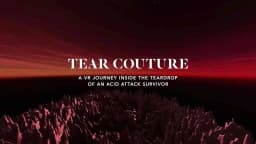
Tear Couture Puts Acid Survivors at the Heart of Public Health Art
How Tear Couture Made Acid Violence Visible Through Immersive Art Tear Couture is a 2022 immersive...
St. Jude Hall of Heroes Turns Patient Bravery Into a VR Monument
St. Jude Hall of Heroes is a 2019 integrated virtual reality campaign created by BBDO for St. Jude Children's Research Hospital, placing individualized 3D statues of pediatric cancer patients inside an immersive digital environment accessible via Oculus Quest, distributed across selected Best Buy locations in the United States beginning December 2019.
St. Jude Children's Research Hospital witnesses extraordinary acts of courage every day. The institution's patients — children in active treatment or recovery from cancer — rarely receive the public recognition that society extends to conventional heroes. That structural invisibility forms the emotional core of Hall of Heroes. As the campaign's own premise states, these heroes don't get medals or a statue, and not everyone is lucky enough to hear their stories. The campaign exists to close that gap.
In the United States, the experience debuted at selected Best Buy retail locations in December 2019 before expanding to Oculus TV in February 2020, according to Flight School Studio. The campaign was created in partnership with BBDO New York, creative development studio Flight School, and Facebook's Oculus division, with ALSAC — St. Jude's fundraising and awareness arm — guiding strategic objectives. Using Oculus Quest and Rift platforms, visitors could move freely through an enormous virtual hall populated by hero statues, each one unique to a specific child and the particular nature of that child's battle with cancer. Flight School artists met directly with 12 current and former St. Jude patients whose stories inspired the statue designs, according to flightschoolstudio.com. The statues were designed to stand 50 feet tall inside the virtual space, a scale impossible to achieve in the physical world, transforming an emotional truth into an architectural statement. The campaign's objectives were threefold: honor patients, extend empathy to a mass audience through immersive technology, and ultimately reinforce the donor relationship that sustains St. Jude's research mission.
St. Jude Children's Research Hospital operates in a philanthropic and medical-research funding environment where emotional resonance drives donor behaviour. The institution does not compete in conventional hospital services; rather, as noted by stjude.org, it operates in global pediatric oncology and medical-research philanthropy, with a reach spanning all 50 United States, all 10 Canadian provinces, and 151 countries as reported by St. Jude's own institutional data for 2019. In that context, sustaining donor engagement year after year demands creative approaches that can cut through the accumulated noise of charitable appeals.
The strategic logic behind Hall of Heroes reflects a deeper understanding of the limitations of traditional cause marketing. Photographic and video formats, however powerful, are now ubiquitous across charitable campaigns in the United States. Competitors in the children's health philanthropy space — including Children's Miracle Network Hospitals and the Make-A-Wish Foundation — rely heavily on similar emotional storytelling formats: documentary video, celebrity endorsement, and retail point-of-sale drives. St. Jude itself had run major integrated campaigns featuring celebrity partners including Jennifer Aniston, Sofia Vergara, and Michael Strahan as part of its Thanks and Giving platform, according to mediapost.com, demonstrating the brand's established comfort with high-reach, broad-audience tactics. Hall of Heroes represents a deliberate pivot toward depth of engagement over breadth of reach.
Virtual reality technology in 2019 offered something documentary video cannot: genuine presence. By placing a donor or potential supporter physically inside a hall of statues — statues rendered at 50 feet tall, according to Flight School Studio — the campaign creates a visceral sense of scale and reverence that a flat screen cannot replicate. The Oculus Quest platform, launched by Facebook in May 2019, was itself a new consumer product with a growing installed base in the United States, making a Best Buy distribution partnership an astute point of contact for reaching early adopters already interested in the hardware. The campaign's deployment on Oculus TV in February 2020 further extended access beyond the retail demonstration environment, as reported by flightschoolstudio.com.
Flight School Studio served as the primary creative development partner for St. Jude Hall of Heroes. BBDO New York led the overall campaign, with Chief Creative Officer of BBDO Worldwide David Lubars and Chief Creative Officer of BBDO New York Greg Hahn providing senior creative oversight, according to adsoftheworld.com. Flight School, a Los Angeles-based studio, handled the three-dimensional design and environmental construction of the virtual experience itself.
The creative process began with human contact. Artists from Flight School met individually with 12 current and former St. Jude patients, according to flightschoolstudio.com, gathering the personal details — the particularities of each child's story, character, and fight — that would inform the visual identity of each statue. This approach distinguishes Hall of Heroes from campaigns that use patient stories as illustrative content; here, patient identity becomes structural and sculptural, embedded in the geometry of the virtual object itself. Each statue is unique. No two figures share the same form, posture, or symbolic language, because no two children's experiences are identical.
The environmental design choice to render statues at 50 feet tall, as documented by Flight School Studio, is a deliberate act of creative rhetoric. In the physical world, that scale is reserved for monuments to historical figures, national leaders, and mythological subjects. By appropriating that scale for children receiving cancer treatment, the campaign makes a visual argument without narration: these children belong in that category of human significance. The virtual hall itself functions as architecture — a space with weight, atmosphere, and navigational freedom — rather than as a passive film experience. Visitors using Oculus Quest can wander freely, choosing which statues to approach and which stories to explore, giving the audience a degree of authorial control unusual in cause-marketing creative work. Production credits for additional crew roles on St. Jude Hall of Heroes are not publicly documented beyond the principals named above.
No single verified performance metric — donor conversion rate, foot traffic figure, or direct fundraising attribution — for St. Jude Hall of Heroes is publicly available. What the public record does confirm is a pattern of industry recognition that speaks to the campaign's perceived effectiveness and creative ambition.
MediaPost named BBDO its 2019 Creative Agency of the Year on January 16, 2020, according to mediapost.com, explicitly citing Hall of Heroes as a standout example of a VR application that transformed pediatric cancer patients into celebrated heroes. Forbes published dedicated editorial coverage on March 9, 2020, written by Sol Rogers, framing the project as a leading example of VR deployed for social good — a format intended to build empathy and encourage donations through direct patient and survivor storytelling, as reported by forbes.com. The One Club's ADC Awards listed Hall of Heroes for BBDO New York, Facebook New York, and Flight School Los Angeles in 2020, with recognition across the Craft in Motion, Film, and Extended Reality categories, according to oneclub.org.
Structurally, the campaign demonstrates effectiveness across several dimensions that predict downstream donor impact. The decision to ground the experience in real patients — met in person by artists, according to flightschoolstudio.com — produces a specificity of emotional detail that generic cause campaigns rarely achieve. The Oculus Quest distribution through Best Buy places the experience at a high-intent consumer touchpoint, reaching audiences already investing in immersive technology. Clapboard rates St. Jude Hall of Heroes at 82 out of 100, reflecting strong creative craft, meaningful deployment of emerging technology, and a clear alignment between the campaign's form and its humanitarian purpose.
St. Jude Hall of Heroes is a 2019 virtual reality experience created by BBDO for St. Jude Children's Research Hospital. The campaign built a virtual hall containing individualized 3D statues of 12 pediatric cancer patients, rendered at 50 feet tall, accessible via Oculus Quest at selected Best Buy locations across the United States, according to Flight School Studio.
BBDO New York created the campaign for St. Jude Children's Research Hospital, with creative development handled by Flight School Studio of Los Angeles. Senior creative leadership included David Lubars, Chief Creative Officer of BBDO Worldwide, and Greg Hahn, Chief Creative Officer of BBDO New York, according to adsoftheworld.com. Facebook's Oculus division was also a key partner.
Hall of Heroes used Oculus Quest and Rift platforms to place visitors inside a navigable virtual hall. Visitors could wander freely among statues standing 50 feet tall, as documented by Flight School Studio. The experience launched at Best Buy locations in December 2019 in the United States, then expanded to Oculus TV in February 2020, according to flightschoolstudio.com.
Hall of Heroes received recognition from The One Club's ADC Awards in 2020 across Craft in Motion, Film, and Extended Reality categories, according to oneclub.org. MediaPost also named BBDO its 2019 Creative Agency of the Year, citing Hall of Heroes specifically, as reported by mediapost.com. Forbes published editorial coverage framing it as a leading VR-for-good campaign.
Twelve current and former St. Jude patients are featured in the Hall of Heroes virtual reality experience. Flight School Studio artists met individually with each child to gather personal details that informed the unique statue designs, according to flightschoolstudio.com. Each statue reflects the specific story and character of the individual child it represents.
In the United States, Hall of Heroes launched at selected Best Buy retail locations in December 2019, allowing visitors to access the Oculus Quest experience in store. The campaign expanded to Oculus TV in February 2020, broadening access beyond physical retail, according to Flight School Studio. The campaign was published in the United States as an integrated initiative.
.webp)
Creative Collaboration Platform: The Backbone of Modern Creative WorkWhat is a creative collaboration platform?Clapboard defines a creative collaboration platform as the operational core for today’s distributed creative teams. This is not a collection of digital collaboration tools stitched together; Clapboard’s system


Understanding the Creative Production MarketplaceWhat is a Creative Production Marketplace?Clapboard defines a creative production marketplace as a structured ecosystem where brands, agencies, and production talent converge to execute video, advertising, and branded content at scale. Unlike the legacy agency or freelanREAD FULL ARTICLE

The Urgent Need for a Creative Production Operating SystemWhy Traditional Creative Production Models Break DownClapboard sees the creative production landscape shifting under pressure. Content velocity is no longer a buzzword—it’s a mandate. Modern advertising demands relentless output across dozens of channels, each wREAD FULL ARTICLE