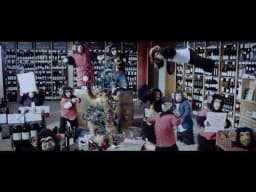
The Sip'n Save campaign, launched in Australia in 2014, employs a humor-driven approach to position the brand as approachable and closely connected to its customers’ everyday experiences. Through a series of short films depicting humorous "fail" moments—such as marlin fishing mishaps—the campaign subtly underscores the idea of being “that close,” mirroring the brand’s promise of convenient savings and accessibility. The implication is that just as these near-success failures resonate with common frustrations, Sip'n Save is always close at hand to help shoppers avoid costly mistakes and save money.
Strategically, the campaign leverages relatable, lighthearted content to engage a broad retail audience accustomed to value-driven shopping. By focusing on everyday scenarios that elicit empathy through humor, the creative angle humanizes the brand and fosters a sense of connection without overtly selling products. The choice of film as the medium supports narrative storytelling that captures attention and encourages sharing, while the modest online engagement metrics suggest an early-stage or niche reach rather than mass exposure. Positioned within the retail services sector, Sip'n Save’s insight appears rooted in consumers’ desire for practical savings solutions amid routine challenges, with the humorous fails acting as a metaphor for the pitfalls the brand helps shoppers avoid. Overall, the campaign seeks to embed Sip'n Save in consumers’ minds as a trustworthy and convenient savings partner through relatable storytelling rather than direct promotional messaging.
FORMAT#2 SHOW THE PROBLEM — Highlights a relatable problem, then shows the product as the solution.
The campaign’s recurring “Fail” theme across titles like “Fail - Marlin” and “Fail - Bike,” paired with the punchline “That was close. So are we,” signals a classic Show the Problem structure. The humorous setups present everyday mishaps or near-disaster moments (the ‘problem’), after which the tagline and branding imply Sip'n Save as the comforting—and convenient—solution nearby. There’s no mention of a story arc, symbolism, or testimonial but a clear demonstration of situations where the need for a drink or relaxant is evident, making this creative device the closest fit.
ADVERTISING FORMATS EXPLAINED: https://www.clapboard.com/blog/branding-and-advertising/brand-strategy/12-advertising-creative-formats
1. Woolworths – Market Positioning
Woolworths positions itself as Australia’s leading supermarket offering extensive product variety with a strong focus on fresh produce, quality, and everyday low prices. Their customer loyalty programs and widespread store network emphasize convenience and value, appealing to mainstream shoppers seeking reliability and frequent savings.
2. Coles – Market Positioning
Coles differentiates through competitive pricing, frequent promotions, and a commitment to sustainability and local sourcing. Their “Down Down” campaign highlights price cuts, while their growing range of private-label products targets budget-conscious consumers looking for both affordability and trusted quality.
3. ALDI – Market Positioning
ALDI disrupts the market with a no-frills, discount supermarket model focusing on a limited but high-quality product range at rock-bottom prices. Their minimalist store design and efficient logistics enable them to offer significant savings to cost-sensitive shoppers, carving a niche among value-driven consumers.
4. IGA – Market Positioning
IGA emphasizes community connection by supporting local suppliers and tailoring product ranges to neighborhood needs. Their positioning centers on convenience and personalized service, appealing to customers who value regional brands and the feel of a smaller, community-focused retailer.
5. Costco – Market Positioning
Costco targets bulk-buyers and value seekers with a membership-only warehouse club model offering discounted prices on large quantities and premium brands. Their strategy centers on delivering high value for families and businesses that prioritize savings through economies of scale and quality assurance.
Q: What is Fail - Marlin, Fail - Bike, Fail - Trampoline, Fail - Sno... about?
A: Fail - Marlin, Fail - Bike, Fail - Trampoline, Fail - Sno... is a professional campaign created for Sip'n Save by the Australian agency kwp! and released in 2014. The campaign consists of a series of short films, each depicting humorous everyday mishaps or near-misses, such as a marlin fishing fail, to engage audiences within the retail services sector. The central creative idea is to use these relatable, lighthearted scenarios to position Sip'n Save as a brand that is always close by, ready to offer value and convenience when customers need it most. The tagline That was close. So are we encapsulates this promise.
Q: What creative device does Fail - Marlin, Fail - Bike, Fail - Trampoline, Fail - Sno... use?
A: Fail - Marlin, Fail - Bike, Fail - Trampoline, Fail - Sno... employs the Show the Problem creative format, as classified by Clapboard's 12-format taxonomy. Each film highlights a relatable problem—such as a near-disaster or comic mishap—before positioning Sip'n Save as the solution through the campaign’s punchline That was close. So are we. This approach avoids overt product demonstration or testimonials, instead relying on the universal appeal of everyday fails to create an implicit connection between the brand and the consumer’s need for a convenient, supportive retail partner.
Q: What is the campaign proposition for Fail - Marlin, Fail - Bike, Fail - Trampoline, Fail - Sno...?
A: The campaign proposition for Fail - Marlin, Fail - Bike, Fail - Trampoline, Fail - Sno... centers on positioning Sip'n Save as an approachable, customer-centric brand that understands the everyday challenges and frustrations of its audience. By using humor and relatable fail moments, the campaign suggests that Sip'n Save is always nearby to help shoppers avoid costly mistakes and access savings. This strategy targets value-driven consumers in the retail sector, aiming to foster trust and loyalty by humanizing the brand and emphasizing its commitment to convenience and practical support in daily life.
Q: How does Fail - Marlin, Fail - Bike, Fail - Trampoline, Fail - Sno... rank in Clapboard's archive?
A: Fail - Marlin, Fail - Bike, Fail - Trampoline, Fail - Sno... holds a Clapboard Campaign Score of 56/100. This score reflects Clapboard's assessment of the campaign’s creative ambition, execution quality, and cultural relevance within the global ad archive.
Q: Who are the competitors in Sip'n Save's category?
A: In the Australian retail services sector, Sip'n Save competes with several major players: Woolworths leads with a focus on product variety and everyday low prices, Coles emphasizes competitive pricing and sustainability, ALDI attracts value-driven shoppers with its discount model and efficient store design, IGA stands out for its community orientation and personalized service, and Costco appeals to bulk-buyers seeking savings through its membership warehouse format. Each competitor brings a distinct approach to value, convenience, or local relevance within the market.


 ARCHIVE
.webp)