 ARCHIVE
Blank Whopper - Burger King | Clapboard Ad Archive
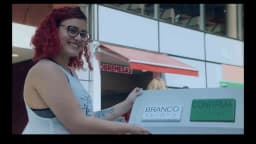
Burger King’s Blank Whopper campaign, created by agency David and launched in Brazil in 2018...
Schweppes Turns a Nightclub Dress Into a Harassment Detector
"The Dress for Respect" is a 2018 experiential campaign created by Ogilvy Brazil for Schweppes in which three women wore sensor-equipped dresses inside a São Paulo nightclub to detect and record instances of non-consensual touching in real time, producing documented evidence of the scale of harassment women face in nightlife settings across Brazil.
Published in July 2018 and developed under Executive Creative Director Félix del Valle, the campaign marked a significant departure from Schweppes' established creative territory. The brand had previously operated under its internationally recognised "What Did You Expect?" platform — a framework associated with playful, sexually suggestive scenarios, according to Clapboard's lineage research. "The Dress for Respect" inverted that premise entirely, using the nightclub environment not as a stage for innuendo but as a site of social documentation. The objective was to shift the brand's positioning in Brazil toward a stance of active respect, making Schweppes a visible advocate against harassment in the very venues where its products are most consumed.
The campaign mechanics were precise. Three participants — Luisa, Tatiana, and Juliana — wore specially constructed garments embedded with touch sensors into a São Paulo nightclub. Over the course of approximately three hours and forty-seven minutes, the dresses recorded every contact, distinguishing between consensual and non-consensual interactions. The data captured that evening became the campaign's primary evidence and its most arresting creative output. In Brazil, where a growing conversation around gender-based violence in public spaces had gained cultural momentum, the campaign's timing and setting gave it immediate relevance. The São Paulo nightclub context grounded an abstract social argument in a single, verifiable night of evidence — transforming a product-adjacent brand platform into something closer to investigative social design.
Schweppes entered 2018 facing a dual challenge in Brazil: defend its position in a premiumising non-alcoholic drinks category while simultaneously finding a culturally credible way to reposition the brand's voice. According to Clapboard's market research, the tonic and premium mixer segment was undergoing rapid transformation globally, with Fever-Tree — Schweppes' most significant competitive pressure in the premium tier — reporting 2018 revenue of £237.4 million, up forty percent year over year, as reported by publicly available company filings and cited by Clapboard. That growth reflected deepening premiumisation in mixer culture, a shift that threatened Schweppes' former dominance in the segment.
In Brazil specifically, the strategic insight driving "The Dress for Respect" was rooted in social data rather than category data. According to The Drum, eighty-six percent of Brazilian women reported experiencing harassment in nightclubs — a figure that gave the campaign both its moral authority and its market logic. Nightclubs are precisely the environment in which Schweppes competes for consumption occasions, making harassment in those spaces a brand-relevant issue rather than a tangential cause. Ogilvy Brazil identified that Schweppes could not credibly continue operating within a suggestive creative framework at a moment when Brazilian cultural discourse was actively interrogating consent in nightlife contexts.
The planning team, led by Thais Frazão and Gabriela Rodrigues, constructed a campaign that used experiential activation — rather than conventional advertising — to generate evidence-based narrative content. This placed the campaign in direct contrast to competitors such as Fever-Tree, whose 2018 communications remained focused on product quality and cocktail culture. By choosing an experiential medium, Ogilvy Brazil ensured that the campaign's credibility rested on documented real-world data rather than brand assertion, a structural decision that proved central to its subsequent awards recognition and media traction.
Director Giancarlo Barone led the production of "The Dress for Respect," with the physical garments — the campaign's central creative instrument — developed in collaboration with clothing construction credited to the production team at Volcano, which handled both production and post-production for the project. Art directors Félix del Valle as Executive Creative Director, Edu Cesar, and André Oberg shaped the visual identity of the campaign, while copywriters Maria Clara Cardão and Frederico Teixeira developed the narrative framing that transformed sensor data into human testimony.
The dresses themselves were the creative execution. Each garment was embedded with sensors capable of detecting and logging physical contact, with the data transmitted and recorded in real time. The decision to dress three women simultaneously — rather than one — was a deliberate creative choice, allowing the campaign to aggregate data across participants and demonstrate that the experience was not isolated or anomalous. Over three hours and forty-seven minutes inside a São Paulo nightclub, the sensors recorded one hundred and fifty-seven incidents of unwanted touching across the three participants, a figure that WARC and AdHugger both report, amounting to roughly forty touches per hour collectively.
Photography was handled by Alberto La Salvia, and video editing by Guilherme Caldas, whose work shaped the documentary footage into the campaign film that subsequently generated more than six hundred thousand views on Facebook, according to WARC. Executive producers Enzo Barone and JP Albuquerque oversaw the production logistics, with RTVC coordination handled by Fabiola Thomal. The resulting artefact — part social experiment, part brand film, part data visualisation — operated simultaneously as evidence, advocacy, and advertising. The campaign's experiential medium classification reflects this hybridity: it was not a television spot or a digital banner but a designed encounter with documented consequences, a structural choice that gave the creative work a factual authority no scripted narrative could replicate.
"The Dress for Respect" earned a Bronze Lion in the Glass: The Lion for Change category at Cannes Lions 2018, according to AdHugger. The One Club subsequently awarded the campaign a Bronze Pencil in the Integrated Digital and Physical Product category at The One Show 2019, as reported by The One Club. Both recognitions positioned the work within the industry's most closely watched frameworks for purpose-driven advertising effectiveness, validating the campaign's structural approach to social impact.
On a commercial level, Schweppes' sales volume in Brazil increased twenty percent from 2017 to 2018, according to WARC. While no single campaign can be isolated as the sole driver of a volumetric sales shift, the temporal alignment between "The Dress for Respect" and that growth figures prominently in WARC's documentation of the campaign's business context. The campaign video generated more than six hundred thousand views on Facebook, according to WARC, and the sensor-equipped dress recorded sixty thousand touches during one night, as reported by AdHugger — a figure that encompasses the documented one hundred and fifty-seven unwanted incidents alongside consensual contact across the full duration of the event.
No further independently verified performance data beyond these metrics is publicly available for this campaign. Structurally, however, the campaign's effectiveness rests on a rare quality in experiential advertising: its central creative asset produced primary evidence that no audience could dismiss as brand construction. The Clapboard Score for "The Dress for Respect" is 75 out of 100, reflecting strong creative originality, documented social impact, and verified commercial results, with room noted for broader reach beyond the single-night activation format.
"The Dress for Respect" was a 2018 experiential campaign by Ogilvy Brazil for Schweppes in which three women wore sensor-equipped dresses in a São Paulo nightclub to record non-consensual touching in real time. Over three hours and forty-seven minutes, sensors logged one hundred and fifty-seven incidents of unwanted touching, generating data that formed the campaign's core evidence and narrative.
Ogilvy Brazil created the campaign for Schweppes, a Coca-Cola Brasil brand. Executive Creative Director Félix del Valle led the creative team, which included art directors Edu Cesar and André Oberg, copywriters Maria Clara Cardão and Frederico Teixeira, and director Giancarlo Barone. Planning was led by Thais Frazão and Gabriela Rodrigues, with Volcano handling production and post-production.
The campaign won a Bronze Lion in the Glass: The Lion for Change category at Cannes Lions 2018, according to AdHugger. It also received a Bronze Pencil in the Integrated Digital and Physical Product category at The One Show 2019, as reported by The One Club. Both awards recognised its approach to purpose-driven experiential advertising in Brazil.
Schweppes' sales volume in Brazil rose twenty percent from 2017 to 2018, according to WARC. The campaign video exceeded six hundred thousand Facebook views, also per WARC. The sensor dresses recorded sixty thousand touches in one night, according to AdHugger, including one hundred and fifty-seven documented incidents of unwanted touching across three participants.
Schweppes positioned the campaign around a documented social reality: eighty-six percent of Brazilian women reported experiencing nightclub harassment, according to The Drum. Nightclubs are a primary consumption environment for Schweppes products, making harassment there a brand-relevant issue. Ogilvy Brazil used this insight to reposition Schweppes away from its suggestive historical advertising platform toward active advocacy.
"The Dress for Respect" receives a Clapboard Score of 75 out of 100. The score reflects the campaign's creative originality in using sensor technology as an evidence-gathering instrument, its verified commercial results in Brazil, and its Cannes Lions recognition, balanced against the inherent reach limitations of a single-night experiential activation format.
.webp)
Creative Collaboration Platform: The Backbone of Modern Creative WorkWhat is a creative collaboration platform?Clapboard defines a creative collaboration platform as the operational core for today’s distributed creative teams. This is not a collection of digital collaboration tools stitched together; Clapboard’s system


Understanding the Creative Production MarketplaceWhat is a Creative Production Marketplace?Clapboard defines a creative production marketplace as a structured ecosystem where brands, agencies, and production talent converge to execute video, advertising, and branded content at scale. Unlike the legacy agency or freelanREAD FULL ARTICLE

The Urgent Need for a Creative Production Operating SystemWhy Traditional Creative Production Models Break DownClapboard sees the creative production landscape shifting under pressure. Content velocity is no longer a buzzword—it’s a mandate. Modern advertising demands relentless output across dozens of channels, each wREAD FULL ARTICLE