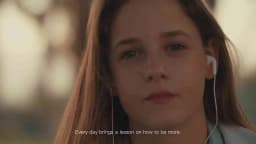
Ronseal's 'Do The DIY' campaign, created by BJL in 2018, used mock-hypnosis across TV, radio, and digital to tackle British consumers' deep reluctance to

How Ronseal Used Hypnosis to Make DIY Impossible to Ignore
Ronseal's 'Do The DIY' campaign is a 2018 United Kingdom multi-channel initiative created by Manchester-based agency BJL, using mock-hypnosis as a humorous device to persuade British homeowners to stop postponing unglamorous household tasks such as painting fences, staining decking, and treating garden structures.
The campaign launched on 29 March 2018 and was published in campaign listings in April 2018, according to Clapboard's editorial archive. It comprised four media assets spanning television, radio, social, digital, and PR channels, with product focus placed squarely on Ronseal's fence, decking, and door treatment ranges. The geographic market is the United Kingdom, where DIY home maintenance is a culturally familiar, if frequently deferred, domestic ritual. The campaign arrived in the early spring window — precisely the moment British consumers begin confronting the garden jobs they have been avoiding since the previous autumn.
The creative strategy leaned into Ronseal's established brand personality. Jane Ryder, Marketing Director at Ronseal, stated plainly: "Ronseal as a brand is known for its straight forward, no nonsense approach — and we've never shied away from the realities of DIY." That candour shaped the tone of the entire campaign, allowing BJL to treat consumer avoidance not as a problem to minimise but as the central comic truth around which all executions were built. In Ryder's own words, she was "delighted we've found a way to creatively illustrate the lengths we're prepared to go to help people get the DIY done whilst still being honest about the fact that people will inevitably put it off." The campaign sits within the House and Garden household product category and carries a Clapboard Score of 59 out of 100.
Ronseal identified a fundamental tension at the heart of the UK household product market. British homeowners broadly intend to maintain their properties but systematically delay the least rewarding tasks — fence staining, decking treatment, exterior woodwork — until external pressure, most often the arrival of spring, makes avoidance harder to sustain. BJL's strategic response was to name that procrastination directly rather than pretend it does not exist, as reported by The Drum on 29 March 2018.
The hypnosis device gave that strategy a legible, entertaining form. Rather than promising ease or speed — the default register of household product advertising — the campaign acknowledged that consumers needed an almost irrational nudge to begin. The mock-hypnosis framing let Ronseal hold two ideas simultaneously: honesty about the unpleasantness of the task and genuine commitment to helping consumers complete it. This positioned the brand not as a passive product on a shelf but as an active, if gently absurdist, motivator. In the United Kingdom, where self-deprecating humour is a mainstream creative register rather than a niche one, the tone read as authentic rather than forced.
Ronseal operates in a competitive wood coatings and exterior treatments market where rivals including Dulux, whose parent company AkzoNobel held an estimated global wood coatings share of approximately eleven percent according to research cited by BCC Research, and Sadolin compete aggressively on both heritage and product performance. Against that backdrop, Ronseal's commitment to humour and directness — a lineage stretching back to its famous "Does exactly what it says on the tin" strapline — functions as a genuine differentiator rather than a stylistic preference. BJL had held Ronseal's creative account since 2015, according to Dentsu, giving the agency sufficient institutional knowledge to extend the brand's voice into genuinely new comic territory without losing its essential character.
The campaign was directed creatively by Richard Pearson and Karl Stones at BJL, with strategic planning led by Tony Evans as head of planning, according to Clapboard's production records. The creative team built four distinct assets, each targeting a specific Ronseal product — including Fence Life Plus and Decking Stain — while maintaining a unified hypnosis-themed visual and tonal language across the campaign.
The television and film executions placed the hypnosis conceit at the centre of the narrative, presenting the persuasive voice as the mechanism by which an ordinary British homeowner is coaxed from inertia into productive action. The humour is deadpan and observational, calibrated for the sensibility of a UK audience that has been avoiding the fence for six months and knows it. That specificity — painting fences, staining decking, treating a back-garden door — is precisely what gives the creative work its traction. It does not generalise into aspirational home improvement; it identifies the exact tasks that accumulate guilt in the British household product owner's conscience.
The audio execution is the campaign's most technically distinctive element. One radio and digital audio asset was produced using 3D audio specifically designed for headphone listening, as reported by The Drum and noted in Clapboard's campaign archive. This production choice reinforced the hypnosis concept at a sensory level: the spatial audio placed the persuasive voice directly in the listener's ear, making the mock-hypnotic suggestion feel physically immediate. It is an example of form serving concept rather than simply decorating it. The campaign ran across TV, radio, social, digital, and PR channels simultaneously, giving the hypnosis device sufficient media weight to function as a coherent cultural moment rather than a one-off execution in a single format.
No verified performance data for the 'Do The DIY' campaign is publicly available. No sales uplift figures, media reach statistics, or brand tracking results have been published by Ronseal, BJL, or any third-party source in connection with this campaign. The analysis that follows is therefore structural rather than empirical.
The campaign's core effectiveness argument rests on strategic fit. Ronseal chose a spring launch window — the campaign broke on 29 March 2018 in the United Kingdom, according to The Drum — that aligns precisely with the seasonal moment when British consumers re-encounter deferred DIY tasks. The hypnosis device, while comic, carries a genuine persuasive logic: it names the psychological barrier rather than ignoring it, which is more likely to produce recognition and engagement than a straightforward product demonstration. The 3D audio execution demonstrates a willingness to invest in format innovation rather than simply repurposing television creative for other channels, which suggests a media strategy designed to earn attention rather than merely purchase it.
The campaign also benefits from the accumulated equity of the Ronseal brand voice. BJL's 2016 Channel 4 takeover during Gogglebox — a three-minute-plus ad break showing a man silently painting a fence — had already established the agency's capacity to find unconventional creative forms for this client, as reported by The Drum. 'Do The DIY' extends that willingness to subvert category norms. Against competitors including Dulux and Sadolin, who operate in more conventional registers, Ronseal's tonal consistency is a meaningful structural advantage. The Clapboard Score of 59 out of 100 reflects a campaign that executes its concept competently but stops short of the creative ambition that defines its most celebrated predecessors in the Ronseal archive.
Ronseal's 'Do The DIY' is a 2018 United Kingdom campaign by agency BJL. It used mock-hypnosis across TV, radio, digital, and social channels to encourage British homeowners to stop procrastinating and complete deferred outdoor tasks like fence painting and decking staining. The campaign launched on 29 March 2018, according to The Drum.
BJL created the 'Do The DIY' campaign for Ronseal. Creative directors Richard Pearson and Karl Stones led the creative work, with Tony Evans serving as head of planning. BJL has held Ronseal's creative account since 2015, according to Dentsu, giving the agency a strong foundation in the brand's direct, humorous voice.
Ronseal used hypnosis to address British consumers' well-documented tendency to postpone outdoor DIY tasks. The device acknowledged procrastination directly rather than ignoring it, which aligned with the brand's honest, no-nonsense positioning. Jane Ryder, Ronseal's Marketing Director, described it as illustrating the lengths the brand would go to help people get DIY done.
One audio execution used 3D spatial audio designed specifically for headphone listening, as reported by The Drum. This production choice placed the mock-hypnotic voice directly in the listener's ear, reinforcing the campaign's central concept at a sensory level and demonstrating deliberate craft rather than a straightforward channel repurpose from television creative.
The campaign extends a creative lineage that includes BJL's 2016 Channel 4 ad-break takeover during Gogglebox, which featured a man silently painting a fence for over three minutes, as reported by The Drum. Both campaigns treat the unglamorous reality of household product maintenance as creative material rather than something to be softened or avoided in advertising.
Ronseal's 'Do The DIY' campaign holds a Clapboard Score of 59 out of 100. The score reflects a campaign that deploys its hypnosis concept with confidence and tonal consistency, but does not fully reach the creative ambition of Ronseal's most celebrated work. No third-party effectiveness data has been published to supplement this editorial assessment.
.webp)
Creative Collaboration Platform: The Backbone of Modern Creative WorkWhat is a creative collaboration platform?Clapboard defines a creative collaboration platform as the operational core for today’s distributed creative teams. This is not a collection of digital collaboration tools stitched together; Clapboard’s system


Understanding the Creative Production MarketplaceWhat is a Creative Production Marketplace?Clapboard defines a creative production marketplace as a structured ecosystem where brands, agencies, and production talent converge to execute video, advertising, and branded content at scale. Unlike the legacy agency or freelanREAD FULL ARTICLE

The Urgent Need for a Creative Production Operating SystemWhy Traditional Creative Production Models Break DownClapboard sees the creative production landscape shifting under pressure. Content velocity is no longer a buzzword—it’s a mandate. Modern advertising demands relentless output across dozens of channels, each wREAD FULL ARTICLE