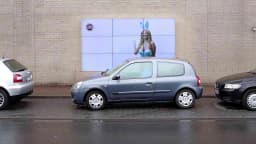
The ‘Twingo Stiletto’ campaign by Renault, launched in Portugal in 2014, aims to address a specific urban lifestyle challenge encountered by its target audience—primarily women navigating the city of Lisbon. The campaign’s brand proposition centers on blending style with practicality, positioning the Renault Twingo as a vehicle that complements the modern, fashion-conscious woman’s need for both elegance and ease of mobility. By associating the car with a high-end shoe designer, Luís Onofre, the campaign conveys that the Twingo is not just a functional automobile but also an extension of personal style, offering confidence and sophistication without compromising convenience.
The market strategy leverages a cultural and contextual insight about Lisbon’s notoriously difficult terrain for walking in heels, recognizing a daily pain point for urban, style-aware women. Rather than promoting traditional automotive features alone, the campaign adopts an ambient, experiential approach by launching the Twingo Stiletto—the fusion of a shoe and the car—at a high-profile fashion event (VFNO). This creative angle skillfully bridges the worlds of fashion and automotive, targeting women who value aesthetics but face practical constraints in a metropolitan setting. By doing so, the campaign appeals to a niche segment that seeks vehicles aligning with their lifestyle and identity, promoting Renault Twingo as a solution that harmonizes fashion, function, and urban living challenges. This strategy differentiates the Twingo within the competitive automotive market by embedding the product within a culturally relevant narrative rather than merely emphasizing technical specifications.
FORMAT#2 SHOW THE PROBLEM — Highlights a relatable problem, then shows the product as the solution.
This campaign begins by presenting a clear and relatable problem: Lisbon’s streets are inhospitable for women walking in high heels, forcing them to rely on their cars, but even driving in heels is challenging. The introduction of the Renault Twingo Stiletto, designed in partnership with Luís Onofre, is positioned explicitly as the solution to this dual dilemma. The narrative structure frames the problem first and then highlights the tailored product as the direct resolution, making “Show the Problem” the dominant creative format at play in this communication.
ADVERTISING FORMATS EXPLAINED: https://www.clapboard.com/blog/branding-and-advertising/brand-strategy/12-advertising-creative-formats
1. Volkswagen – Market Positioning
Volkswagen positions itself as a brand offering reliable, high-quality vehicles that blend German engineering with broad appeal. It focuses on innovation, safety, and driving pleasure, targeting middle to upper-middle-class consumers seeking a balance of style, performance, and value across various vehicle segments.
2. Peugeot – Market Positioning
Peugeot emphasizes French design flair combined with practical, efficient vehicles tailored for urban and family use. The brand positions itself around comfort, technology, and affordability, appealing to consumers who want stylish yet accessible cars with a focus on fuel economy and environmental sustainability.
3. Ford – Market Positioning
Ford leverages its heritage as a dependable, versatile automaker focused on performance, durability, and innovation. It targets a broad audience with a strong presence in compact cars and SUVs, promoting smart technology, connectivity, and driving dynamics to appeal to practical buyers and enthusiasts alike.
4. Citroën – Market Positioning
Citroën differentiates itself through avant-garde styling and comfort-centric design. It focuses on affordability without compromising on innovation and unique driving experiences, often catering to urban drivers looking for quirky, comfortable, and economical vehicles with a touch of French creativity.
5. Opel – Market Positioning
Opel positions itself as a provider of affordable, practical cars with a focus on German engineering, safety, and efficiency. The brand aims at value-conscious consumers who seek reliable vehicles with modern features and fuel-efficient options, combining everyday usability with solid build quality.
Q: What is Twingo Stiletto about?
A: Twingo Stiletto is a professional campaign created by Publicis for Renault and launched in Portugal in 2014. The campaign addressed the unique challenge faced by women in Lisbon, where walking in heels is difficult due to the city’s terrain and driving in them is equally uncomfortable. By partnering with renowned shoe designer Luís Onofre, Renault introduced the Twingo Stiletto—a shoe that merges style with comfort—to coincide with the launch of the New Renault Twingo at VFNO 2014. This ambient campaign used a single media asset to connect the brand with urban, fashion-conscious women, positioning the Twingo as a stylish and practical city car.
Q: What creative device does Twingo Stiletto use?
A: Twingo Stiletto employs the Show the Problem creative format, as classified by Clapboard’s 12-format taxonomy. The campaign begins by highlighting a relatable urban issue: the difficulty women face walking and driving in heels in Lisbon. It then introduces the Twingo Stiletto, designed with Luís Onofre, as the direct solution to this dual challenge. By framing the problem first and then presenting Renault’s innovative product as the answer, the campaign leverages a clear narrative structure that resonates with its target audience and reinforces the brand’s relevance in their daily lives.
Q: What is the campaign proposition for Twingo Stiletto?
A: The campaign proposition for Twingo Stiletto centers on blending style with practicality, positioning the Renault Twingo as the ideal vehicle for modern, fashion-conscious women navigating Lisbon’s challenging urban landscape. By associating the car with high-end shoe designer Luís Onofre, Renault communicates that the Twingo is more than just transportation—it is an extension of personal style and confidence. This strategic approach targets women who value both elegance and ease of mobility, embedding the car within a culturally relevant narrative that differentiates it from competitors focused solely on technical features.
Q: How does Twingo Stiletto rank in Clapboard's archive?
A: Twingo Stiletto holds a Clapboard Campaign Score of 68/100. This score reflects the campaign’s creative ambition, execution quality, and cultural relevance as assessed by Clapboard’s global ad archive.
Q: Who are the competitors in Renault's category?
A: In the automotive market, Renault competes with several key brands. Volkswagen is recognized for its reliable, high-quality vehicles that blend German engineering with broad consumer appeal. Peugeot emphasizes French design and practical, efficient cars suited for urban and family use. Ford leverages its heritage of performance and innovation, targeting a wide audience with a focus on technology and driving dynamics. Citroën stands out for avant-garde styling and comfort-centric design, appealing to urban drivers seeking affordability and creativity. Opel positions itself around affordable, practical cars with German engineering and a focus on safety and efficiency.


 ARCHIVE
.webp)