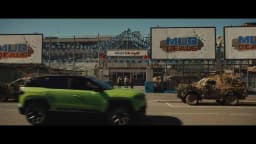
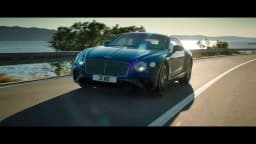
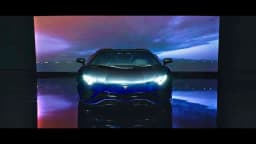
Renault's #EnterTheZone campaign by We Are Social France, launched March 2017, connects high-performance driving to the psychology of peak focus — not vehicle

Renault EnterTheZone Reframes Performance Driving as a Mental State
Renault's #EnterTheZone is a 2017 digital film campaign created by We Are Social France that positions high-performance driving as a gateway to a rare psychological state of total focus — the same transcendent concentration experienced by elite athletes, musicians, gamers, and Tibetan monks seeking deep mental immersion.
The campaign launched in France in March 2017, targeting sports enthusiasts and anyone who has either experienced or aspires to reach what psychologists and athletes commonly call "the Zone" — a state of heightened concentration in which external distraction falls away and performance peaks. Rather than cataloguing engine specifications or safety ratings, the film immerses the viewer in the feeling of that state, drawing a direct experiential line between the intensity of gaming, music, and competitive sport and the act of driving a Renault performance vehicle. The creative inspiration extended beyond Western sport psychology; the brief cited Tibetan monks seeking a comparable condition of extreme mental focus as a conceptual anchor for the campaign's tone and imagery.
In France, where Renault holds enduring cultural status as both a mass-market and motorsport brand, this shift in register was deliberate. According to Media Renaultgroup, Groupe Renault's global sales rose by approximately eight and a half percent to 3,761,634 vehicles in 2017, a year in which the brand's global market share reached roughly four percent, up approximately 0.2 percentage points on the prior year. Against that commercial backdrop, #EnterTheZone functioned less as a sales activation and more as a brand-positioning statement — one that aligned Renault with aspiration, focus, and the internal drama of human achievement rather than the external drama of track speed alone. The campaign contains a single media asset, a film, reinforcing the conviction that one precisely executed piece of creative can carry an idea further than a fragmented multi-format push.
We Are Social France identified a clear gap in how automotive brands were speaking to performance-oriented audiences in France in 2017. The prevailing industry convention — pioneered and sustained by competitors including Peugeot Sport and Volkswagen's performance sub-brands — centred on physical spectacle: track footage, acceleration figures, and engineering credentials. Renault's #EnterTheZone pivoted to interiority, treating the driver's psychological state as the genuine differentiator.
The strategic rationale drew on a cultural truth that extends across sport, gaming, and music communities: the aspiration to reach a state of optimal flow is universal, but it is rarely addressed directly by automotive advertising. Strategy Director Helen Duvoux-Mauguet and Strategic Planner Fabien Gaëtan anchored the campaign in this insight, connecting Renault's performance heritage — most visibly through the brand's Formula One presence via the Renault Sport F1 programme, which returned to the grid as a full constructor in 2016 — to the internal experience of any person who has ever pushed themselves to the edge of their capability. According to sportstrategies.com, the campaign was explicitly positioned around the 2017 Formula One season's renewal of Renault Sport's constructor status, lending the psychological concept a concrete, high-profile sporting context.
In the French automotive market, where according to marklines.com the competitive landscape in 2017 was defined by intense rivalry between domestic manufacturers and expanding European volume brands, distinguishing a performance sub-brand on emotional rather than technical grounds represented a meaningful strategic bet. By framing the Zone as something universally desirable and achievable — not just on a circuit but in a gym, at a console, or on a stage — We Are Social broadened Renault's potential audience without diluting the performance credential. The single-film format reinforced creative discipline, ensuring the insight was delivered at full concentration rather than dispersed across formats.
Director Thibault Grevet helmed the #EnterTheZone film, bringing a visual sensibility capable of rendering an interior psychological state through external imagery — a significant craft challenge for any performance-automotive brief. The production required the film to feel simultaneously like a sports film, a music video, and something closer to a meditative document, given that the Zone concept explicitly referenced Tibetan monks alongside elite athletes and competitive gamers.
Creative Director Thomas Guilhot, Art Director Paul Grange, and Copywriter Alexandre Foucray developed the creative framework at We Are Social France, constructing a narrative that deliberately avoided conventional car-commercial grammar — no slow-motion chassis reveals, no isolated track sequences divorced from human presence. Instead, the film places the psychological journey at the centre, with driving positioned as one manifestation of a wider human drive toward peak experience. Sound design was handled by Sizzer Amsterdam, whose contribution was structurally important: in a campaign about sensory immersion and heightened states, the sonic architecture of the film carried as much argumentative weight as the visuals. TV Producer Alexandra Marik managed production logistics, with Group Account Director Thomas Laydis and Account Director Margaux Pietri leading the client relationship through delivery.
The decision to build the campaign around a single film asset rather than a multi-format content system was itself a creative statement. It concentrated the audience's attention in a way that mirrored the campaign's own subject matter — the elimination of distraction in pursuit of a singular, intense experience. According to backlight.fr and cbnews.fr, the film circulated as a digital-first piece in France, consistent with We Are Social's broader positioning as an agency that leads with social and digital distribution strategies rather than traditional broadcast-first models. Production credits beyond those listed are not publicly documented in available sources.
No campaign-specific performance data for #EnterTheZone — including verified view counts, engagement rates, or attribution-linked sales figures — is publicly available in independently verifiable sources. No award wins for the campaign have been confirmed across Cannes Lions, D&AD, Clio Awards, The One Show, Effie Awards, Webby Awards, or WARC Awards databases.
What the structural evidence does support is a coherent and disciplined brand-positioning exercise executed at a moment of genuine strategic relevance. According to media.renaultgroup.com, Groupe Renault's global sales grew by approximately eight and a half percent in 2017, reaching 3,761,634 vehicles — a commercial trajectory that the brand's renewed Formula One constructor presence, which informed the campaign's strategic context per sportstrategies.com, ran alongside rather than against. In France specifically, Renault's position as the dominant domestic manufacturer meant that #EnterTheZone was not tasked with building market awareness from a low base but with elevating brand perception among an audience already familiar with the marque.
The campaign's single-asset format, its refusal of product-feature communication, and its reliance on psychological resonance over technical argument each represent structural risks that a brand with Renault's market presence was well-positioned to absorb. Whether those risks generated measurable return remains undocumented. Clapboard scores #EnterTheZone at 66 out of 100, reflecting a campaign with a genuinely differentiated strategic idea and disciplined creative execution, offset by limited documented reach evidence and the inherent difficulty of measuring brand-state campaigns against hard commercial outcomes.
Renault's #EnterTheZone is a 2017 film campaign created by We Are Social France that connects high-performance driving to the psychology of peak focus. It draws inspiration from elite sport, gaming, music, and Tibetan monks seeking deep mental immersion, positioning the Zone state as the emotional territory Renault performance vehicles inhabit.
We Are Social France created #EnterTheZone for Renault. The core creative team included Creative Director Thomas Guilhot, Art Director Paul Grange, Copywriter Alexandre Foucray, Strategy Director Helen Duvoux-Mauguet, and Strategic Planner Fabien Gaëtan. Director Thibault Grevet helmed the film, with sound design by Sizzer Amsterdam.
Renault's #EnterTheZone campaign was published in France in March 2017. It launched as a digital-first film campaign, consistent with We Are Social's agency approach, and was positioned to coincide with Renault Sport's renewed Formula One constructor status for the 2017 season, according to sportstrategies.com.
We Are Social France identified that performance automotive advertising in France focused on physical spectacle rather than psychological experience. The campaign reframed Renault's performance credential around the universal aspiration to reach a flow state — a strategy developed by Helen Duvoux-Mauguet and Fabien Gaëtan that broadened audience relevance without diluting the brand's sporting heritage.
No award wins for Renault's #EnterTheZone have been verified across Cannes Lions, D&AD, Clio Awards, The One Show, Effie Awards, Webby Awards, or WARC Awards. The campaign earned a Clapboard Score of 66 out of 100, reflecting a strong strategic concept and disciplined single-asset execution against limited documented performance evidence.
In France, Renault holds strong market presence as a domestic manufacturer. #EnterTheZone shifted the brand's performance communication from technical specification toward psychological aspiration, aligning with Renault Sport's Formula One return in 2017. According to media.renaultgroup.com, Groupe Renault's global sales grew approximately eight and a half percent that year, providing commercial context for the brand-elevation strategy.
.webp)
Creative Collaboration Platform: The Backbone of Modern Creative WorkWhat is a creative collaboration platform?Clapboard defines a creative collaboration platform as the operational core for today’s distributed creative teams. This is not a collection of digital collaboration tools stitched together; Clapboard’s system


Understanding the Creative Production MarketplaceWhat is a Creative Production Marketplace?Clapboard defines a creative production marketplace as a structured ecosystem where brands, agencies, and production talent converge to execute video, advertising, and branded content at scale. Unlike the legacy agency or freelanREAD FULL ARTICLE

The Urgent Need for a Creative Production Operating SystemWhy Traditional Creative Production Models Break DownClapboard sees the creative production landscape shifting under pressure. Content velocity is no longer a buzzword—it’s a mandate. Modern advertising demands relentless output across dozens of channels, each wREAD FULL ARTICLE