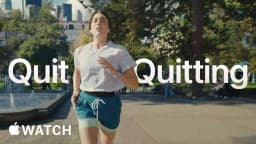
Puma's Go Wild campaign, created by adam&eveDDB and Leland in March 2025, repositions the sportswear brand around the runner's high and everyday athletic joy

Puma Goes Wild With Its Biggest Global Brand Campaign Yet
Go Wild is Puma's largest global brand campaign to date, launched on March 20, 2025, in the United States and worldwide, created by adam&eveDDB with music supervision by Leland, and built around the euphoric emotional state known as the runner's high to position sport as a source of personal joy rather than competitive achievement.
The campaign centres on a 60-second hero film that abandons the familiar world of elite athletic performance in favour of relatable, everyday running scenarios. Ordinary people — a parent pushing a jogging stroller, a dog walker breaking into a sprint, community runners sharing a moment of collective abandon — populate the screen in place of celebrity endorsers. This creative decision reflects a deliberate strategic repositioning: Puma is not speaking to podium finishers but to the far larger population of everyday athletes who run for how it makes them feel. In the United States and across six major markets, the campaign speaks directly to that emotional payoff.
The film's soundtrack draws on a reworked version of Afroman's Because I Got High, a choice reported by The Drum that links the song's familiar premise to the natural euphoria of a hard run. The recontextualisation is both playful and precise, signalling that Puma intends to reclaim the humor and irreverence that characterised its brand identity in the 1980s and 1990s. Julie Legrand, Senior Director of Global Brand Strategy and Communications at Puma, has described the campaign's north star as transforming Puma into a love brand — one that earns affection not through aspiration alone but through genuine emotional resonance. Go Wild earns a Clapboard Score of 76 out of 100, reflecting strong creative and strategic cohesion across its film execution.
Puma developed Go Wild from the largest consumer research programme in the brand's history. Pre-launch System1 testing was conducted across six markets — the United States, China, Germany, Mexico, India, and Saudi Arabia — according to reporting by Marketing Dive and Campaign Live, giving the campaign an unusually rigorous empirical foundation before a single frame was released publicly.
The core insight is that the runner's high — the euphoric neurochemical state experienced during sustained physical effort — is both universal and underserved as a brand territory. In the United States, where the fitness culture spans everything from competitive road racing to casual weekend jogging, Puma identified a gap between how sportswear brands traditionally communicate and how the majority of active consumers actually experience sport. Nike, the dominant force in the US athletic footwear market with approximately fifteen to twenty percent of global athletic footwear revenue according to Mordor Intelligence, has long owned the territory of elite aspiration. Adidas has similarly anchored its messaging in performance culture and cultural credibility. Puma's strategic move is to occupy the emotional space those competitors leave vacant: the private, euphoric, sometimes absurd joy of physical movement for its own sake.
This repositioning targets younger everyday athletes rather than elite competitors, a segment that Creative Review and Creative Salon both noted as central to the campaign's commercial logic. Puma increased its marketing investment by forty percent year over year, as reported by MediaPost, signalling that Go Wild is not a one-off executional push but the opening statement of a sustained brand platform. Adam&eveDDB, which won Puma's global creative duties in late 2024, built the campaign around performance meeting joy as untapped market territory — a positioning designed to be both emotionally differentiated and commercially durable across the United States and beyond.
Adam&eveDDB constructed the Go Wild hero film around a single, governing emotional truth: that running makes ordinary people feel extraordinary. The creative approach prioritises authenticity over spectacle, casting non-celebrity figures in mundane but universally legible running situations that escalate into moments of unguarded, physical joy.
The production deploys a visual language calibrated for genuine relatability. Locations, wardrobe, and casting reflect the full social breadth of running culture in the United States — not the curated aesthetics of a premium athletic brand shoot but the real, unglamorous, sometimes chaotic experience of getting out the door and moving. This directorial commitment to ordinariness is precisely what makes the euphoric moments land with force. The film earns its emotional payoff because the setup feels true.
The music strategy, supervised by Leland, is the campaign's most distinctive creative decision. The reworked version of Afroman's Because I Got High, as reported by The Drum, functions as more than a sonic hook. It reframes a song with culturally loaded associations around a completely different kind of high — one that is physical, legal, and universally available to anyone willing to run. The recontextualisation is sharp enough to generate earned media attention while remaining grounded in the campaign's core strategic message. It also connects directly to Puma's historical brand voice: the humor and irreverence that defined the label's personality in the 1980s and 1990s, as noted in reporting by Creative Salon. Production credits beyond Leland's music supervision role are not fully catalogued in public sources at the time of writing, though the agency of record on the film is confirmed as adam&eveDDB. The 60-second format gives the narrative sufficient room to establish character, build momentum, and deliver an emotional resolution — a structural choice that reflects confidence in the storytelling rather than a retreat to rapid-cut product demonstration.
Go Wild ranked in the top five percent of advertisements for sales-driving effectiveness, according to System1 Group testing conducted prior to the campaign's March 20, 2025 launch. That result — drawn from pre-launch evaluation across the United States, China, Germany, Mexico, India, and Saudi Arabia — positions the campaign among a small cohort of commercial films that demonstrably move consumer purchase intent rather than simply generating awareness or goodwill.
System1 Group's scoring methodology measures long-term brand-building potential alongside short-term sales activation, which means the top-five-percent ranking reflects the film's capacity to deliver sustained commercial returns rather than a single-cycle spike. For Puma, operating in a global sportswear market that Fortune Business Insights estimates carries a compound annual growth rate forecast of approximately five to seven percent through the early 2030s, a campaign validated at this level of effectiveness represents a meaningful competitive asset in the United States and in every market where the film deploys.
No additional verified performance data — including specific uplift figures, earned media valuations, or post-launch sales metrics — is publicly available for Go Wild at the time of writing. What the System1 Group pre-launch data does confirm, however, is that the creative decisions made by adam&eveDDB and Leland — the casting of everyday athletes, the humor-forward music recontextualisation, the emotional narrative arc — collectively produce an ad that audiences in the United States and across key global markets respond to with both immediate engagement and durable brand affinity. That combination is rare. The Clapboard editorial score of 76 out of 100 aligns with this read: a campaign of genuine strategic clarity and creative confidence, with room for the full arc of its commercial impact still to be measured.
Go Wild is Puma's largest global brand campaign to date, launched March 20, 2025. Created by adam&eveDDB with music by Leland, it reframes running around the euphoric emotional state known as the runner's high, targeting everyday athletes in the United States and globally rather than elite competitors or celebrity endorsers.
Adam&eveDDB created Go Wild for Puma after winning the brand's global creative duties in late 2024. Leland handled music supervision on the campaign. The work was published in the United States in March 2025 and represents adam&eveDDB's first major global platform for the sportswear brand.
Go Wild uses a reworked version of Afroman's Because I Got High, as reported by The Drum. Music supervision was handled by Leland. The recontextualisation links the song's premise to the natural euphoria of running, reinforcing the campaign's core message while reconnecting Puma to its historically irreverent brand voice.
Go Wild ranked in the top five percent of advertisements for sales-driving effectiveness, according to System1 Group pre-launch testing. Research spanned six markets including the United States. The campaign also earned a Clapboard Score of 76 out of 100, reflecting strong strategic and creative cohesion across its film execution.
Julie Legrand, Senior Director of Global Brand Strategy and Communications at Puma, led brand strategy for Go Wild. Adam&eveDDB served as global creative agency and Leland supervised music. The campaign was developed from the largest consumer research programme in Puma's brand history, spanning the United States and five additional markets.
Go Wild targets the emotional space that Nike and Adidas leave largely unoccupied. Nike holds approximately fifteen to twenty percent of global athletic footwear revenue according to Mordor Intelligence, anchoring messaging in elite aspiration. Puma's campaign instead celebrates the private, joyful side of everyday running, positioning the brand as distinctly human and accessible across the United States.
.webp)
Creative Collaboration Platform: The Backbone of Modern Creative WorkWhat is a creative collaboration platform?Clapboard defines a creative collaboration platform as the operational core for today’s distributed creative teams. This is not a collection of digital collaboration tools stitched together; Clapboard’s system


Understanding the Creative Production MarketplaceWhat is a Creative Production Marketplace?Clapboard defines a creative production marketplace as a structured ecosystem where brands, agencies, and production talent converge to execute video, advertising, and branded content at scale. Unlike the legacy agency or freelanREAD FULL ARTICLE

The Urgent Need for a Creative Production Operating SystemWhy Traditional Creative Production Models Break DownClapboard sees the creative production landscape shifting under pressure. Content velocity is no longer a buzzword—it’s a mandate. Modern advertising demands relentless output across dozens of channels, each wREAD FULL ARTICLE