 ARCHIVE
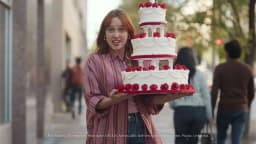
Subway Protein Pockets Reframes Value for the Protein-Conscious Generation
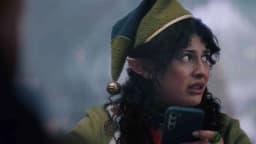
How Subway's Protein Pockets Turned a $3.99 Price Point Into a Brand Moment Subway's New 20g+...
Progressive Insurance Weaponises Passive Aggression in 2025 Brand Push
Progressive Insurance's Passive Progressive campaign is a nationally broadcast humour-driven initiative launched in the United States in February 2025, created by Arnold Worldwide, using passive-aggressive character behaviour to dramatise consumer envy around better insurance savings and coverage.
The campaign arrived with a clear strategic proposition embedded in its tagline: "Don't be Passive Progressive." Rather than leading with price comparisons or product features, Arnold Worldwide constructed a social mirror — presenting fictional characters whose thinly veiled resentment toward people with Progressive coverage, or those considering switching, exposes the absurdity of staying with a lesser deal out of inertia. The mechanic is comic but the argument is commercial.
Two 30-second hero spots anchored the launch. As reported by shots.net and reel360.com, the spots were titled "Tom" and "Nancy," set in an office environment and at a soccer field respectively, each staging a scenario in which the passive-aggressive character's behaviour becomes the unwitting advertisement for Progressive. Two 15-second cutdowns, including a spot titled "Elevator Buttons," extended the campaign across broadcast and digital formats. In total, the campaign launched with two primary media assets documented in the Clapboard archive.
In the United States, the campaign reached audiences at a moment of notable pressure in the personal insurance market. The creative choice to centre the work on recognisable social dynamics — the pointed comment, the loaded silence, the performative indifference — gave Progressive a culturally legible shorthand that required no insurance literacy to decode. The Passive Progressive campaign earned a Clapboard Score of 63 out of 100, reflecting solid creative construction against a competitive field where distinctiveness remains difficult to sustain.
Progressive Insurance operates in one of the most advertising-saturated categories in the United States. The strategic logic behind Passive Progressive begins with that saturation problem. When every major insurer competes on price messaging and claims simplicity, Arnold Worldwide's decision to route the 2025 campaign through human social behaviour rather than product specification represents a deliberate move toward emotional differentiation.
The US car insurance market was estimated at approximately $386.2 billion in 2025, according to insurancenavy.com, with liability coverage representing approximately 45.92% of that market. The scale of the category means consumer switching behaviour is commercially significant — and passive inaction, the very behaviour the campaign lampoons, is a genuine business obstacle for any insurer trying to grow share. Arnold Worldwide's creative insight is precise: the people least likely to switch are not hostile to Progressive, they are simply comfortable with inertia, and social embarrassment is a more motivating force than a rate chart.
Progressive's two most prominent competitors in the United States — Geico and State Farm — have both built long-running character-based advertising ecosystems. Geico's Gecko and State Farm's Jake from State Farm occupy similarly durable brand positions built on humour and recognisability. Progressive's own character lineage is equally deep: Flo, portrayed by actress and comedian Stephanie Courtney, debuted in 2008 through the Superstore campaign, as documented across sources including cleveland.com and En Wikipedia. The Passive Progressive approach does not abandon that character heritage but complements it by introducing a new social archetype — the envious bystander — that places the brand's value proposition in the mouth of someone who refuses to admit it. That structural inversion is the campaign's sharpest strategic tool.
Passive Progressive is built on performance. The campaign's creative success depends entirely on the precision of its comic acting — the half-smile that isn't quite a smile, the compliment delivered with the wrong emphasis, the pause held just a beat too long. Arnold Worldwide constructed two distinct social environments, an office and a soccer field, to demonstrate that passive-aggressive behaviour around insurance is not a demographic quirk but a universal social register.
The creative leadership at Arnold Worldwide behind the campaign is publicly documented. Donnell Johnson served as SVP, Group Creative Director, with Tom Kelly as VP, Creative Director and Cassondra Bazelow and Caroline Monday as Associate Creative Directors, as credited across shots.net and reel360.com. Sean McBride held the role of Chief Creative Officer, with Val Bettini serving as Chief Client Officer. Executive production was handled by Patrick Carney. The depth of the creative team reflects the structural ambition of the campaign: multiple formats, multiple social settings, and a tonal consistency that had to hold across both 30-second and 15-second executions without the joke deflating at shorter length.
As characterised by shots.net in a January 2026 report, the campaign's second iteration — introducing spots titled "Molly's Vacation" and "Joe's Family Reunion" — was described as "wickedly funny," with the two 30-second spots identified as "hilarious triumphs." That editorial framing, applied to the follow-up work, retrospectively confirms that the original February 2025 launch established a tonal platform sturdy enough to support extension. The craft decision to anchor each spot in a single, socially specific location rather than a montage of situations gives each execution room to build comic pressure gradually, which is the structural requirement of passive-aggressive humour done well.
No verified performance data for the Passive Progressive campaign is publicly available. Progressive Insurance has not released viewership figures, brand-lift metrics, or conversion data connected to the February 2025 launch, and no independent third-party measurement source has published campaign-specific results attributable to this work.
Structural analysis, however, points to several indicators of effectiveness. The campaign's extension into a second iteration in January 2026 — documented by campaignlive.com and shots.net — is itself a market signal. Advertisers in the United States do not develop follow-on creative for campaigns that fail to perform; the commissioning of "Molly's Vacation" and "Joe's Family Reunion" as successor spots implies internal confidence in the original platform's commercial and cultural traction.
The Clapboard Score of 63 out of 100 for Passive Progressive reflects a campaign that executes its strategic premise with clarity and comedic discipline but operates within a well-established tonal register for the category. The passive-aggressive archetype is culturally durable and broadly legible across the United States, which supports reach, but the creative risk is calibrated rather than radical. Progressive's long-running investment in character-driven humour, as traced from Flo's 2008 debut through the 2022 Flo's Love Interest campaign featuring Jon Hamm — as reported by abcnews.com — means the Passive Progressive work lands in already-receptive territory. The structural effectiveness is high; the creative surprise factor is moderate. That balance is precisely what the Clapboard Score captures.
Passive Progressive is a nationally broadcast US campaign launched by Progressive Insurance in February 2025, created by Arnold Worldwide. It uses passive-aggressive character behaviour to dramatise consumer envy around better insurance savings, anchored by the tagline "Don't be Passive Progressive" across two 30-second and two 15-second television spots.
Arnold Worldwide created Passive Progressive for Progressive Insurance. Key creatives included Donnell Johnson as SVP Group Creative Director, Tom Kelly as VP Creative Director, and Associate Creative Directors Cassondra Bazelow and Caroline Monday, with Sean McBride serving as Chief Creative Officer, as credited by shots.net and reel360.com.
Passive Progressive launched with two 30-second hero spots titled "Tom," set in an office, and "Nancy," set at a soccer field, as reported by shots.net. Two 15-second cutdowns, including "Elevator Buttons," extended the campaign. A second iteration followed in January 2026 with spots titled "Molly's Vacation" and "Joe's Family Reunion."
Progressive Insurance has built its advertising identity around character-driven humour since Flo debuted in 2008, as documented by cleveland.com and en.wikipedia.org. Passive Progressive extends that heritage by introducing a new social archetype — the envious bystander — rather than replacing Flo, adding a fresh comic mechanism to an already well-established brand voice in the United States.
Passive Progressive received a Clapboard Score of 63 out of 100. The score reflects strong strategic clarity and comedic discipline in execution, balanced against a creative approach that operates within a familiar tonal register for US insurance advertising rather than departing radically from category convention.
Passive Progressive extended into a second campaign iteration in January 2026, as reported by shots.net and campaignlive.com. The follow-up introduced two new 30-second spots, described by shots.net as "wickedly funny" and "hilarious triumphs," indicating Arnold Worldwide and Progressive Insurance treated the original 2025 launch as a platform rather than a standalone execution.
.webp)
Creative Collaboration Platform: The Backbone of Modern Creative WorkWhat is a creative collaboration platform?Clapboard defines a creative collaboration platform as the operational core for today’s distributed creative teams. This is not a collection of digital collaboration tools stitched together; Clapboard’s system


Understanding the Creative Production MarketplaceWhat is a Creative Production Marketplace?Clapboard defines a creative production marketplace as a structured ecosystem where brands, agencies, and production talent converge to execute video, advertising, and branded content at scale. Unlike the legacy agency or freelanREAD FULL ARTICLE

The Urgent Need for a Creative Production Operating SystemWhy Traditional Creative Production Models Break DownClapboard sees the creative production landscape shifting under pressure. Content velocity is no longer a buzzword—it’s a mandate. Modern advertising demands relentless output across dozens of channels, each wREAD FULL ARTICLE