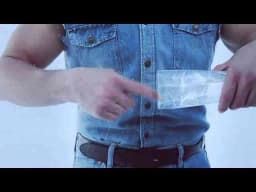
Pirinsko Ledeno's Ice Tunnel activation at Kapana Fest 2019 translated a −1°C filtration claim into a multi-sensory walk-through installation created by 121

Pirinsko Ledeno Turns a Temperature Claim Into a Walk-Through Experience
Pirinsko Ledeno's Ice Tunnel is a multi-sensory experiential installation created by 121 Agency that placed festival-goers physically inside the brand's core product claim — beer filtered at −1°C — at Kapana Fest 2019 in Bulgaria.
Pirinsko Ledeno launched in Bulgaria in 2019 as a brand new product in the mainstream packaged-beer market. Its central marketing proposition was precise and singular: the beer is filtered at −1°C. For 121 Agency, the creative challenge was not merely to communicate that temperature but to make an audience feel it. The solution was an immersive tunnel constructed from ice and animated by projected visuals on the floor, atmospheric sound design, theatrical smoke, and direct product placement. The installation did not describe cold. It delivered cold as a physical encounter.
The activation took place at Kapana Fest 2019, one of Bulgaria's prominent urban cultural festivals held in the Kapana creative district of Plovdiv. The festival context was deliberate. Experiential campaigns in food and drink categories benefit from high-footfall, leisure-minded environments where audiences have time, curiosity, and an appetite for discovery. Kapana Fest provided exactly that setting, placing the newly launched Pirinsko Ledeno in front of a concentrated, engaged crowd during the summer season — the peak consumption period for beer in the Bulgarian market. According to data documented by adsoftheworld.com and corroborated by the 121 Agency's own records, more than 5,500 people experienced the Ice Tunnel installation during its first three days. For a single-location activation supporting a product launch, that reach figure represents a structurally efficient use of experiential media in a concentrated geographic market.
The Clapboard Score for the Ice Tunnel campaign is 62 out of 100, reflecting strong conceptual clarity and purposeful sensory execution against a limited single-market footprint and the absence of independently verified award recognition.
Pirinsko Ledeno entered a Bulgarian beer market already shaped by established mainstream lager brands competing on familiarity, heritage, and price. The competitive landscape in Bulgaria's packaged-beer segment included Kamenitza, associated with Molson Coors, and Zagorka, a Heineken-owned brand with deep national penetration — both representing the kind of incumbent volume players that make a new product launch strategically challenging without a genuinely differentiated proposition.
The strategic answer Pirinsko Ledeno and 121 Agency identified was not to compete on taste descriptors or heritage storytelling, which are territory already occupied by established rivals, but to own a specific, verifiable process: filtration at −1°C. That claim is concrete, technical, and sensory in its implication. It promises a colder, crisper experience in a way that adjective-heavy advertising cannot credibly deliver. The experiential campaign format was therefore not a stylistic choice but a strategic one. An ice tunnel is the most direct possible proof point for a sub-zero filtration claim. It transforms a product specification into a physical memory.
The choice of Kapana Fest 2019 as the activation venue also reflects an insight about the Bulgarian consumer audience the brand was targeting. Kapana Fest draws a culturally engaged, urban demographic in Plovdiv — a city that served as European Capital of Culture in 2019, as designated by the European Commission. That designation brought heightened domestic and international attention to the city during the year, amplifying the potential visibility of any well-executed brand activation staged within its creative district. Pirinsko Ledeno positioned its product launch inside a moment of genuine cultural significance in Bulgaria, rather than purchasing attention in a neutral commercial environment.
According to adsoftheworld.com, the Ice Tunnel campaign is documented as an experiential medium execution, a format that in the food and drink category is used precisely when a brand needs audiences to experience a product truth rather than simply hear it stated.
The Ice Tunnel installation operated across five simultaneous sensory channels. Ice formed the physical architecture of the space, establishing an immediate tactile and visual register of cold. Projected visuals animated the floor beneath visitors' feet, creating a sense of movement and depth that prevented the environment from reading as a static display. Sound design filled the tunnel with an ambient audio layer that reinforced the atmospheric quality of the cold environment without competing with the visual elements. Theatrical smoke thickened the air and softened the light, producing the diffused, crystalline quality associated with sub-zero spaces. Product placement completed the sequence, situating Pirinsko Ledeno within the environment as its natural and logical conclusion.
The sequencing of these elements reflects deliberate craft thinking. Each layer serves the central claim — filtration at −1°C — rather than decorating around it. The ice is structural evidence. The projected floor gives the cold a dynamic quality that static refrigeration cannot provide. The smoke creates the visual analogue of breath in freezing air. The sound grounds the visitor in the experience before any product message is introduced. This is multi-sensory design used argumentatively, not decoratively, and it distinguishes the Ice Tunnel from the category of brand activations that deploy spectacle without strategic function.
Production credits for the Ice Tunnel campaign are not publicly documented beyond the agency attribution to 121 Agency, Sofia, as recorded on adsoftheworld.com and in Clapboard's archive. The campaign was covered by PR EDGE, a Japanese marketing publication that documented the activation as a noteworthy international experiential execution, indicating that the creative work generated attention beyond the Bulgarian market where it ran. The installation produced one media asset, as noted in Clapboard's records, suggesting the campaign was conceived primarily as a live, in-person experience rather than a content-production vehicle designed for amplification across owned or paid digital channels.
No verified third-party performance data — including sales uplift, brand tracking movement, or media-value equivalency — is publicly available for the Pirinsko Ledeno Ice Tunnel campaign. No verified award wins or shortlist placements at major international advertising festivals are documented for this activation, based on research across adsoftheworld.com, Predge Jp, and Clapboard's own records.
The participation figure that is documented is significant on its own terms. More than 5,500 people moved through the installation during its first three days, according to records cited on adsoftheworld.com and corroborated by 121 Agency's documentation. For a single-location experiential activation in Bulgaria supporting a new product, that volume of direct physical engagement represents a high-density proof-of-concept. Experiential media in the food and drink category derives its value not from broad reach but from depth of impression — and an ice tunnel that a visitor walks through, feels, hears, and photographs generates a quality of brand memory that a static display or a digital pre-roll cannot replicate.
Structurally, the campaign's effectiveness rests on the alignment between claim, format, and context. The product claim is −1°C filtration. The format is a cold, immersive physical environment. The context is a summer festival at peak beer-consumption season in Bulgaria. Each of those three variables reinforces the others, which is the structural signature of a well-designed experiential campaign. The primary limitation the Ice Tunnel faces as a case study is its single-market, single-event footprint and the absence of any documented amplification strategy that would have extended its reach beyond the Kapana Fest 2019 audience in Bulgaria. The Clapboard Score of 62 out of 100 reflects precisely that balance: strong conceptual and executional coherence, constrained by geographic and distributional scope.
The Ice Tunnel was an experiential brand activation created by 121 Agency for Pirinsko Ledeno at Kapana Fest 2019 in Bulgaria. The installation used ice, projected floor visuals, sound, and smoke to immerse visitors in the brand's core product claim — beer filtered at −1°C — as a physical, walk-through environment rather than a conventional advertisement.
More than 5,500 people walked through the Ice Tunnel during its first three days at Kapana Fest 2019, according to records documented on adsoftheworld.com and 121 Agency's own materials. The activation took place in the Kapana creative district of Plovdiv, Bulgaria, during the summer of 2019.
Pirinsko Ledeno is filtered at −1°C, and the Ice Tunnel was designed to make that claim physically felt rather than simply stated. The installation architecture — ice structure, sub-zero atmosphere, smoke, and sound — functioned as a sensory proof point for the brand's filtration process at the moment of its Bulgarian product launch.
121 Agency, based in Sofia, Bulgaria, created the Ice Tunnel experiential campaign for Pirinsko Ledeno in 2019. The activation was published in July 2019 and documented on adsoftheworld.com and in Clapboard's advertising archive as a single-asset experiential execution in the alcoholic drinks category.
No verified award wins or shortlist placements at major international advertising festivals are publicly documented for the Ice Tunnel campaign. Research across adsoftheworld.com, predge.jp, and Clapboard's records confirms no recognised industry honours, though the campaign received editorial coverage from PR EDGE, a Japanese marketing publication.
Pirinsko Ledeno's product proposition — filtration at −1°C — is a sensory claim that demands physical demonstration. In a Bulgarian beer market shaped by established rivals including Kamenitza and Zagorka, 121 Agency used the experiential format to give the brand an encounter-based proof point that taste-descriptor or heritage advertising could not credibly replicate.
.webp)
Creative Collaboration Platform: The Backbone of Modern Creative WorkWhat is a creative collaboration platform?Clapboard defines a creative collaboration platform as the operational core for today’s distributed creative teams. This is not a collection of digital collaboration tools stitched together; Clapboard’s system


Understanding the Creative Production MarketplaceWhat is a Creative Production Marketplace?Clapboard defines a creative production marketplace as a structured ecosystem where brands, agencies, and production talent converge to execute video, advertising, and branded content at scale. Unlike the legacy agency or freelanREAD FULL ARTICLE

The Urgent Need for a Creative Production Operating SystemWhy Traditional Creative Production Models Break DownClapboard sees the creative production landscape shifting under pressure. Content velocity is no longer a buzzword—it’s a mandate. Modern advertising demands relentless output across dozens of channels, each wREAD FULL ARTICLE