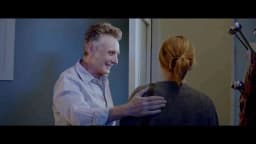
Philips and Ogilvy Social.Lab Amsterdam created Team Heart Safety, an experiential campaign using interactive LED running shirts to visualise AED distances in

Philips Team Heart Safety Brings AED Awareness to the Eindhoven Marathon
Philips Team Heart Safety is an experiential healthcare campaign created by Ogilvy Social.Lab Amsterdam that equipped three runners at the 2019 Eindhoven Marathon with interactive LED shirts displaying the real-time distance to the nearest Automated External Defibrillator, making the invisible geography of cardiac emergency response immediately visible to a live public audience in The Netherlands.
The campaign launched on 13 October 2019, timed precisely to the Eindhoven Marathon — a choice that was both strategic and symbolic, given that Eindhoven is Philips' hometown and the marathon route crossed the city itself. Three participants, Tim van Pelt, Thijs van Keulen, and Dennis de Knijff, wore the specially designed shirts throughout the race, turning themselves into moving data visualisations of public health infrastructure, according to records documented on ogilvy.com. The core objective was to draw public and civic attention to the importance of the six-minute zone: the principle that access to an Automated External Defibrillator within six minutes is critical to survival in a cardiac arrest emergency.
In The Netherlands, where Philips has maintained its global headquarters since its founding in Eindhoven, the campaign positioned the brand not merely as a manufacturer of AED devices but as an advocate for the urban health ecosystems those devices depend on. The campaign carried a direct civic call to action — urging the public to support a heart-safer Eindhoven — and sat within a broader Philips strategic pivot toward human-centred health technology focused on measurable public outcomes. Clapboard assigns this campaign a score of 71 out of 100, recognising its strong conceptual clarity and execution within the healthcare experiential category.
Philips anchored the entire campaign strategy in the six-minute zone principle, a clinically grounded threshold establishing that a cardiac arrest patient's survival odds decline sharply when defibrillation is delayed beyond six minutes. This single insight transformed an abstract infrastructure problem — the uneven geographic distribution of AEDs across urban areas — into a tangible, emotionally legible experience for marathon spectators and runners alike in The Netherlands.
The strategic logic was developed under the direction of Rogier van der Werf, Strategy Director at Ogilvy Social.Lab Amsterdam, as credited on ogilvy.com. By selecting the Eindhoven Marathon as the activation venue, the team ensured that the message reached a physically active audience already engaged with cardiovascular health, while the civic backdrop of Philips' hometown amplified the brand's sense of local responsibility. The marathon's route through central Eindhoven created a natural test environment for demonstrating where six-minute AED coverage existed and where it did not, according to campaign materials documented on campaignsoftheworld.com.
The competitive landscape in healthcare advertising in The Netherlands includes global medtech brands such as Medtronic and Zoll Medical, both of which operate AED product lines and have run awareness initiatives of their own. What distinguished the Philips approach was its decision to make the data public and participatory rather than contained within a product demonstration. Philips' Diagnosis and Treatment businesses grew two percent on a comparable-sales basis in early 2019, according to Results Philips, reflecting the company's broader momentum in health-technology segments. The global cardiovascular-device market was estimated at approximately US$40.8 billion in 2018, with a projected compound annual growth rate of 6.5 percent through 2027, according to hitconsultant.net — a market context that makes consumer trust and brand advocacy increasingly material to competitive positioning.
Each interactive LED shirt worn during the Eindhoven Marathon contained approximately 850 individually addressable LEDs, engineered to respond dynamically to the runner's precise geographic position in real time. The technical foundation rested on a GPS tracking system feeding into a Python-powered computer system that continuously calculated the walking time and distance from the runner's current location to the nearest registered AED in Eindhoven, according to cresta-awards.com, where the campaign was entered as a finalist in the Healthcare Devices category at the Cresta Awards 2020.
The shirts did not merely display a numerical readout. They changed colour: transitioning from red to green when the runner entered a zone where an AED was reachable within approximately six minutes, according to campaign documentation on ogilvy.com. This colour-state mechanic translated a complex spatial data relationship into an immediate, crowd-readable signal — one visible to marathon spectators with no prior context required. The VFX and wearable-tech execution was led by Technical Director Mario Piepenbrink, with production handled by Bandit Amsterdam, as credited across ogilvy.com and cresta-awards.com.
Creative direction was provided by Gijs Sluijters and Joris Tol at Ogilvy Social.Lab Amsterdam, with account leadership from Pauline Landa as Account Director and Myrte de Jonge as Account Manager, per records on campaignsoftheworld.com and ogilvy.com. Strategist Ilonka van Bennekom contributed to the campaign's conceptual development, as documented on campaignsoftheworld.com. The decision to use live marathon participants rather than actors or staged demonstrations grounded the piece in authentic physical effort, reinforcing the emotional stakes of cardiac emergency preparedness without requiring any scripted narrative.
No independently verified post-campaign performance data for Team Heart Safety — such as reach figures, earned media value, or measurable change in AED registration rates in Eindhoven — is publicly available through named third-party sources. What is documented is that the campaign asset recorded 3,982 views and 16 likes on the platform where it was submitted, as noted in Clapboard's own editorial records, and that it was recognised as a finalist in the Healthcare Devices category at the Cresta Awards 2020, according to cresta-awards.com — a meaningful acknowledgement within international healthcare advertising.
Structurally, the campaign demonstrates several qualities that correlate with durable effectiveness in the experiential healthcare category. The activation was built around a single, falsifiable claim — the six-minute survival window — which gave journalists, civic advocates, and spectators a concrete frame for amplification without requiring Philips to supply additional context. The colour-change mechanic from red to green created a shareable visual moment that was legible across languages and demographics, a material advantage in a multilingual urban marathon environment in The Netherlands.
The choice of the Eindhoven Marathon as the activation venue also served a dual audience function: it reached health-conscious participants directly while placing the campaign within a civic event that carried inherent media coverage. For a campaign whose ultimate goal was not product purchase but public infrastructure advocacy, this structural alignment between message, medium, and moment represents the campaign's most durable strategic asset. Clapboard scores Team Heart Safety 71 out of 100, reflecting strong conceptual integrity and technical craft with limited documented reach amplification beyond the activation itself.
Philips Team Heart Safety was an experiential healthcare campaign launched in October 2019 in The Netherlands. Created by Ogilvy Social.Lab Amsterdam, it equipped three runners at the Eindhoven Marathon with interactive LED shirts displaying real-time distance to the nearest AED, visualising the six-minute cardiac emergency response zone for live spectators.
Each shirt contained approximately 850 individually addressable LEDs connected to a GPS system and a Python-powered computer. The system calculated real-time distance to the nearest registered AED in Eindhoven, with the shirt changing from red to green when the runner entered a zone where an AED was reachable within six minutes, according to cresta-awards.com.
Ogilvy Social.Lab Amsterdam created Team Heart Safety for Philips. Creative directors Gijs Sluijters and Joris Tol led the concept, with Strategy Director Rogier van der Werf guiding the strategic rationale. Production was handled by Bandit Amsterdam, with Technical Director Mario Piepenbrink overseeing the wearable LED and GPS engineering, per ogilvy.com.
Eindhoven is Philips' hometown, making the marathon a symbolically resonant venue. The race route crossed the city, creating a live test of AED geographic coverage. The event also reached a health-conscious audience already engaged with cardiovascular performance, amplifying the campaign's six-minute survival-zone message to a relevant and receptive crowd.
Team Heart Safety was recognised as a finalist in the Healthcare Devices category at the Cresta Awards 2020, entered under the title Philips AED by Ogilvy Social.Lab Amsterdam, according to cresta-awards.com. Clapboard assigns the campaign a score of 71 out of 100, reflecting strong conceptual clarity and technical execution within the healthcare experiential category.
The six-minute zone is a clinically grounded threshold establishing that survival odds in cardiac arrest decline sharply when defibrillation is delayed beyond six minutes. Philips used this principle as the strategic core of Team Heart Safety, visualising where Eindhoven met or fell short of this standard through the colour-change behaviour of the LED shirts during the marathon.
.webp)
Creative Collaboration Platform: The Backbone of Modern Creative WorkWhat is a creative collaboration platform?Clapboard defines a creative collaboration platform as the operational core for today’s distributed creative teams. This is not a collection of digital collaboration tools stitched together; Clapboard’s system


Understanding the Creative Production MarketplaceWhat is a Creative Production Marketplace?Clapboard defines a creative production marketplace as a structured ecosystem where brands, agencies, and production talent converge to execute video, advertising, and branded content at scale. Unlike the legacy agency or freelanREAD FULL ARTICLE

The Urgent Need for a Creative Production Operating SystemWhy Traditional Creative Production Models Break DownClapboard sees the creative production landscape shifting under pressure. Content velocity is no longer a buzzword—it’s a mandate. Modern advertising demands relentless output across dozens of channels, each wREAD FULL ARTICLE