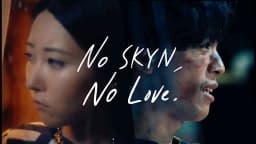
Pepsi Right Here Right Now Captures Chinese Youth in 2017
Pepsi's 'Right Here Right Now' is a 2017 Chinese summer campaign film, created by Civilization Shanghai, that traces the brand's 36-year presence in China through recreated generational moments of youth culture, launching on National Youth Day, May 4, 2017.
The campaign centres on a single film asset — a deliberate constraint that concentrates creative and media weight into one landmark piece of storytelling. Released in China in May 2017, the work traces formative moments in the lives of Chinese youth from 1981 onward, aligning each decade's cultural touchstones with Pepsi-Cola's parallel journey through the market. The objective is dual: to celebrate the brand's heritage in China and to reaffirm Pepsi as the drink of present-tense youth energy rather than nostalgic retrospection.
Civilization Shanghai, the agency behind the film, has produced Pepsi China work across multiple years, with prior campaigns including the 2013 Chinese New Year film 'Family' and the 2014 film 'Deliverance,' as documented on adsoftheworld.com and adruby.com. 'Right Here Right Now' represents the most historically ambitious instalment in that body of work. The choice of May 4 as the launch date is not incidental. National Youth Day in China carries deep civic and cultural resonance, marking the 1919 student movement and functioning as a recurring platform for brands addressing young Chinese consumers. By anchoring the film's release to that date, Pepsi-Cola positions the work within a cultural conversation already in progress rather than interrupting it. The campaign's geographic focus is the Chinese market exclusively, and every creative decision — the visual periods, the music, the casting — is calibrated for an audience whose lived experience maps directly onto the film's timeline.
Pepsi targets Chinese youth as its primary audience for the 'Right Here Right Now' campaign. That focus reflects a broader strategic truth about the non-alcoholic drinks category in China, where generational identity and aspirational self-expression are primary purchase drivers among younger consumers.
The competitive context matters here. In the global carbonated soft drinks market, The Coca-Cola Company held a 53% value share in 2017, while PepsiCo held 18%, according to data cited by studocu.com drawing on Euromonitor-aligned reporting. That gap makes differentiation through cultural storytelling — rather than price or distribution — a rational strategic lever for Pepsi-Cola in a market as brand-conscious as China. Coca-Cola, as Pepsi's most direct rival, has long invested in Chinese New Year and youth-platform advertising; by launching on National Youth Day rather than a commercial holiday, Civilization Shanghai carves out distinct cultural territory.
The insight driving the creative is straightforward: ordinary moments, accumulated across generations, constitute the texture of a life. As Andrew Lok, co-founder and film director at Civilization Shanghai, stated in Branding in Asia on May 12, 2017, 'Most of the moments we featured in our film may seem ordinary to today's audience.' That ordinariness is the point. Rather than positioning Pepsi-Cola through spectacle — a strategic choice that separates this work from celebrity-driven campaigns the agency itself produced in earlier years, including the 2014 'Deliverance' film featuring Chinese movie star Huang Xiaoming, as documented on adruby.com — 'Right Here Right Now' builds brand equity through recognition and shared memory. The film's 36-year arc, beginning in 1981, encompasses China's reform era, the emergence of a consumer middle class, and the successive youth cultures that Pepsi has accompanied throughout.
Andrew Lok directs 'Right Here Right Now' for Pepsi China, bringing both his role as co-founder of Civilization Shanghai and his background as a film director to a project that required sustained historical research alongside conventional production craft.
The production scope is substantial. According to reporting by Branding in Asia and corroborated on adsoftheworld.com, the film required more than three months of planning and two weeks of filming across multiple locations in China. That timeline reflects the demands of period-accurate recreation: costumes, set dressing, props, and choreography each had to be calibrated to specific decades, from the early 1980s through to 2017. The decision to shoot at multiple locations rather than a single controlled environment adds physical and logistical complexity, and signals a commitment to visual authenticity over studio convenience.
Lok's own framing of the creative intent, as reported by Branding in Asia, is instructive about the tonal discipline the film maintains: 'This is more like a record of where Pepsi has been, is now, and intends to go. Pepsi is a brand about the here and now... the brand believes the young and young at heart of every generation wants to live each moment to its fullest, to completely embrace the now.' That philosophy shapes the editing logic of the film, which moves through decades without dwelling in any single era long enough to become sentimental. The pacing keeps the work present-tense even as it references the past, a difficult tonal balance to sustain across a single film asset. Civilization Shanghai's prior Pepsi China campaigns, including 'Family' in 2013 and 'Universal Cup' in 2014 — the latter credited to Alex Xie, Stephen Zou, Andrew Lok, Juno Zhang, and Miya Wang on adsoftheworld.com — establish the agency as a consistent creative partner capable of shifting register across very different briefs. 'Right Here Right Now' is the most formally ambitious of these, in terms of both temporal scope and production investment.
No verified performance data from independent third-party measurement bodies is publicly available for 'Right Here Right Now,' and the campaign has not been confirmed as a winner at Cannes Lions, the Effies, The One Show, D&AD, the Clios, the Webby Awards, or WARC, as confirmed across clapboard.com and adsoftheworld.com.
What is publicly documented is significant nonetheless. According to Branding in Asia and adsoftheworld.com, the film exceeded 20 million views within several days of its release in China. That figure, achieved without confirmed paid amplification data on record, suggests the content generated organic velocity at scale — a meaningful signal in a Chinese digital landscape where short-form video platforms carry enormous social currency. The film also received extensive coverage from Chinese entertainment and mainstream media outlets and was reposted by A-list Chinese celebrities, as reported by Branding in Asia. Celebrity re-sharing on Chinese social platforms functions as an earned-media multiplier of considerable force, extending reach beyond any paid schedule the brand may have deployed.
Structurally, the campaign's single-asset discipline concentrates brand investment in a way that favours cultural impact over frequency-based recall. The decision to launch on National Youth Day creates a contextual relevance window that amplifies earned attention. The 36-year historical arc gives media outlets and audiences an editorial hook — anniversaries and generational narratives are inherently shareable formats in Chinese media culture. Clapboard rates 'Right Here Right Now' at 71 out of 100, reflecting strong cultural specificity and production ambition set against the absence of independently verified award recognition or third-party effectiveness data.
Pepsi's 'Right Here Right Now' is a 2017 Chinese summer film by Civilization Shanghai that traces the brand's 36-year history in China through recreated moments of youth culture. It launched on May 4, 2017 — China's National Youth Day — targeting young Chinese consumers with a narrative spanning from 1981 to the present.
Andrew Lok directed the film. He serves as co-founder and film director at Civilization Shanghai, the agency responsible for the campaign. Lok described the work as a record of where Pepsi has been, is now, and intends to go, as reported by Branding in Asia in May 2017.
The film exceeded 20 million views within several days of its May 2017 release in China, according to Branding in Asia and adsoftheworld.com. It also received coverage from Chinese entertainment and mainstream media outlets and was reposted by A-list Chinese celebrities, extending its reach significantly across the Chinese market.
National Youth Day, observed on May 4 in China, carries deep cultural resonance tied to the 1919 student movement. Launching on that date placed Pepsi-Cola within an existing cultural conversation about Chinese youth identity rather than interrupting it, reinforcing the campaign's strategic focus on generational storytelling and present-tense youth culture.
No award wins for 'Right Here Right Now' have been confirmed at Cannes Lions, the Effies, The One Show, D&AD, the Clios, the Webby Awards, or WARC, as verified across clapboard.com and adsoftheworld.com. Clapboard assigns the campaign a score of 71 out of 100, reflecting its cultural ambition and production scale.
Civilization Shanghai has produced multiple Pepsi China campaigns, including the 2013 Chinese New Year film 'Family' and the 2014 films 'Deliverance' and 'Universal Cup,' as documented on adsoftheworld.com and adruby.com. 'Right Here Right Now' in 2017 represents the most historically expansive film the agency has produced for the brand.
.webp)
Creative Collaboration Platform: The Backbone of Modern Creative WorkWhat is a creative collaboration platform?Clapboard defines a creative collaboration platform as the operational core for today’s distributed creative teams. This is not a collection of digital collaboration tools stitched together; Clapboard’s system


Understanding the Creative Production MarketplaceWhat is a Creative Production Marketplace?Clapboard defines a creative production marketplace as a structured ecosystem where brands, agencies, and production talent converge to execute video, advertising, and branded content at scale. Unlike the legacy agency or freelanREAD FULL ARTICLE

The Urgent Need for a Creative Production Operating SystemWhy Traditional Creative Production Models Break DownClapboard sees the creative production landscape shifting under pressure. Content velocity is no longer a buzzword—it’s a mandate. Modern advertising demands relentless output across dozens of channels, each wREAD FULL ARTICLE