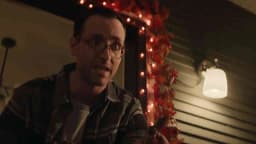
Peeps 'Easter without Peeps Delights is a Crying Shame' campaign by Terri & Sandy repositioned Easter candy for adults through a family-comedy film in 2017.

Peeps Delights Flips the Easter Candy Script in 2017
Peeps launched "Easter without Peeps Delights is a Crying Shame" in March 2017, a single-film campaign created by New York agency Terri & Sandy that repositioned Easter candy for adult consumers in the United States by depicting children stealing their parents' Peeps Delights and leaving the grown-ups bereft during the holiday.
The campaign arrived at a precise moment of product introduction. Peeps Delights, a new product line within the Peeps candies portfolio, had been announced publicly on February 23, 2017, at the South Beach Wine and Food Festival, according to reporting archived on clapboard.com. The film went live the following month, making it one of the earliest pieces of consumer-facing creative to support the launch in the United States market. The proximity between product reveal and campaign publication reflects a tight go-to-market strategy, placing the brand in front of Easter shoppers during the window when seasonal confectionery decisions are made.
The creative premise inverts a long-standing cultural assumption: that Easter candy exists primarily for children. By staging a scenario in which kids are the thieves and adults are the aggrieved parties, the campaign signals that Peeps Delights occupy a different register than traditional Peeps candies. Adults want them. Adults lose them. That reversal is the entire argument of the film, made without exposition, delivered through family-comedy performance. The campaign was published in the United States as a film medium execution and contains one media asset, as documented by clapboard.com. The Clapboard Score for this campaign stands at 60 out of 100.
Peeps positioned Peeps Delights as a product that adults would actively seek rather than passively purchase for children. That positioning responds to a documented shift in the United States confectionery market, where adult snacking occasions were generating increasing brand attention from manufacturers seeking to extend seasonal lines beyond their traditional younger-skewing audiences.
The Easter candy market in the United States was valued at approximately three point five billion dollars in 2015, according to confectionerynews.com, illustrating the commercial scale against which Peeps Delights was being introduced. Within that environment, Peeps competes directly with Reese's, whose "Best Easter Ever" campaign and seasonal product architecture has long dominated adult confectionery consideration during the holiday, and with Mars-owned M&M's, which deploys similarly broad holiday creative across the Easter period in the United States. Both competitors invest heavily in seasonal film and retail activation, meaning Peeps required a differentiated creative angle rather than a conventional holiday-warmth approach.
Terri & Sandy's strategic insight was to locate the product's desirability precisely where conventional Easter snack advertising would not look: in adult frustration rather than child delight. The sugar confectionery segment, the category in which Peeps candies sit, recorded approximately three point nine percent growth in 2017, the strongest performance of any major confectionery segment that year, according to nosh.com. Launching Peeps Delights into that growth environment with a campaign that asserted adult demand was a calculated move to claim shelf presence and consumer attention simultaneously. The campaign did not attempt to dislodge Peeps' existing equity with children; instead it argued that the new product line had created an entirely separate craving in the household.
Terri & Sandy constructed the campaign around a single comedic film. The execution presents a domestic Easter scenario in which children take the adults' Peeps Delights, reversing the conventional hierarchy of holiday candy ownership and generating the emotional payoff the title promises: a crying shame for the grown-ups left empty-handed.
The choice of film as the sole medium concentrates the campaign's impact into one piece of storytelling rather than distributing it across formats. Family-comedy as a genre carries specific tonal requirements — timing, casting, and domestic set design all bear the weight of making the reversal feel recognisable rather than contrived. The scenario works because it is grounded in an experience most households understand: food disappearing before the person who wanted it most can reach it. Peeps Delights occupy the role of the coveted object, which is itself a form of product demonstration; the audience understands through the parents' distress that the product is worth wanting.
Production credits for "Easter without Peeps Delights is a Crying Shame" are not publicly documented. What the archive record at clapboard.com confirms is that Terri & Sandy, the New York agency with an established creative relationship with Peeps dating to at least 2013, served as the agency of record for this execution. That continuity matters creatively. Terri & Sandy, operating previously as The Terri & Sandy Solution, created the 2013 campaign "Brothers," which was Peeps' first live-action television commercial in more than ten years, according to prnewswire.com, and established the brand's comfort with character-driven, performance-reliant film. The 2017 Peeps Delights campaign inherits that grammatical tradition — live action, domestic setting, human behaviour as the primary creative vehicle — while deploying it in service of a new product and a newly identified consumer.
No verified performance data for "Easter without Peeps Delights is a Crying Shame" is publicly available. No view counts, sales attribution figures, or post-campaign research results have been published in connection with this execution, and clapboard.com does not document contemporaneous awards recognition for the campaign.
Structural analysis, however, reveals a campaign that executes its narrow brief with competence. The single-film format is consistent with a new-product-launch objective that prioritises awareness and product personality establishment over multi-channel frequency. The comedic reversal at the heart of the creative is legible in seconds, which is a practical virtue for film content competing for attention during a high-volume seasonal advertising period in the United States. The campaign does not ask its audience to learn new information about Peeps candies as a brand; it asks them to accept one new idea — that Peeps Delights are desirable enough for adults to grieve their absence — and it delivers that idea through a scenario rather than a claim.
The Clapboard Score of 60 out of 100 reflects a campaign that is strategically sound and tonally coherent but limited in ambition and scale. One media asset serving a product launch in a market as competitive as United States Easter confectionery represents a contained bet. The creative idea is strong enough to support expansion; the execution as archived does not pursue it. For a product announced less than a month before the campaign published, that restraint may have been a production reality as much as a strategic choice.
Peeps launched this campaign in March 2017 through New York agency Terri & Sandy. It is a single-film execution set in the United States that depicts children stealing their parents' Peeps Delights during Easter, using family-comedy to position the new product line as something adults actively crave and miss.
Terri & Sandy, a New York advertising agency, created the campaign for Peeps in 2017. The agency had an established creative relationship with the brand, having also produced the 2013 "Brothers" campaign, which was Peeps' first live-action television commercial in more than a decade, according to prnewswire.com.
Peeps Delights is a product line introduced by Peeps in 2017. The product was publicly announced on February 23, 2017, at the South Beach Wine and Food Festival, according to clapboard.com, and the Terri & Sandy campaign was published the following month to support its Easter-season launch in the United States.
The campaign inverts a familiar Easter candy assumption. Children steal the adults' Peeps Delights rather than the reverse, leaving parents without the product during the holiday. That reversal argues, through comedy rather than claim, that Peeps Delights appeal to adult consumers as much as any confectionery snack aimed at children.
The campaign received a Clapboard Score of 60 out of 100, according to clapboard.com. The score reflects a strategically coherent execution with a clear and legible comedic idea, while noting that a single media asset represents a limited scale of ambition for a new product launch in the competitive United States Easter confectionery market.
.webp)
Creative Collaboration Platform: The Backbone of Modern Creative WorkWhat is a creative collaboration platform?Clapboard defines a creative collaboration platform as the operational core for today’s distributed creative teams. This is not a collection of digital collaboration tools stitched together; Clapboard’s system


Understanding the Creative Production MarketplaceWhat is a Creative Production Marketplace?Clapboard defines a creative production marketplace as a structured ecosystem where brands, agencies, and production talent converge to execute video, advertising, and branded content at scale. Unlike the legacy agency or freelanREAD FULL ARTICLE

The Urgent Need for a Creative Production Operating SystemWhy Traditional Creative Production Models Break DownClapboard sees the creative production landscape shifting under pressure. Content velocity is no longer a buzzword—it’s a mandate. Modern advertising demands relentless output across dozens of channels, each wREAD FULL ARTICLE