 ARCHIVE
How Denny's and EP+Co Turned a Viral Dad-and-Son Moment Into a Father's Day Film
How Denny's Captured Father's Day With DJ Pryor and Kingston Denny's 2019 Father's Day film...
How Panda Express Used Fortune Girl to Champion Everyday Generosity
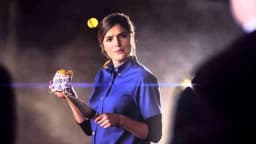
Panda Express launched Fortune Girl in May 2015, a single-film campaign created by Bailey Lauerman in the United States that centres on sharing good fortune and everyday generosity, supported by the social hashtag #FortunateForYou and a Baileylauerman.clapboard.com/blog/about-clapboard/overview/video-first-platform-creative-marketplace-explainer">custom brand webpage, according to Qsrmagazine.
Fortune Girl represents a deliberate pivot in how Panda Express chose to present itself to American audiences in 2015. Rather than leaning on product photography, promotional pricing, or the kind of appetite-driven creative common across the food and drink category, the campaign builds its identity around an emotional proposition: that small acts of kindness, symbolised through the cultural shorthand of fortune and luck, carry genuine meaning. The single film asset carries the entire narrative weight of the campaign, functioning less as a traditional advertisement and more as a short story designed to resonate beyond the transaction.
Bailey Lauerman, the Omaha-based independent agency behind the campaign, structured Fortune Girl around three reinforcing elements, according to Little Black Book. The film anchors the experience. The #FortunateForYou hashtag extends it into social conversation. And the custom brand webpage provides a destination that deepens engagement beyond the thirty-second or sixty-second film window. Together, these components signal that the campaign was designed with platform thinking in mind, not simply as a media buy. In the United States, where fast-casual dining was reshaping consumer expectations of what a restaurant brand could stand for, the choice to lead with narrative rather than product was a meaningful creative decision. The Clapboard Score for Fortune Girl is 63 out of 100, reflecting a campaign with genuine emotional ambition and coherent strategic architecture, though one whose public footprint remains limited in terms of documented reach and measurable outcome.
Fast casual was the fastest-growing major foodservice segment in the United States in 2015. According to QSR Magazine, the segment expanded by approximately 10.4 percent that year, adding around 3.4 billion US dollars in sales and representing roughly 10 percent of the broader US fast-food market, according to Qsrmedia. The 500 largest US restaurant chains generated approximately 288 billion US dollars in 2015 sales, per reporting from Meat and Poultry, with fast-casual concepts within that group growing at approximately 11.4 percent. That environment made brand differentiation both more urgent and more difficult: when every competitor was growing, standing apart required something beyond convenience or price.
Panda Express occupied a distinctive position within this landscape. As one of the leading US fast-casual Chinese-American restaurant brands, it competed not only against direct category rivals such as Chipotle Mexican Grill and Panera Bread, both of which had already established strong brand narratives in the United States, but also against the broader fast-food sector fighting for the same consumer dollar. Bailey Lauerman's response was to build Fortune Girl around a positioning of positivity, connection, and cultural resonance rather than menu innovation or value. The fortune cookie, already a recognisable piece of Panda Express brand iconography, provided the strategic bridge: a culturally embedded object associated with luck, wisdom, and sharing, repurposed as the emotional engine of a film narrative. This approach allowed the 2015 campaign to speak to values — generosity, gratitude, community — that transcend any single meal occasion, addressing a consumer appetite for brands that communicate meaning alongside product.
Fortune Girl is built on a single media asset: one film. That formal constraint is itself a creative statement. Bailey Lauerman chose depth over volume, investing the campaign's expressive energy into a narrative capable of doing what a suite of shorter, product-led executions cannot — establishing an emotional world with enough texture to invite genuine audience identification.
The film centres on the theme of good fortune as something shared rather than simply received. Its storytelling logic mirrors the structure of the fortune cookie itself: a small, contained object that opens into something larger and more meaningful than its exterior suggests. The campaign's accompanying hashtag, #FortunateForYou, extends this logic into participatory territory, inviting audiences in the United States to articulate their own expressions of gratitude and generosity in the social space. The custom brand webpage functions as a third layer of creative architecture, giving the campaign a home beyond the broadcast or digital placement where the film first appeared.
Production credits for Fortune Girl are not publicly documented in the sources available to Clapboard. What is clear from the campaign's structure is that Bailey Lauerman pursued a cinematic register rather than the glossy, food-forward visual language conventional to the food and drink category. The 2015 campaign marked a clean break from earlier Panda Express creative approaches, including the 2008 Eddie and Tom-Tom campaign created by Siltanen and Partners, which featured two talking panda characters voiced by Reno Wilson and Steve Mackall promoting Beijing Beef, according to research documented at historyoasis.com. Fortune Girl introduced an entirely new creative direction, replacing character-driven comedy with emotionally grounded human narrative — a shift that reflects how brand storytelling in the food industry was evolving during this period.
No verified performance data for Fortune Girl is publicly available. According to Clapboard's editorial research, no sales lift, incremental traffic figures, or social engagement metrics have been documented in the public record. The campaign does not appear in the award archives of Cannes Lions, the Effies, The One Show, D&AD, the Clios, or the Webby Awards, and no trade press reviews have been located in Campaign, Ad Age, Adweek, The Drum, or Contagious.
Structural analysis, however, offers meaningful signals. Fortune Girl is designed with the architecture of a campaign that expects to earn attention rather than simply buy it. A single high-craft film paired with a participatory hashtag and a branded content destination reflects a media model that depends on the film's emotional quality to generate organic amplification. In the United States in 2015, that model was viable: the fast-casual segment was growing rapidly, according to QSR Magazine, and consumers were demonstrating appetite for brand stories that carried cultural and emotional weight beyond the product offer.
The campaign's Clapboard Score of 63 out of 100 reflects this duality. The strategic logic is coherent, the creative register is distinctive for the food and drink category, and the cultural insight underpinning the fortune motif is genuinely owned by Panda Express in a way few competitors could replicate. What limits the score is the absence of any verified evidence that the campaign achieved the reach or resonance its architecture was built to generate. Fortune Girl remains a well-constructed creative argument for a brand idea — one whose real-world impact cannot be confirmed from the public record.
Fortune Girl is a 2015 Panda Express film campaign created by Bailey Lauerman in the United States. It centres on sharing good fortune and everyday generosity, supported by the hashtag #FortunateForYou and a custom brand webpage. The campaign consists of a single narrative film designed to build emotional connection rather than promote a specific product.
Bailey Lauerman, an independent agency based in Omaha, United States, created the Fortune Girl campaign for Panda Express. The campaign was published in May 2015 and represented a new creative direction for the brand, shifting away from character-driven product advertising toward emotionally grounded narrative storytelling in the food and drink category.
The Panda Express Fortune Girl campaign used the hashtag #FortunateForYou. This social component extended the film's themes of gratitude and generosity into participatory digital conversation, inviting US audiences to share their own expressions of good fortune alongside the campaign's custom brand webpage and central narrative film.
Fortune Girl marked a clean creative break from earlier Panda Express campaigns. The 2008 Eddie and Tom-Tom campaign, created by Siltanen and Partners with voice actors Reno Wilson and Steve Mackall, used talking panda characters for product promotion. Fortune Girl replaced that character-driven comedy approach with emotionally grounded human storytelling centred on kindness and cultural connection.
Fast casual was the fastest-growing foodservice segment in the United States in 2015. According to QSR Magazine, the segment expanded approximately 10.4 percent that year. This competitive growth environment made emotional brand differentiation strategically valuable, providing the market rationale for Panda Express and Bailey Lauerman to lead with narrative rather than product or price.
Fortune Girl receives a Clapboard Score of 63 out of 100. The score reflects a campaign with coherent strategic architecture and a distinctive emotional register for the food and drink category. The absence of any publicly verified performance data, awards recognition, or documented trade press coverage limits the score despite the campaign's structural and creative strengths.
.webp)
Creative Collaboration Platform: The Backbone of Modern Creative WorkWhat is a creative collaboration platform?Clapboard defines a creative collaboration platform as the operational core for today’s distributed creative teams. This is not a collection of digital collaboration tools stitched together; Clapboard’s system


Understanding the Creative Production MarketplaceWhat is a Creative Production Marketplace?Clapboard defines a creative production marketplace as a structured ecosystem where brands, agencies, and production talent converge to execute video, advertising, and branded content at scale. Unlike the legacy agency or freelanREAD FULL ARTICLE

The Urgent Need for a Creative Production Operating SystemWhy Traditional Creative Production Models Break DownClapboard sees the creative production landscape shifting under pressure. Content velocity is no longer a buzzword—it’s a mandate. Modern advertising demands relentless output across dozens of channels, each wREAD FULL ARTICLE