Ouigo's Memories campaign, created by Rosapark in France in May 2021, used home-video nostalgia and La Lambada to reframe affordable train travel as a family

Ouigo Memories Turns Family Nostalgia Into a Train Ticket
Ouigo's Memories campaign is a narrative-driven film created by Rosapark and published in France in May 2021, positioning the low-cost high-speed rail brand as an emotionally resonant choice for families by evoking childhood holiday nostalgia and anchoring it to a maximum fare of €8 for travel throughout France.
Ouigo belongs to SNCF, France's national rail operator, and operates as its low-cost high-speed offer. The Memories campaign launched on 17 May 2021, according to packshotmag.com, with distribution across Facebook, Instagram, Twitter, TikTok, and YouTube TrueView. That multi-platform approach allowed the single film asset to reach audiences where they already consume personal and family content, reinforcing the campaign's domestic, emotionally familiar register. The tagline, as reported by Little Black Book, reads: "À votre tour de fabriquer des souvenirs à vos enfants" — "Now it's your turn to make memories for your children" — a direct handoff from one generation of holiday-makers to the next.
In France, the campaign's strategic objective was precise: shift leisure travel decisions away from the family car and toward the train, specifically by addressing adults who remember 1980s and 1990s family holidays and may now be parents themselves, according to packshotmag.com. Rather than leading with price, the creative leads with feeling, letting the €8 fare arrive as a revelation rather than a proposition. A companion Instagram contest activation under the hashtag #OUIGOenVacances offered Ouigo vouchers as prizes, extending the campaign's reach into user-generated memory-sharing. Clapboard rates Memories at 55 out of 100, reflecting an execution that is strategically coherent and emotionally competent without reaching the creative distinction of the brand's most celebrated work.
Rosapark identified a specific and underserved tension in French leisure travel: cost-conscious families default to the car not only for financial reasons but because the car feels familiar, controllable, and emotionally associated with the childhood holiday experience itself. Memories directly addresses this by appropriating that same emotional territory — the camcorder footage, the beach, the camping site — and reassigning it to the train journey.
The targeting, as described by packshotmag.com, centres on adults shaped by 1980s and 1990s family holidays who are now raising children of their own. This generational bridge is not incidental; it is the campaign's core strategic device. By triggering parental nostalgia, Ouigo positions its service as the vehicle through which that remembered warmth can be recreated and passed forward. The creative approach therefore functions simultaneously as a price-value argument and an identity argument: choosing Ouigo is framed as responsible, emotionally generous parenting.
In the French rail market, Ouigo competes most directly with its parent company SNCF's full-fare TGV Inoui service and, increasingly, with Trenitalia's Frecciarossa operation, which entered the French high-speed market in 2021 as a competitor on the Paris–Lyon–Milan corridor. The European high-speed rail vehicle market was forecast at a compound annual growth rate of 4.1 percent for 2022 to 2027, according to cognitivemarketresearch.com, signalling a category expanding in both supply and competitive intensity. Within that context, Ouigo's decision to compete on emotional meaning rather than schedule frequency or onboard amenity is a deliberate differentiation from full-service operators. The campaign's focus on affordability without shame — €8 fares presented as enablers of love, not symbols of compromise — is a positioning that neither Trenitalia nor TGV Inoui can credibly occupy in the French domestic market.
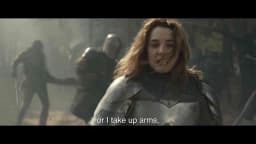
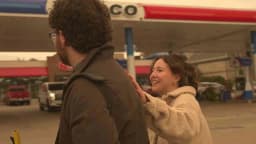
Ugo Mangin directed Memories, with production handled by Birth, according to packshotmag.com. The film adopts a home-video aesthetic rooted in the visual grammar of analogue camcorder footage: washed-out colour grading, handheld movement, low-resolution grain, and the specific awkward intimacy of a parent filming children at the beach or a campsite. This is not stylised nostalgia as pastiche; the execution commits to the texture of the real thing, drawing on the visual codes that French adults of a specific generation will recognise as their own.
The creative team at Rosapark responsible for the campaign includes copywriter Dimitri Lucas and art director Matthieu Vivinis, working under creative directors Gilles Fichteberg and Jean-François Sacco, two of the agency's three co-founders alongside Jean-Patrick Chiquiar. The management structure also includes managing director Delphine Drutel, client director Camille Passot, account manager Clémence Joly, social-media strategist Cassandre Geron, and TV production lead Stan Bertin, according to clapboard.com. Cinematography was handled by Raphaël Vandenbussche.
The use of La Lambada as the film's musical anchor, noted by culturepub.fr, is a precise cultural choice. The song's peak popularity in France coincides exactly with the late 1980s and early 1990s period the visuals reference, functioning as an auditory key that unlocks the same autobiographical memory the images evoke. The campaign's single media asset concentrates its emotional investment into one unbroken narrative arc rather than distributing it across a fragmented series, a structural decision that gives the film room to build genuine sentiment before the price proposition lands. In France, that restraint — letting emotion carry the argument — distinguishes the execution from the category's habitual reliance on functional messaging.
No independently verified campaign performance data for Memories — such as paid media reach figures, conversion rates, or brand-lift measurements — is publicly available from named sources. The film accumulated approximately 1,482 views on the platform where it was catalogued, according to clapboard.com, alongside one recorded like, figures that reflect the archival snapshot rather than the campaign's full multi-platform distribution across Facebook, Instagram, Twitter, TikTok, and YouTube TrueView.
Ouigo recorded approximately 9.76 million passengers in a recent operational period, according to Shs Hal Science, a figure that contextualises the scale of the audience the brand addresses and the commercial stakes attached to shifting modal choice away from the private car. The Instagram activation under #OUIGOenVacances extended the campaign into participatory territory, inviting families to generate their own memory content in exchange for Ouigo vouchers — a mechanic that, structurally, aligns the campaign's emotional proposition with a direct incentive to book, as reported by packshotmag.com.
Structurally, the campaign's effectiveness rests on two compounding moves: the nostalgia trigger lowers emotional resistance, and the €8 price point removes the rational objection. Neither argument is made didactically; both arrive through the film's narrative logic. Clapboard rates Memories at 55 out of 100. The score reflects an emotionally competent and strategically sound campaign that stops short of formal innovation. The home-video aesthetic, while executed with discipline, operates within a well-established creative convention, and the campaign's impact within France likely depended more on media placement and the Instagram activation than on the film's standalone creative ambition.
Ouigo's Memories campaign is a French rail advertising film created by Rosapark and released in May 2021. It uses home-video nostalgia and a soundtrack of La Lambada to connect the brand's €8 fares with the emotional value of creating family holiday memories, targeting parents who remember 1980s and 1990s childhood trips, according to packshotmag.com.
Rosapark produced the campaign with creative directors Gilles Fichteberg and Jean-François Sacco leading the work. Copywriter Dimitri Lucas and art director Matthieu Vivinis handled the creative execution. Ugo Mangin directed the film through production company Birth, with Delphine Drutel as managing director and Camille Passot as client director, according to clapboard.com.
The campaign launched in France on 17 May 2021, according to packshotmag.com. Distribution ran across Facebook, Instagram, Twitter, TikTok, and YouTube TrueView. An Instagram contest using the hashtag #OUIGOenVacances extended the campaign further, offering Ouigo vouchers to participants who engaged with the memory-sharing mechanic, as reported by packshotmag.com.
Ouigo's strategic objective was to shift French families from car travel to train travel for summer holidays. Rosapark targeted adults shaped by 1980s and 1990s family holidays who are now parents, combining emotional nostalgia with the rational argument of an €8 maximum fare throughout France, according to packshotmag.com and lbbonline.com.
Clapboard rates the Ouigo Memories campaign at 55 out of 100. The score reflects a strategically coherent and emotionally competent film that operates within established creative conventions. The home-video aesthetic is executed with discipline, but the campaign's formal ambition does not extend beyond the well-mapped territory of analogue nostalgia advertising.
Rosapark, co-founded by Jean-Patrick Chiquiar alongside Gilles Fichteberg and Jean-François Sacco, positions itself within the French creative agency market as an emotionally driven, narrative-focused shop. The Ouigo relationship, spanning at least from a 2018 interactive pinball game through the 2021 Memories film, demonstrates sustained strategic alignment between agency and client, according to influencia.net and lbbonline.com.
.webp)
Creative Collaboration Platform: The Backbone of Modern Creative WorkWhat is a creative collaboration platform?Clapboard defines a creative collaboration platform as the operational core for today’s distributed creative teams. This is not a collection of digital collaboration tools stitched together; Clapboard’s system


Understanding the Creative Production MarketplaceWhat is a Creative Production Marketplace?Clapboard defines a creative production marketplace as a structured ecosystem where brands, agencies, and production talent converge to execute video, advertising, and branded content at scale. Unlike the legacy agency or freelanREAD FULL ARTICLE

The Urgent Need for a Creative Production Operating SystemWhy Traditional Creative Production Models Break DownClapboard sees the creative production landscape shifting under pressure. Content velocity is no longer a buzzword—it’s a mandate. Modern advertising demands relentless output across dozens of channels, each wREAD FULL ARTICLE