O2 Priority Catch Some Stardust Brings Rewards to Life
O2's Catch Some Stardust campaign is a 2019 UK advertising initiative created by VCCP that repositioned O2 Priority as an aspirational, invitation-only experience platform, launching across television, out-of-home, video-on-demand, social media, and Snapchat augmented reality on 5 July 2019.
O2 Priority operates as a customer-reward platform offering O2 subscribers exclusive invitations, entertainment access, high-street offers, and priority ticket booking. The 2019 campaign's central objective was to move the brand perception of O2 Priority beyond a conventional loyalty benefit and into the territory of something rarer and more emotionally resonant. VCCP achieved this by constructing a creative world around the metaphor of stardust — luminous particles that fall from the sky and transform, upon contact, into real invitations and exclusive experiences. The campaign asked audiences across the United Kingdom not to think of O2 Priority as a perk they earned, but as a kind of magic they could catch.
The campaign's media plan was deliberately anchored to high-reach, entertainment-adjacent UK television programming. The 30-second TV film was scheduled around Love Island, Celebrity Juice, 8 Out of 10 Cats, and the final of The Voice Kids, as reported by campaignlive.co.uk — placements chosen to align the campaign with moments of popular cultural participation rather than passive viewing. That alignment was intentional: O2 Priority exists to grant access to experiences, and appearing inside the UK's most-watched entertainment formats reinforced exactly that promise. The campaign included a Facebook Messenger bot and Snapchat augmented reality activation, extending the stardust conceit into interactive digital environments. In the United Kingdom in July 2019, this multi-channel approach represented a considered effort to meet younger audiences on the platforms where they already spent time, rather than relying on television reach alone.
O2 Priority faced a strategic tension familiar to any mature rewards programme. Customer loyalty schemes in the telecommunications sector risk becoming invisible — known, but not felt. VCCP's strategic brief, as documented by vccp.com, was to transform the way O2 customers perceived Priority: from a background benefit into a foreground experience that felt genuinely exclusive and worth seeking out.
The broader UK electronics and technology market provided important context for this repositioning. Global smartphone sales reached approximately 1.37 billion units in 2019, down from approximately 1.40 billion the year before, according to gadgetguy.com.au — a contraction that confirmed handset markets had entered a replacement-driven, mature phase in which network operators could no longer rely on device excitement alone to drive engagement. In the United Kingdom, as elsewhere, operators needed to compete on the quality of the surrounding ecosystem rather than the handset on the shelf. Samsung held a 19.2 percent share of the global smartphone market in 2019, shipping approximately 296.2 million units, according to itbrief.com.au, while competitors including Huawei and Xiaomi applied sustained downward pressure on average selling prices. Against that backdrop, differentiating a network on experience rather than hardware became a commercially rational strategy.
O2's own brand lineage shaped the strategic choices made in 2019. VCCP, founded in 2002 with O2 as its founding client, had guided the brand through several distinct platform shifts, per vccp.com: the character-driven Be More Dog identity introduced in 2013, the customer-benefit proposition More for You launched in June 2016, and the Breathe It All In master brand platform introduced in September 2018. Catch Some Stardust did not displace that master platform but sat within it, applying its emotional register specifically to O2 Priority. The stardust metaphor gave VCCP a device that felt continuous with O2's history of warmth and cultural proximity while reaching for something more aspirational.
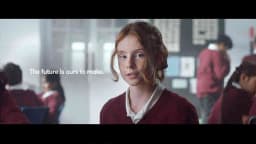
The 30-second television film is the centrepiece of the Catch Some Stardust campaign. It depicts people catching falling particles of stardust that transform, in their hands, into invitations — fast-track access, priority tickets, exclusive moments — making tangible what O2 Priority promises in the abstract. The visual logic is simple and immediate: something rare falls from the sky, and O2 customers are the ones positioned to receive it.
The film's soundtrack gives the creative its clearest emotional signal. Singer Tom Grennan recorded a cover of City of Stars, the Academy Award-winning song from the 2016 film La La Land, for the campaign, as documented by campaignlive.co.uk. The choice is precise: City of Stars carries associations with aspiration, romantic possibility, and the pursuit of something just out of reach. Grennan's version, rendered with a distinctly British vocal texture, localises that ambition for a UK audience without diluting the song's established emotional resonance. The pairing of an aspirational visual metaphor with an aspirational musical reference gave the 30-second film a coherence that extended beyond television into the broader campaign.
The Snapchat augmented reality activation translated the stardust metaphor into an interactive format, allowing users to engage with the campaign's central image in their own environment. The Facebook Messenger bot created a further layer of personalisation, connecting the emotional premise of exclusive access to a functional mechanism through which O2 customers could act on that premise. These executions, documented by vccp.com and The Drum, demonstrate a production approach that treated digital and social not as afterthoughts to a television idea but as extensions of the same creative logic. Production credits for the Catch Some Stardust film beyond VCCP's creative authorship are not publicly documented in available sources.
No verified performance data for the Catch Some Stardust campaign is publicly available. O2 and VCCP have not published figures relating to brand-tracking uplift, Priority app registrations, or earned media reach generated by the July 2019 launch. Analysis must therefore rest on the structural qualities of the campaign rather than disclosed metrics.
Structurally, the campaign demonstrates several characteristics associated with effective brand repositioning work. The stardust metaphor is ownable — no competing UK network operator was using a comparable device at the time of launch — and it is scalable across formats from a 30-second television film to a Snapchat AR lens without losing coherence. The media placement strategy, centred on high-reach UK entertainment programming including the Love Island season and The Voice Kids final as reported by campaignlive.co.uk, ensured the campaign landed in contexts where emotional engagement was already elevated. Scheduling a rewards-platform campaign inside entertainment programming that audiences were actively choosing to watch rather than tolerating created natural alignment between the campaign's promise and its environment.
The decision to deploy Tom Grennan's cover of City of Stars added cultural currency that a bespoke composition could not have provided on the same timeline. Grennan, a rising UK artist in 2019, brought authenticity relevant to a British audience without carrying the distance of an international superstar. Taken together, these structural choices reflect a campaign designed to shift emotional association rather than drive immediate direct response — a measured ambition for a platform whose value compounds over time. Clapboard scores Catch Some Stardust 69 out of 100, recognising its creative coherence and strategic clarity while noting the absence of verified outcome data limits a full assessment of its commercial effectiveness.
Catch Some Stardust is a 2019 UK advertising campaign created by VCCP for O2 Priority. It launched on 5 July 2019 across television, out-of-home, video-on-demand, social media, and Snapchat AR, using falling stardust as a metaphor for the exclusive invitations and experiences available through O2 Priority.
VCCP created the Catch Some Stardust campaign for O2. VCCP has been O2's agency since the network's launch, a relationship that began in 2002 when O2 was the founding client of the agency, making the 2019 campaign part of a partnership spanning approximately 17 years at the time of launch.
The O2 Catch Some Stardust TV advert uses a cover of City of Stars performed by UK singer Tom Grennan. City of Stars originally featured in the 2016 film La La Land. Grennan's version was recorded specifically for the campaign, lending the 30-second film a distinctly British register.
O2 scheduled the Catch Some Stardust 30-second television film around Love Island, Celebrity Juice, 8 Out of 10 Cats, and The Voice Kids final, according to campaignlive.co.uk. These placements positioned the campaign alongside the UK's most-watched entertainment programmes during the summer 2019 broadcast season.
Beyond television, the Catch Some Stardust campaign included Snapchat augmented reality and a Facebook Messenger bot, as documented by vccp.com and thedrum.com. Both digital activations extended the stardust metaphor into interactive formats, allowing O2 customers to engage with the campaign's premise of exclusive access on their own devices.
Clapboard scores the O2 Priority Catch Some Stardust campaign 69 out of 100. The score reflects the campaign's creative coherence, strategic clarity, and multi-channel ambition, while acknowledging that the absence of publicly verified performance data limits a complete assessment of its commercial impact in the UK market.
.webp)
Creative Collaboration Platform: The Backbone of Modern Creative WorkWhat is a creative collaboration platform?Clapboard defines a creative collaboration platform as the operational core for today’s distributed creative teams. This is not a collection of digital collaboration tools stitched together; Clapboard’s system


Understanding the Creative Production MarketplaceWhat is a Creative Production Marketplace?Clapboard defines a creative production marketplace as a structured ecosystem where brands, agencies, and production talent converge to execute video, advertising, and branded content at scale. Unlike the legacy agency or freelanREAD FULL ARTICLE

The Urgent Need for a Creative Production Operating SystemWhy Traditional Creative Production Models Break DownClapboard sees the creative production landscape shifting under pressure. Content velocity is no longer a buzzword—it’s a mandate. Modern advertising demands relentless output across dozens of channels, each wREAD FULL ARTICLE