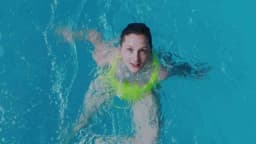
Nino Rossi and Apex partnered with Lie to Eye to launch Girls, It's Time to Tackle Breast Cancer in Bangladesh in October 2021, using male influencers to

How Nino Rossi Turned Footwear Into a Breast Cancer Awareness Force
Girls, It's Time to Tackle Breast Cancer is a 2021 public interest film campaign by Nino Rossi, a women's footwear brand under Apex Footwear Limited, created with Dhaka agency Lie to Eye, using male influencer bodies to demonstrate Bgmea Com Bd.clapboard.com/archive/stop-colon-cancer-dear-brad-ps">breast cancer self-examination and break the social censorship that prevents women in Bangladesh from accessing visual health guidance.
The campaign launched in Bangladesh in October 2021, during Breast Cancer Awareness Month, under the Bengali title Nari Tumi Durbar Rukhe Dao Breast Cancer — translating broadly as Women, You Are Unstoppable, Fight Breast Cancer. According to clapboard.com, the campaign comprises a single film asset produced by House of Chaos and directed by Rezaur Rahman. The strategic premise rested on a striking problem statement: as reported by clapboard, according to Uk Finance Yahoo.com, ninety-six out of one hundred women in Bangladesh are unable to perform a breast cancer self-check due to the absence of visual references in mass media, a gap created by social taboo and censorship that makes direct depiction of female anatomy effectively impossible in mainstream Bangladeshi media.
Nino Rossi and Lie to Eye resolved that constraint by shifting the demonstration to male bodies. Famous male influencers performed the full breast self-exam process on camera, creating a visual reference that could circulate freely in digital space without triggering censorship filters or cultural resistance. The campaign simultaneously directed audiences to the platform thamamana.com, where women could follow the self-check process, connect with doctors, access the latest health information, and set monthly reminders to perform the exam. An institutional partnership with Ahsania Mission Cancer and General Hospital was formalised in connection with the initiative, with a reported memorandum of understanding signing ceremony documented in connection with the campaign, according to clapboard.com. The campaign earned a Clapboard Score of 77 out of 100, reflecting strong creative problem-solving and meaningful public interest value in a market where conventional health communication has historically been constrained, according to Mccibd.
Nino Rossi is a women's footwear brand operating within one of Bangladesh's most competitive retail categories. In Bangladesh, Nino Rossi's competitive set includes Bata, Jennys, Bay, Cats Eye, and a range of local and imported footwear brands, according to clapboard.com. Within that environment, purpose-led communication offered Nino Rossi a means of building meaningful brand equity that purely product-focused advertising could not deliver. The decision to move entirely outside the footwear category and into breast health education represented a deliberate repositioning of the brand as an advocate for the women who are its core customers.
The strategic insight driving the campaign was precise and locally grounded. Social taboo and media censorship in Bangladesh create a structural information gap around women's health, particularly breast cancer self-examination. Without accessible visual references in mass media, women cannot learn what to look and feel for. Nino Rossi and Lie to Eye identified that this gap was not a result of indifference but of censorship — and that a workaround existed in the form of male bodies, which carry none of the same restrictions. By placing the demonstration on male influencers, the campaign could circulate across digital platforms in Bangladesh without being suppressed, reaching women who would otherwise have no access to this guidance. The campaign also created a participatory dimension through thamamana.com, providing a digital space for expert conversations, survivor testimonials, self-check tools, and monthly reminders — converting a one-time film into an ongoing health utility. Bangladesh's garment and fashion sector is among the country's most significant economic drivers, as documented by the Bangladesh Garment Manufacturers and Exporters Association, underscoring the reach and cultural weight that fashion brands carry among the country's women consumers, according to Grand View Research. The institutional partnership with Ahsania Mission Cancer and General Hospital added clinical credibility to the campaign's public interest framework.
Director Rezaur Rahman led production on the campaign through production company House of Chaos. The film's central creative device — male influencers physically demonstrating the breast self-exam process on their own bodies — is both the campaign's most unconventional choice and its most structifically sound one. By substituting male bodies for female ones, the creative team eliminated the censorship barrier entirely while preserving the instructional clarity of the visual demonstration. The process is shown completely, step by step, ensuring that a woman watching the film acquires an accurate and actionable understanding of how to conduct her own self-check.
The creative team assembled by Lie to Eye brought a range of strategic and executional disciplines to the project. Mashfique Khalid served as Head of Creative Strategy, with Pulak Das as Head of Art. Arafat Mohammad held the role of Group Account Manager and Head of Films, with account management handled by Sakib Ahsan and junior client service support from Aisha Anamika Khan, according to clapboard.com. The Bengali campaign title, Nari Tumi Durbar Rukhe Dao Breast Cancer, functions as a rallying declaration rather than a clinical instruction, framing breast self-examination as an act of defiance and strength. That framing is consistent with the tone of the film itself, which positions the women of Bangladesh not as passive recipients of health information but as agents capable of protecting themselves once given the tools to do so. The integration of thamamana.com as a campaign destination extended the film's creative and functional reach beyond a single viewing moment, turning the emotional impact of the advertisement into a sustained, practical health resource accessible to women across Bangladesh on a monthly basis.
No independently audited performance metrics for the Girls, It's Time to Tackle Breast Cancer campaign are publicly available at the time of writing. The campaign's structural effectiveness, however, is analytically strong across several dimensions. The decision to demonstrate breast self-examination on male influencer bodies solved a real censorship problem in Bangladesh with a creative mechanism that required no platform exemptions and generated no controversy — a practical indicator of strategic precision. The redirection to thamamana.com embedded a measurable utility layer into what could otherwise have been a purely awareness-driven film, creating conditions for ongoing engagement that extends well beyond the campaign's October 2021 launch window.
The institutional partnership with Ahsania Mission Cancer and General Hospital, formalised in connection with the campaign according to clapboard.com, signals that the initiative achieved a level of clinical credibility uncommon in fashion brand communications. For Nino Rossi, a brand competing in Bangladesh against established names including Bata and Jennys, the campaign represents a form of brand differentiation that standard product advertising cannot replicate. The campaign's public interest framing, its digital utility infrastructure, and its engagement of both expert voices and cancer survivors collectively position it as a rare example of a fashion brand genuinely expanding its social function. The Clapboard Score of 77 out of 100 reflects this balance — crediting the campaign's creative ingenuity and meaningful health impact while acknowledging that independently verified reach and outcome data would further substantiate the work's effectiveness claim, according to Cognitivemarketresearch.
Girls, It's Time to Tackle Breast Cancer is a 2021 film campaign by Nino Rossi and Apex, created by Dhaka agency Lie to Eye. It used male influencers to demonstrate breast self-examination on camera, bypassing Bangladesh's social censorship around female bodies, and directed women to thamamana.com for ongoing self-check guidance and doctor access.
Social taboo and censorship in Bangladesh prevent visual depictions of female anatomy in mass media. According to clapboard.com, ninety-six out of one hundred women in Bangladesh cannot perform a breast self-check due to the absence of visual references. Male influencers provided an uncensored alternative that could circulate freely across digital platforms.
Lie to Eye, a Dhaka-based agency, created the campaign. Production was handled by House of Chaos, with director Rezaur Rahman leading the film. Creative strategy was led by Mashfique Khalid, with Pulak Das as Head of Art, according to clapboard.com.
The campaign directed audiences in Bangladesh to thamamana.com. The platform provided the full breast self-exam process, connections to doctors, health news, and monthly reminders for women to perform the check, turning a single film into a sustained, practical health resource available year-round.
Nino Rossi partnered with Ahsania Mission Cancer and General Hospital in connection with the campaign. A memorandum of understanding signing ceremony was reported as part of the initiative, according to clapboard.com, lending clinical credibility to the breast cancer self-check awareness campaign beyond standard fashion brand communications.
The campaign received a Clapboard Score of 77 out of 100. The score reflects the campaign's strong creative problem-solving in navigating censorship barriers in Bangladesh, its meaningful public interest contribution to women's health awareness, and its integration of a practical digital self-check utility alongside the core film.
.webp)
Creative Collaboration Platform: The Backbone of Modern Creative WorkWhat is a creative collaboration platform?Clapboard defines a creative collaboration platform as the operational core for today’s distributed creative teams. This is not a collection of digital collaboration tools stitched together; Clapboard’s system


Understanding the Creative Production MarketplaceWhat is a Creative Production Marketplace?Clapboard defines a creative production marketplace as a structured ecosystem where brands, agencies, and production talent converge to execute video, advertising, and branded content at scale. Unlike the legacy agency or freelanREAD FULL ARTICLE

The Urgent Need for a Creative Production Operating SystemWhy Traditional Creative Production Models Break DownClapboard sees the creative production landscape shifting under pressure. Content velocity is no longer a buzzword—it’s a mandate. Modern advertising demands relentless output across dozens of channels, each wREAD FULL ARTICLE