 ARCHIVE
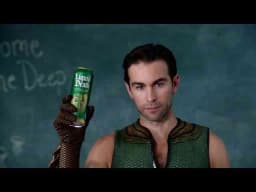
Liquid Death Fires The Deep in a Public Apology Built for the Internet
How Liquid Death Turned a Fictional Firing into a Public Apology That Spread Liquid Death's "Public...
Miller Lite Sends Jason Witten to Deliver Beer to Football Fans
Miller Lite's "Beer Delivery" campaign is a September 2018 experiential activation created by DDB Chicago in which Dallas Cowboys tight end Jason Witten personally surprises selected football fans by delivering Miller Lite beer to them during football viewing season in the United States.
The campaign operates on a deceptively direct premise. Rather than staging an elaborate production set or constructing an aspirational lifestyle narrative, Miller Lite and DDB Chicago placed one of the most recognisable figures in Dallas Cowboys history — Jason Witten — at the doorstep of real fans, according to Reelchicago. The surprise element is the creative engine: fans expecting a delivery receive instead a personal appearance from a player synonymous with Dallas football culture, according to 247wallst. That tension between the ordinary act of beer delivery and the extraordinary presence of Jason Witten generates the campaign's emotional charge and its shareability.
Published and archived in September 2018, the campaign targets Miller Lite loyalists and football fans in the United States at the precise moment when beer and sport converge most powerfully: the opening of the NFL season. The medium is experiential, and the campaign's primary content asset is an online video running longer than one minute, capturing authentic fan reactions as the encounters unfold. DDB, working through production company Gifted Youth and directed by Sergio Cilli, built the campaign around documentary-style candid footage rather than scripted performance, leaning into the unpredictability of real human responses. The Clapboard Score for "Beer Delivery" is 63 out of 100, reflecting the campaign's solid structural concept and cultural relevance within the alcoholic drinks category, balanced against limited documented reach and the absence of verified awards recognition.
Miller Lite enters the 2018 football season facing a premium-light beer segment defined by competitive pressure from two dominant rivals. Bud Light held approximately 15.4% of the US beer market, according to data cited by Molson Coors Blog, positioning it as the category's volume leader. Coors Light case volume fell 3.9% and Bud Light case volume fell 6% in 2017, according to Nielsen all-outlet and convenience data through December 30, 2017, as reported by Molson Coors Blog. These declines signal a category undergoing structural softening even among its biggest players, creating an opening for a brand willing to invest in emotional differentiation rather than pure promotional spending, according to Vinepair.
Miller Lite's own trajectory in 2018 provides strategic context. The brand gained 0.5 percentage points in the US premium-light segment year-to-date through April 7, 2018, according to Molson Coors Blog — a modest but directionally meaningful gain that precedes the September launch of "Beer Delivery." DDB's strategic response to this environment is not to compete on price or product claims but to compete on cultural belonging. Football fandom in the United States represents one of the most emotionally adhesive communities in American consumer culture, and Jason Witten's relationship with Dallas Cowboys supporters is built on more than a decade of on-field loyalty.
The experiential format itself reflects a deliberate departure from conventional beer advertising, according to Molsoncoorsblog. Where competitors like Bud Light pursued broad broadcast reach through NFL sponsorship assets in 2018, Miller Lite used DDB to engineer a narrower, more intimate encounter designed to generate organic social amplification. The campaign positions Miller Lite not as an official sponsor making a transactional claim on football, but as a brand that understands what game day actually feels like for the fans living it in the United States, according to Chicagotribune.
Director Sergio Cilli of production company Gifted Youth leads the creative execution of "Beer Delivery," shaping what could have been a straightforward celebrity cameo into a piece of observational filmmaking. Cilli's approach prioritises unscripted reaction over polished performance, allowing the camera to dwell on the moment of recognition as fans process the fact that Jason Witten is standing at their door holding Miller Lite. That choice — to let the surprise breathe rather than cut away — is the defining craft decision of the campaign.
The production infrastructure supporting Cilli's direction is substantial. Executive producer Anthony Ficalora and managing director Dal Wolf oversee operations at Gifted Youth, while post-production is handled by Optimus, with editor Mike Berg and edit assistant Jenny Schaye shaping the raw footage into a coherent narrative arc. Color grading is completed at Nice Shoes by colorist Gene Curley, whose work gives the piece a naturalistic visual texture consistent with its documentary ambitions. Sound design is managed by Nicholas Papaleo, senior sound designer at DDB Audio, with audio production by DDB's Cameron Aper, ensuring the audio landscape preserves the intimacy of the real-world encounters rather than amplifying them artificially, according to credits documented by Reel Chicago and LBB Online.
The creative leadership at DDB Chicago brings significant weight to the project. Ari Weiss serves as chief creative officer of DDB North America, presiding over a campaign that reflects DDB Chicago's broader strategic commitment to earned authenticity in brand storytelling. As Colin Costello noted in Reel Chicago's coverage published September 12, 2018, the campaign's editorial strength lies in the authenticity of Witten's relationship with Dallas fans and the genuine entertainment value generated by the encounters — a point that validates the campaign's core craft hypothesis: that real surprise, captured honestly, outperforms manufactured emotion in the alcoholic drinks category.
No verified performance data for the "Beer Delivery" campaign is publicly available. No campaign-specific effectiveness data, sales lift figures, or market-share attribution connected directly to "Beer Delivery" have been confirmed, according to Clapboard's editorial research. The campaign has not received documented recognition across Cannes Lions, Effies, The One Show, D&AD, Clios, Webby Awards, or WARC Awards, according to Clapboard's awards tracking.
Structural analysis offers a credible proxy for effectiveness. The campaign's experiential architecture is built around three compounding mechanisms: the social currency of Jason Witten's presence among Dallas Cowboys fans in the United States, the shareability of genuine surprise captured on camera, and the natural alignment between the NFL season's opening and beer consumption behaviour. Each mechanism reinforces the others. An experiential campaign of this design — where the primary content is authentic fan reaction rather than brand messaging — tends to generate disproportionate earned media relative to production investment, provided the talent relationship is credible. Witten's multi-decade association with Dallas football makes that credibility structurally sound.
The campaign's 63 out of 100 Clapboard Score reflects this balance: a well-constructed idea with genuine cultural grounding in the US football fan community, tempered by the absence of documented reach metrics, limited verified amplification data, and no awards trail to signal peer recognition within the industry.
Miller Lite's Beer Delivery campaign was a September 2018 experiential activation created by DDB Chicago. Dallas Cowboys tight end Jason Witten personally delivered Miller Lite beer to unsuspecting football fans in the United States, with genuine fan reactions captured in an online video exceeding one minute in length.
Sergio Cilli of production company Gifted Youth directed the Beer Delivery campaign for Miller Lite in 2018. Cilli's approach prioritised unscripted fan reactions over polished performance, giving the campaign a documentary quality that reinforced the authenticity of Jason Witten's surprise appearances.
DDB selected Jason Witten because his multi-decade association with the Dallas Cowboys gave him deep credibility among the football fans Miller Lite was targeting in the United States. Witten's presence transformed a simple beer delivery into a culturally resonant surprise moment with genuine emotional impact.
The Miller Lite Beer Delivery campaign by DDB has no documented awards recognition. According to Clapboard's editorial research, the campaign received no verified recognition across Cannes Lions, Effies, The One Show, D&AD, Clios, Webby Awards, or WARC Awards following its September 2018 launch.
Miller Lite gained 0.5 percentage points in the US premium-light segment year-to-date through April 7, 2018, according to Molson Coors Blog. This modest growth preceded the September 2018 Beer Delivery launch, situating the campaign within a competitive landscape where Bud Light held approximately 15.4% of the US beer market.
Miller Lite's Beer Delivery campaign holds a Clapboard Score of 63 out of 100. This score reflects the campaign's strong cultural grounding in US football fandom and a well-constructed experiential concept, balanced against the absence of verified performance metrics and no documented industry awards recognition.
.webp)
Creative Collaboration Platform: The Backbone of Modern Creative WorkWhat is a creative collaboration platform?Clapboard defines a creative collaboration platform as the operational core for today’s distributed creative teams. This is not a collection of digital collaboration tools stitched together; Clapboard’s system


Understanding the Creative Production MarketplaceWhat is a Creative Production Marketplace?Clapboard defines a creative production marketplace as a structured ecosystem where brands, agencies, and production talent converge to execute video, advertising, and branded content at scale. Unlike the legacy agency or freelanREAD FULL ARTICLE

The Urgent Need for a Creative Production Operating SystemWhy Traditional Creative Production Models Break DownClapboard sees the creative production landscape shifting under pressure. Content velocity is no longer a buzzword—it’s a mandate. Modern advertising demands relentless output across dozens of channels, each wREAD FULL ARTICLE