Microsoft's #Kickstanding campaign, created by Ensemble and UM Bangkok in Thailand in May 2014, used co-creation to drive awareness of the Surface tablet's

How Microsoft Used #Kickstanding to Put Surface on the Map in Thailand
Microsoft's #Kickstanding campaign is a Thailand-market digital initiative launched in May 2014 by agency Ensemble and media partner UM Bangkok, designed to drive consumer awareness of the Surface tablet's built-in kickstand feature through co-creation and social participation.
The campaign centres on a single, product-specific idea: the Surface kickstand is not merely a hardware detail but a behaviour worth naming, sharing, and celebrating. By anchoring the creative around a hashtag — #Kickstanding — Microsoft and Ensemble invited Thai audiences to make the physical act of propping up a Surface device into a cultural signal, turning an engineering feature into a social gesture. This approach reflects a broader strategic instinct within Microsoft's 2014 global push to differentiate Surface from both entertainment-first tablets and conventional laptops in the increasingly competitive hybrid-device market.
In Thailand, the campaign was executed entirely through digital channels, consistent with the country's rapidly expanding online connectivity during that period. The archived record documents one media asset associated with the campaign, suggesting a tightly focused creative execution rather than a multi-format production sweep. The #Kickstanding effort sits within a year of significant corporate activity for Microsoft: in May 2014, the company also announced a partnership providing free Office 365 for Education to students across emerging markets, as reported by News Microsoft, underscoring the brand's simultaneous effort to build institutional credibility in Southeast Asia alongside consumer product visibility. The campaign earned a 2014 Silver award for Best Use of Co-creation and Crowdsourcing at Marketing and Loyalty Engagement Singapore, confirming external industry recognition of its participatory mechanics even within a single-market deployment.
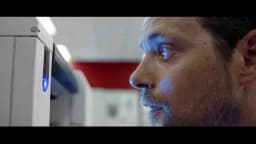
Microsoft positioned the #Kickstanding campaign against a specific competitive tension in the 2014 Thailand electronics market. The Surface tablet faced pressure from entertainment-oriented devices on one side and conventional laptops on the other, with Apple's iPad representing the dominant consumer tablet frame of reference and Lenovo aggressively expanding its hybrid-device presence across Asia-Pacific markets, as noted in reporting from News Lenovo.
The strategic insight driving #Kickstanding is that product features alone rarely shift consumer perception — behaviours do. The kickstand on the Surface was a visible, tactile differentiator that no comparable iPad model offered at the time, and Ensemble's decision to build a co-creation campaign around that single feature transformed a specification into an identity marker. By assigning the feature a hashtag, the campaign gave Thai consumers a ready-made vocabulary for self-expression tied directly to the device.
The broader market context reinforces why Microsoft needed this kind of creative leverage in 2014. According to Gartner, worldwide PC shipments reached 79.4 million units in the third quarter of 2014, representing a year-over-year decline of 0.5 percent, signalling a contracting traditional PC environment that made Surface's hybrid positioning commercially essential. In Thailand specifically, digital adoption was accelerating, making social and participatory digital formats a strategically sound media choice for reaching younger, connected consumers. Microsoft's decision to work with both a creative agency, Ensemble, and a specialist media agency, UM Bangkok, reflects an understanding that co-creation mechanics require precise media amplification to generate the social density that makes a hashtag campaign self-sustaining rather than inert.
Ensemble built the #Kickstanding campaign around a co-creation mechanic, inviting Thai consumers to participate in defining what it means to use the Surface kickstand rather than simply receiving a product demonstration. The creative approach trusts the product's physical distinctiveness to carry the concept, treating the kickstand not as a feature to be explained but as a behaviour to be performed and shared publicly through the campaign's central hashtag.
Creative direction for the campaign was led by Yanathorn Punratanarungsee, with Monprapa Rattanakanokporn also credited. The involvement of UM Bangkok alongside Ensemble suggests a deliberate division of labour between creative concepting and media placement, a structural choice that reflects the campaign's dependence on social distribution to achieve the participatory volume that gives a crowdsourcing mechanic meaning. Without audience amplification, a hashtag remains decorative; with coordinated media placement, it becomes a shared cultural prompt.
The campaign's archived footprint consists of one documented media asset, which places limits on how fully the production scope can be assessed from the public record. No verified trade press reviews of the creative execution have been identified from publications including Campaign, Ad Age, Adweek, The Drum, or Contagious. What the archive does confirm is that the campaign was submitted and recognised within the same calendar year as its launch, receiving a Silver award at Marketing and Loyalty Engagement Singapore for Best Use of Co-creation and Crowdsourcing. That recognition points to a creative execution that industry peers judged effective in its category mechanics, even if the full scope of the production remains incompletely documented. The lineage of Microsoft's participatory advertising instinct traces back to the 2008 "I'm a PC" campaign, as noted by motioncue.com, which similarly invited ordinary users to co-author the brand's identity against a dominant Apple narrative.
No verified performance data for the #Kickstanding campaign is publicly available. Consumer reach figures, engagement metrics, social media reaction data across platforms, and media spend are not established by available sources. In the absence of quantified outcomes, the campaign's structural effectiveness can still be assessed on the basis of its design logic and the recognition it received.
The co-creation mechanic at the centre of #Kickstanding is structurally sound for a single-market digital campaign with limited documented asset production. A hashtag-driven participation format requires low consumer effort while generating visible, brand-attributed social content — a cost-efficient model for awareness-stage objectives in a market where Microsoft was competing for tablet consideration against deeply entrenched alternatives. The 2014 Silver award at Marketing and Loyalty Engagement Singapore for Best Use of Co-creation and Crowdsourcing provides the only externally verified indicator of impact, suggesting that the campaign's mechanics were judged credible by a regional industry jury even if consumer-side results have not entered the public record.
The campaign's narrow documented scope — one media asset, a single market, a single launch window — also limits the evidence base available for retrospective analysis. It is not possible to determine from available sources whether #Kickstanding generated sustained conversation in Thailand beyond its initial launch period, or how it contributed to Surface sales or brand preference metrics in the market. Clapboard's editorial assessment places #Kickstanding at a score of 53 out of 100, reflecting a campaign with a coherent central idea and validated co-creation credentials that is held back by an incomplete public record and the structural constraints of a single-market, single-asset execution.
Microsoft's #Kickstanding was a digital campaign launched in Thailand in May 2014, created by Ensemble and UM Bangkok. It used a co-creation mechanic built around the Surface tablet's built-in kickstand feature, inviting Thai consumers to participate through a shared hashtag and turning a product specification into a social behaviour.
Ensemble served as the lead creative agency on Microsoft's #Kickstanding campaign, with UM Bangkok handling media responsibilities. Creative director Yanathorn Punratanarungsee and Monprapa Rattanakanokporn are both credited on the campaign, which was produced for the Thailand market and launched in May 2014.
The #Kickstanding campaign won a Silver award at the 2014 Marketing and Loyalty Engagement Singapore awards, recognised in the category of Best Use of Co-creation and Crowdsourcing. This remains the only externally verified recognition for the campaign in the public record and was awarded in the same year as the campaign's launch.
The #Kickstanding campaign specifically promoted the Surface tablet's integrated kickstand. Ensemble positioned this physical feature as a distinct behavioural identity marker, differentiating the Surface from competing tablets including Apple's iPad, which offered no comparable built-in stand at the time of the campaign's May 2014 launch in Thailand.
Microsoft's #Kickstanding campaign holds a Clapboard Score of 53 out of 100. The score reflects a coherent co-creation concept and a validated industry award, offset by a limited documented production footprint, a single-market scope confined to Thailand, and the absence of publicly available consumer performance metrics.
.webp)
Creative Collaboration Platform: The Backbone of Modern Creative WorkWhat is a creative collaboration platform?Clapboard defines a creative collaboration platform as the operational core for today’s distributed creative teams. This is not a collection of digital collaboration tools stitched together; Clapboard’s system


Understanding the Creative Production MarketplaceWhat is a Creative Production Marketplace?Clapboard defines a creative production marketplace as a structured ecosystem where brands, agencies, and production talent converge to execute video, advertising, and branded content at scale. Unlike the legacy agency or freelanREAD FULL ARTICLE

The Urgent Need for a Creative Production Operating SystemWhy Traditional Creative Production Models Break DownClapboard sees the creative production landscape shifting under pressure. Content velocity is no longer a buzzword—it’s a mandate. Modern advertising demands relentless output across dozens of channels, each wREAD FULL ARTICLE