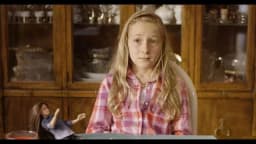
Metro Brazil and Artplan transformed a standard website CAPTCHA into a daily fake news detection tool, launching the Captcha Against Fake News campaign in May

How Metro Brazil Turned a CAPTCHA Into a Fake News Filter
Metro Brazil's Captcha Against Fake News is an experiential campaign created by Artplan and launched in Brazil in May 2019, in which the newspaper converted its standard website CAPTCHA mechanism into a daily interactive tool that challenged users to identify which image contained a piece of fake news, then immediately delivered a verified factual explanation, according to WARC.
The campaign operates at the intersection of routine digital behaviour and editorial purpose. Where a conventional CAPTCHA asks users to identify traffic lights or crosswalks to prove they are human, Metro's version asked a more consequential question: can you tell which of these images is false? Every day, the site presented a new fake-news item drawn from the circulating misinformation of that news cycle, making the experience both timely and repeatable. After selecting the image they believed contained the false information, users received a clear, sourced explanation of the verified fact behind the story. User comment functionality was also built into the experience, extending the conversation beyond the CAPTCHA interaction itself.
In Brazil, the campaign arrived at a moment of acute public anxiety about misinformation. The 2018 Brazilian general election had placed the spread of fabricated stories through messaging platforms and social media at the centre of national debate, and news organisations across the country were actively seeking ways to assert their credibility as providers of verified information, according to Lovelymobile News. Metro, a free commuter daily distributed across Brazil's major urban centres, used this campaign to position its journalism as a corrective to the noise rather than a contributor to it. The campaign was produced by Bossa Nova Films and submitted to international creative recognition channels, where it was documented by Ads of the World, according to Adsoftheworld.
Metro Brazil identified a specific and measurable consumer tension. Brazilians were navigating an information environment in which the boundary between verified journalism and fabricated content had become genuinely difficult to locate, and free commuter newspapers like Metro were competing not only with paid broadsheets but with the frictionless speed of WhatsApp forwards and social media posts. The Captcha Against Fake News campaign by Artplan addressed this tension by inserting a media literacy intervention into a moment users had already accepted as part of their digital routine, according to Intch.
The structural pressures on Brazilian print journalism were severe by 2019. According to Poder360, ten major Brazilian newspapers had a combined print circulation of approximately 588,600 copies in October 2019, down from around 1.2 million in December 2014 — a decline of roughly 51.7 percent over five years. According to Poder360, nine large Brazilian newspapers recorded a combined digital subscription base of approximately 993,000 in the same period, indicating that audience migration to digital platforms was accelerating rather than stabilising. In this environment, Metro's decision to use its own website infrastructure as a credibility-building tool reflected a clear-eyed reading of where its readers actually were.
Competitors including Folha de S.Paulo had invested heavily in fact-checking operations and digital subscription models to defend their editorial authority, as reported by Folha de S.Paulo's own published disclosures. Metro's approach was structurally different: rather than erecting a paywall or launching a branded fact-checking vertical, Artplan embedded the fact-checking moment inside an existing user behaviour, making participation involuntary in the best sense. The strategy acknowledged that media literacy cannot be mandated but can be designed into the architecture of ordinary digital experience.
Artplan constructed the Captcha Against Fake News campaign around a single, elegant mechanical inversion. The creative team took a user interface element universally understood as a gatekeeping nuisance — the CAPTCHA — and reloaded it with editorial intent, transforming friction into instruction without asking users to change their behaviour in any meaningful way.
Creative directors Zico Farina and Marcos Abrucio led the concept, with art direction by Ary Nogueira and copy by Rafael Pascarella, as documented by Ads of the World. The production was handled by Bossa Nova Films, with production direction by Chico Gomes. The visual grammar of the execution was deliberately familiar: the CAPTCHA grid retained its standard appearance so that users would engage with it instinctively before recognising that the images being presented were not road scenes but news photographs, some real and some fabricated.
The daily refresh cadence was central to the campaign's creative logic. By rotating a new fake-news item each day, Artplan ensured that the experience remained current and that repeat visitors to Metro's website encountered a different challenge each time. This prevented the interaction from becoming a novelty that users learned to bypass, and it kept the campaign editorially alive across an extended run rather than spending its impact in a single burst. The decision to include user comment functionality added a social layer to what might otherwise have been a solitary micro-interaction, giving users a space to discuss the fact-check they had just received and extending the reach of each day's verified explanation organically. The campaign was classified as experiential, though it operated entirely within the digital environment of Metro's own website — a choice that kept production costs contained while maximising relevance to Metro's existing audience.
No verified performance data for the Captcha Against Fake News campaign is publicly available. Metro and Artplan have not published figures for user engagement rates, daily interaction volumes, or measurable shifts in brand trust attributable to the campaign. Assessment of its effectiveness therefore rests on structural analysis of the mechanism itself and the competitive context in which it operated.
Structurally, the campaign carried several properties that correlate with durable impact in the experiential media category. The zero-additional-effort barrier to participation — users were already completing the CAPTCHA to access the site — removed the single largest obstacle to engagement that most branded media literacy initiatives face. The daily cadence created a habit loop rather than a one-time event. The immediate delivery of a verified explanation meant that the information reward followed the behavioural prompt within seconds, which aligns with established principles of effective behaviour design.
The campaign was submitted to and documented by Ads of the World and noted by A2C Quebec as a notable example of experiential media work, representing independent third-party recognition of the campaign's creative merit. In the context of Brazilian media in 2019, where print circulation was declining sharply according to Poder360 and digital credibility was a differentiating asset, the campaign gave Metro a concrete and repeatable demonstration of editorial values rather than a declaration of them. Clapboard rates the Captcha Against Fake News campaign a 68 out of 100, reflecting a conceptually strong and culturally resonant idea whose long-term effectiveness cannot be fully assessed without verified audience data.
Metro's Captcha Against Fake News is a 2019 experiential campaign created by Artplan in Brazil. It replaced the standard website CAPTCHA with a daily fake news identification challenge, then delivered a verified factual explanation to users who completed it, combining routine digital behaviour with active media literacy education.
Artplan, based in São Paulo, created the campaign for Metro Brazil. Creative directors Zico Farina and Marcos Abrucio led the concept, with art direction by Ary Nogueira and copy by Rafael Pascarella. Bossa Nova Films handled production, with Chico Gomes serving as production director, as documented by Ads of the World.
Artplan launched Captcha Against Fake News in Brazil in May 2019. The campaign ran on Metro's own website, targeting the newspaper's existing digital audience across Brazil's major urban centres during a period of heightened national concern about misinformation following the 2018 Brazilian general election.
Metro's website CAPTCHA was redesigned to present users with images, one of which contained a fake news item. After selecting the false image, users received a verified factual explanation of the real story. A different fake news item appeared each day, and user comment functionality allowed further discussion of each verified explanation.
Clapboard rates the Captcha Against Fake News campaign 68 out of 100. The score reflects a conceptually strong and culturally timely idea, anchored in a genuine consumer insight about misinformation in Brazil, with the rating tempered by the absence of publicly verified performance data to confirm measurable audience impact.
Brazil's 2018 general election placed misinformation at the centre of national debate, creating direct reputational pressure on news organisations. Metro used Captcha Against Fake News to assert its editorial credibility as a source of verified information, differentiating itself from the unverified content circulating across social media and messaging platforms in Brazil.
.webp)
Creative Collaboration Platform: The Backbone of Modern Creative WorkWhat is a creative collaboration platform?Clapboard defines a creative collaboration platform as the operational core for today’s distributed creative teams. This is not a collection of digital collaboration tools stitched together; Clapboard’s system


Understanding the Creative Production MarketplaceWhat is a Creative Production Marketplace?Clapboard defines a creative production marketplace as a structured ecosystem where brands, agencies, and production talent converge to execute video, advertising, and branded content at scale. Unlike the legacy agency or freelanREAD FULL ARTICLE

The Urgent Need for a Creative Production Operating SystemWhy Traditional Creative Production Models Break DownClapboard sees the creative production landscape shifting under pressure. Content velocity is no longer a buzzword—it’s a mandate. Modern advertising demands relentless output across dozens of channels, each wREAD FULL ARTICLE