Meat Pack Hijack Turned Competitor Stores Into a Discount Race
Meat Pack's Hijack campaign is a 2012 GPS-driven ambient promotion created by 4am Saatchi & Saatchi Guatemala that detected when customers entered rival sneaker stores, then triggered a countdown discount starting at 99% and falling by one percentage point every second, rewarding whoever reached a Meat Pack location fastest with the highest saving.
Meat Pack is the trendiest sneaker store in Guatemala, carrying limited-edition kicks from Adidas, Nike, Puma, and Supra and cultivating a cult following among the country's sneakerhead subculture since opening its doors three years before the campaign launched. The brand's identity is built on edgy, irreverent energy and the expectation that every promotional moment will surprise its audience rather than simply reward them. By December 2012, the retailer needed a new discount mechanic that matched that standard and could compete for foot traffic against the very global brands it stocked.
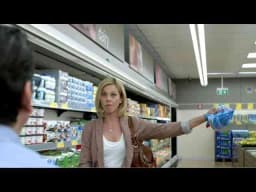
The answer was an enhancement built into the official Meat Pack app. Using GPS tracking technology, Hijack recognised when an app user entered the official retail location of any brand sold at Meat Pack — effectively identifying the consumer inside a competitor's store — and immediately served a personalised discount notice. The offer began at 99% and counted down in real time, one percentage point per second, until the customer either arrived at a Meat Pack store and locked in their saving or lost the offer entirely. The mechanic transformed a mundane shopping trip in Guatemala City into a physical sprint, converting competitive retail geography into a live game. Clapboard rates the campaign 84 out of 100, reflecting exceptional strategic originality and measurable performance against a modest production footprint.
Meat Pack operates in a retail environment defined by the gravitational pull of global sportswear giants. In Guatemala, the official brand stores of Nike, Adidas, and Puma represent the primary competitive threat to a multibrand sneaker retailer, because consumers walking into those flagships are, at that moment, furthest from a Meat Pack purchase decision. The strategic insight behind Hijack was to treat that moment not as a lost sale but as a recruitment opportunity.
The global athletic footwear market stood at approximately 74.7 billion US dollars in 2011, according to data cited on Slideshare, with Nike commanding roughly 31 percent of global market share and Adidas holding approximately 16 percent, also per Slideshare. For a small Guatemalan multibrand retailer, competing on brand equity against those two players is structurally impossible. Hijack instead competed on experience and immediacy, turning the competitor's store into the starting line rather than the finish line. By the time a Nike or Adidas retail environment had captured a consumer's attention, Meat Pack had already placed a counter-offer in that consumer's pocket.
The campaign also exploited a behavioural truth specific to the sneakerhead subculture: discount urgency produces physical action. Sneaker culture in Guatemala, as across Latin America, prizes exclusivity and the feeling of winning a limited opportunity. A countdown that visibly diminishes with every second spent standing in a competitor's store translates abstract urgency into a bodily imperative. According to Marketing Week, reporting in October 2014, Meat Pack had built a Facebook and app audience of 60,000 people before the campaign launched, giving the activation a pre-qualified base of engaged consumers ready to respond the moment Hijack triggered. That existing community meant the mechanics did not need mass media amplification to generate competitive pressure — the pressure was already social and self-reinforcing.
Hijack is a technology-led campaign, but its creative craft lies in the precision with which the mechanic was designed to produce an emotional state — specifically, the racing, slightly panicked joy of someone who knows they are winning something and might lose it. The app enhancement was engineered so that the discount countdown began the instant GPS confirmed the user's presence inside a competitor store, with no delay and no opt-in prompt beyond the one already granted when the customer downloaded the Meat Pack app.
The campaign was directed by Rodolfo Rivera, who also served as Art Director and Photography Director alongside Guiseppe Badalamenti on photography. Miguel Mayen held the position of Chief Creative Officer, with Marcopolo Ramirez and Jonathan Deleon serving as Creative Directors. Rodrigo Fernandez joined Rivera as Art Director, and Guillermo Chang handled design. Music was composed by Elliot Rivas, while Carlos Escobedo led production, supported by Jorge Juarez and Alejandro Perez. Luis Fernando Roca executed animation and graphic design. The breadth of that credit list reflects a campaign that, despite its ambient and mobile categorisation, was built with the production discipline of a full broadcast project.
The social amplification layer was embedded directly into the redemption moment rather than added as an afterthought. When a customer successfully redeemed their discount, the Meat Pack app automatically updated their Facebook status to announce the promotion, their saving, and implicitly the fact that they had moved faster than anyone still standing in a competitor's store. That automatic broadcast created a viral competitive attitude, as described in campaign documentation cited by adsoftheworld.com, turning each successful Hijack into a public boast that recruited the next wave of participants. One customer, Pedro Rodriguez, secured an 89 percent discount — a record redemption that itself became a piece of earned publicity for the campaign.
Hijack produced documented results across three distinct performance dimensions. According to saatchi.com and corroborated by adsoftheworld.com, more than 600 customers were hijacked from competitor stores during the campaign's run, with Marketing Week confirming in its October 2014 reporting that this figure was achieved within a single week. All discounted merchandise sold in record time. The automatic Facebook status updates generated organic viral spread that extended the campaign's reach well beyond the 60,000-person app and social audience Meat Pack had assembled, according to Marketing Week.
The campaign's award record substantiates independent industry validation. Hijack won a Silver Lion in the Mobile Lions category at Cannes Lions 2012, along with a Bronze Lion in an additional category, as reported by adsoftheworld.com and Iima Ac In. The campaign also won Gold at the Jade Awards 2012, per buzinga.com.au, and reached the finalist stage in the Mobile category at El Ojo de Iberoamérica 2012, as listed by elojodeiberoamerica.com. MarTech, writing in May 2021, cited Hijack as a defining example of geo-aware mobile marketing, noting its lasting influence on how location data can be deployed in retail contexts.
No verified sales revenue figures or granular conversion rate data for the Hijack campaign are publicly available beyond the sell-through confirmation noted above. What the structural evidence demonstrates is a closed-loop performance system: GPS detection created a trigger, the countdown mechanic created urgency, physical foot traffic created conversion, and automatic social sharing created the next trigger cycle. For a small Guatemalan sneaker store competing against the flagship retail presence of Nike and Adidas, that loop delivered measurable commercial outcomes with minimal media spend.
Meat Pack's Hijack was a 2012 GPS-driven ambient promotion by 4am Saatchi & Saatchi Guatemala. The official Meat Pack app detected when users entered competitor sneaker stores and triggered a countdown discount starting at 99%, falling one percentage point per second until the customer reached a Meat Pack store and locked in their saving.
Hijack converted more than 600 customers from competitor stores, according to saatchi.com and Marketing Week. Marketing Week's October 2014 report confirmed this figure was achieved within one week. All discounted merchandise sold in record time, and one customer, Pedro Rodriguez, secured a record-breaking 89 percent discount during the campaign.
Hijack won a Silver Lion in the Mobile Lions category at Cannes Lions 2012, plus a Bronze Lion in an additional category, as reported by adsoftheworld.com and iima.ac.in. The campaign also won Gold at the Jade Awards 2012 per buzinga.com.au and reached the finalist stage at El Ojo de Iberoamérica 2012.
The Meat Pack app used GPS tracking to identify when a user entered a competitor's official store in Guatemala. It immediately served a discount notice beginning at 99% and counting down one percentage point per second. Customers who reached a Meat Pack store faster preserved a higher discount, turning urban retail geography into a timed race.
Miguel Mayen served as Chief Creative Officer and Marcopolo Ramirez and Jonathan Deleon as Creative Directors, according to campaign credits documented on clapboard.com. Rodolfo Rivera directed the campaign and also held Art Director and Photography Director roles, with Guiseppe Badalamenti as co-Photography Director and Elliot Rivas composing the campaign's music.
Hijack is considered a landmark because it converted a competitor's physical retail space into a recruitment trigger, a strategy MarTech in May 2021 cited as a defining example of geo-aware mobile marketing. The campaign required no traditional media spend, produced measurable foot traffic and sell-through results, and generated automatic social amplification at the moment of purchase redemption.
.webp)
Creative Collaboration Platform: The Backbone of Modern Creative WorkWhat is a creative collaboration platform?Clapboard defines a creative collaboration platform as the operational core for today’s distributed creative teams. This is not a collection of digital collaboration tools stitched together; Clapboard’s system


Understanding the Creative Production MarketplaceWhat is a Creative Production Marketplace?Clapboard defines a creative production marketplace as a structured ecosystem where brands, agencies, and production talent converge to execute video, advertising, and branded content at scale. Unlike the legacy agency or freelanREAD FULL ARTICLE

The Urgent Need for a Creative Production Operating SystemWhy Traditional Creative Production Models Break DownClapboard sees the creative production landscape shifting under pressure. Content velocity is no longer a buzzword—it’s a mandate. Modern advertising demands relentless output across dozens of channels, each wREAD FULL ARTICLE