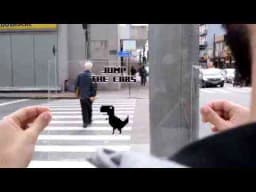
Mattel's 'Race, Park' campaign, created by Ageisobar in Brazil in November 2011, used film to capture the imaginative language of children's gaming and play.

Mattel Brazil Bets on Play With Race Park Film Campaign
Mattel's "Race, Park" is a film campaign produced by São Paulo agency Ageisobar and published in Brazil in November 2011, using two short film assets to communicate the imaginative and rule-governed world of children's play within the gaming and toys category.
The campaign sits within a broader suite of Mattel Brazil film work that Ageisobar developed during the same period. According to Clapboard's archive, at least three related film campaigns — "Race," "Park," and "Dinosaur, Car, Doll" — were classified under gaming and published in the same month, suggesting a coordinated creative push rather than an isolated execution. Together they form a coherent body of work directed at Brazilian families and children, using the film medium to dramatise the internal logic that governs how children engage with toys.
In Brazil, the toy and gaming category was a genuinely competitive arena by 2011. Mattel's strategic objective with this campaign appears rooted in reinforcing the brand's imaginative credentials at a time when the global toy market was expanding. The global toy market reached approximately US$83.3 billion in 2011, according to industry data cited by iacaward.org, placing Mattel — which reported approximately US$6.27 billion in revenue that year, per Investor Hasbro comparable filings — as the world's largest toy company by revenue. Translating that global scale into culturally resonant Brazilian advertising required a locally attuned creative voice, which is precisely what Ageisobar provided. The campaign carries a Clapboard Score of 54 out of 100, reflecting a competent but not landmark execution within the gaming and media entertainment category.
Mattel entered the 2011 Brazilian advertising cycle with strong global momentum. The company and its chief rival Hasbro both grew sales by approximately seven percent in 2011, according to gulfnews.com, while LEGO grew at a faster pace — a detail that contextualises the competitive urgency facing legacy toy brands seeking to maintain cultural relevance with younger audiences. In Brazil specifically, where a growing middle class was expanding household discretionary spending, the toy and gaming category was attracting intensified attention from international players.
Ageisobar's strategic insight for "Race, Park" appears to centre on a simple but durable truth about children's play: children do not experience toys as products. They experience them as systems of rules, roles, and imaginative consequence. A toy car is not a car — it races. A toy truck does not drive — it parks. By anchoring the campaign's language in the verbs of play rather than the nouns of product, the agency positioned Mattel as a brand that genuinely understands how children think, rather than one that merely manufactures objects. This insight aligns with broader academic thinking on children's media literacy and play, explored in scholarship documented on davidbuckingham.net, which notes that children are active meaning-makers rather than passive consumers of branded content.
Against competitors such as Hasbro — which held an estimated five-point-two percent share of the global toy market in 2011 based on revenue proxy, per investor.hasbro.com — Mattel's positioning in Brazil required more than product demonstration. It required emotional and imaginative differentiation. The film medium, chosen deliberately over print or outdoor, gave the campaign the narrative space to embody that differentiation rather than simply assert it.
Creative director Carlos Domingos led the "Race, Park" campaign for Ageisobar, working alongside art director Henrique Mattos and copywriter Daguito Rodrigues, according to Clapboard's production records. The film was directed by Rodrigo Pesavento and produced through Zeppelin Filmes, with music supervision handled by S de Samba under music directors Dimi Kireeff and Henrique Nicolau. RTVC responsibilities were managed by Juliana D'Antino. This is a fully documented production with a clear division of creative and production labour — a signal of professional intent consistent with campaigns submitted for industry consideration.
The choice of film as the primary medium is significant. In Brazil in 2011, television remained the dominant advertising channel, and film production carried both cultural prestige and audience reach that no other format could replicate. By committing to film — and producing two distinct assets rather than one — the campaign team signalled confidence in the creative concept's ability to sustain multiple executions without redundancy.
Pesavento's directorial approach, working with Zeppelin Filmes, would have needed to navigate the particular challenge of representing children's play in a way that feels authentic rather than staged. The campaign contains no verified celebrity, named character, or licensed entertainment property, according to Clapboard's archive, which means the creative weight rests entirely on the visual and narrative logic of play itself. S de Samba's music direction by Kireeff and Nicolau provided the sonic texture that, in film advertising for children's products, often carries as much communicative weight as the image. The result is a campaign that trusts its craft to carry the message — a calculated and creatively disciplined position.
No verified performance data for the "Race, Park" campaign is publicly available. No indexed reviews or coverage of the campaign have been found in Campaign, Ad Age, Adweek, The Drum, or Contagious, according to Clapboard's research. No verified wins or finalist placements have been confirmed at Cannes Lions, the Effies, The One Show, D&AD, or the Clios.
Structural analysis, however, offers a meaningful reading of the campaign's probable effectiveness. The decision to produce two film assets rather than one suggests the agency and client identified sufficient conceptual richness in the brief to sustain creative variation — a structural indicator of strategic depth. The fully credited production team, including a named director, production company, and music house, points to a budget and ambition commensurate with serious market deployment rather than a limited test.
In the Brazilian context, where television advertising in the gaming and toy category competed fiercely for parental and child attention during the pre-Christmas retail window — November being a strategically critical month — a two-asset film campaign would have provided flexibility across broadcast placements and daypart targeting. Mattel's reported global revenue of approximately US$6.27 billion in 2011, per investor.hasbro.com comparable data, underpins the brand's capacity to invest in locally produced, culturally calibrated creative work in markets like Brazil. The campaign's Clapboard Score of 54 out of 100 reflects a professionally executed campaign that demonstrates sound strategic instincts and competent craft, without reaching the creative distinctiveness that defines award-level work in the gaming and media entertainment category.
"Race, Park" is a film campaign created by Ageisobar for Mattel in Brazil, published in November 2011. It comprises two film assets classified under the gaming category and forms part of a broader suite of Mattel Brazil work produced by Ageisobar during the same period, according to Clapboard's archive.
Ageisobar created the campaign, with creative direction by Carlos Domingos, art direction by Henrique Mattos, and copy by Daguito Rodrigues. Director Rodrigo Pesavento shot the films through Zeppelin Filmes. Music was handled by S de Samba, with Dimi Kireeff and Henrique Nicolau serving as music directors, according to Clapboard.
No verified award wins or finalist placements for "Race, Park" have been confirmed at Cannes Lions, the Effies, D&AD, The One Show, or the Clios, according to Clapboard's research. The campaign carries a Clapboard Score of 54 out of 100, indicating a competent professional execution without landmark industry recognition.
Film was the dominant advertising channel in Brazil in 2011, offering the narrative space and audience reach that other formats could not match. Producing two distinct film assets allowed Ageisobar to sustain creative variation across broadcast placements, a structural decision consistent with serious market deployment during the competitive pre-Christmas retail window.
Mattel reported approximately US$6.27 billion in global revenue in 2011, per investor.hasbro.com comparable data, making it the world's largest toy company ahead of Hasbro. In Brazil, where the gaming and toy category was intensifying, "Race, Park" served as a culturally attuned effort to reinforce Mattel's imaginative brand credentials against rival players.
The campaign anchors its language in the verbs of children's play rather than product description — racing, parking — reflecting the insight that children experience toys as rule-governed imaginative systems rather than objects. This approach, developed under creative director Carlos Domingos, positions Mattel as a brand that understands how children genuinely think and play.
.webp)
Creative Collaboration Platform: The Backbone of Modern Creative WorkWhat is a creative collaboration platform?Clapboard defines a creative collaboration platform as the operational core for today’s distributed creative teams. This is not a collection of digital collaboration tools stitched together; Clapboard’s system


Understanding the Creative Production MarketplaceWhat is a Creative Production Marketplace?Clapboard defines a creative production marketplace as a structured ecosystem where brands, agencies, and production talent converge to execute video, advertising, and branded content at scale. Unlike the legacy agency or freelanREAD FULL ARTICLE

The Urgent Need for a Creative Production Operating SystemWhy Traditional Creative Production Models Break DownClapboard sees the creative production landscape shifting under pressure. Content velocity is no longer a buzzword—it’s a mandate. Modern advertising demands relentless output across dozens of channels, each wREAD FULL ARTICLE