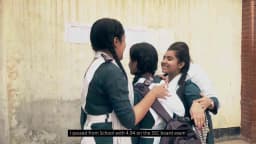
MasterCard and Uzcard's 2019 Easy Payment film, created by TBWA\CAC Tashkent, makes the case for cashless payments in a rapidly digitalising Uzbekistan market.

MasterCard and Uzcard Bet on Simplicity With Easy Payment
Easy Payment is a 2019 film campaign created by TBWA\CAC Tashkent for MasterCard and Uzcard, launched in Uzbekistan in April 2019, designed to communicate the simplicity and accessibility of card-based transactions to a domestic audience navigating a rapidly shifting payments landscape.
The campaign arrived at a precise inflection point in Uzbekistan's banking and finance sector. MasterCard had completed its first transaction through the Uzcard system as recently as June 30, 2017, according to Clapboard's editorial research, meaning the partnership between the two networks was still relatively new by the time this film reached audiences. The objective was straightforward: reduce consumer hesitation around card payments and reinforce the idea that using a MasterCard-enabled Uzcard is an uncomplicated, everyday act. In the Uzbekistan market, where cash had long dominated daily commerce, that message carried real strategic weight.
The campaign comprises a single film asset, indexed on Ads of the World as the principal public record. Its scope is focused rather than broad — one medium, one market, one clear promise. That restraint is itself a strategic choice, concentrating creative energy on a single persuasive moment rather than diffusing it across formats. In Uzbekistan in 2019, where the infrastructure for international card acceptance was still maturing, a film that demystified the payment act spoke directly to the friction consumers were most likely to feel. The Clapboard Score for Easy Payment stands at 66 out of 100, reflecting competent and contextually relevant work that stops short of category-defining creative ambition.
Uzbekistan's payments market was in active flux in April 2019. As reported by Gazeta Uz, competition between the domestic networks Humo and Uzcard was intensifying at that moment, with plans emerging for Visa and MasterCard salary-card issuance across the country. That competitive dynamic gave the Easy Payment campaign a clear strategic purpose: to associate the MasterCard and Uzcard partnership with everyday ease before rival networks could claim that positioning.
The Central Bank of Uzbekistan noted, as of April 18, 2019, that MasterCard and Visa still held limited penetration in the Uzbekistan market, according to reporting tracked by Clapboard's editorial research. The Humo project, a competing domestic initiative, was explicitly designed to build infrastructure compatible with Visa, MasterCard, and UnionPay, signalling that international networks were being actively courted but had not yet achieved mass familiarity among Uzbekistan consumers. In this environment, a campaign centred on simplicity was not a creative default — it was a calibrated response to genuine consumer unfamiliarity with card mechanics.
Globally, MasterCard held a substantial position in the card network landscape. According to the Nilson Report, MasterCard accounted for approximately 24.57 percent of global purchase transactions in 2019, representing around 108.4 billion transactions. Visa led globally at approximately 42.06 percent of purchase transactions that same year, per the Nilson Report, underscoring the competitive pressure MasterCard faced at every level of the market, from international scale down to individual country activations like Uzbekistan. Easy Payment was TBWA\CAC Tashkent's contribution to closing that gap locally, using accessible storytelling to build habitual card behaviour from the ground up in the Uzbekistan banking and finance category.
Easy Payment is a film campaign. That singular medium focus placed the entire persuasive and aesthetic burden on one production, and the team assembled by TBWA\CAC Tashkent approached that responsibility with a defined division of creative labour. Creative Director Farkhod Norbaev shaped the campaign's overall tone and strategic voice, while Art Director Vitaliy Khalzunov was responsible for the visual language that communicates ease and modernity to a Uzbekistan audience. Copywriter Samara Akhmad provided the verbal dimension of that argument, crafting language to make the payment act feel intuitive rather than technical.
Director Malik Zenger translated those creative decisions into moving image, working alongside Director of Photography Tigran Mutafyan, whose lens work determined how the film's core visual metaphors landed on screen. The production was executed by DBLA Video, with Producer Anastacia Lee overseeing logistics and delivery. Client Service Director Nargiz Kamalova held the client relationship with MasterCard and Uzcard throughout the process, ensuring the campaign remained anchored to its banking and finance brief. This is a meaningfully complete production credit list for a 2019 Uzbekistan campaign, suggesting a professional infrastructure that matched the ambition of the brief.
The film's creative strategy appears to privilege clarity over complexity, a choice consistent with the market conditions. In Uzbekistan in 2019, where card payment behaviour was still being formed rather than refined, a campaign that explains and reassures serves the consumer more honestly than one that assumes familiarity. The single-asset approach amplifies this: Easy Payment does not hedge its argument across multiple executions. It makes one case, cleanly. Whether the execution fully capitalises on that structural confidence is a question the Clapboard Score of 66 out of 100 addresses with measured acknowledgement — the work is solid, purposeful, and contextually intelligent, if not transformative in its creative reach.

No verified performance data for Easy Payment is publicly available. MasterCard and Uzcard have not released figures relating to this campaign's reach, recall, or commercial impact in the Uzbekistan market, and no independent trade press review from Campaign, Adweek, or comparable outlets has been identified for this work.
Structural effectiveness, however, can be assessed on its own terms. Easy Payment entered the Uzbekistan banking and finance category at a moment when the primary barrier to card adoption was not product availability but consumer confidence. A film campaign that communicates simplicity directly addresses that barrier. The single-asset format reduces message dilution. The presence of a fully credited production team — including a named director, director of photography, and client service lead — indicates a production standard consistent with professional market-ready output rather than a low-resource activation.
The Clapboard Score of 66 out of 100 reflects this reading. The campaign earns its marks for contextual relevance, strategic clarity, and production completeness. It loses ground where ambition is absent: a score in this range typically signals work that fulfils its brief without expanding what that brief could have been. In a nascent card market like Uzbekistan in 2019, there was space for a more provocative creative argument. Easy Payment chose reassurance over disruption — a defensible choice, but one that contains its own ceiling.
Easy Payment is a film campaign created by TBWA\CAC Tashkent for MasterCard and Uzcard, published in Uzbekistan in April 2019. It targets the banking and finance category with a single film asset designed to communicate the simplicity of card-based payments to Uzbekistan consumers navigating an emerging cashless market, as indexed on Ads of the World.
TBWA\CAC Tashkent created the Easy Payment campaign. The creative team included Creative Director Farkhod Norbaev, Art Director Vitaliy Khalzunov, and Copywriter Samara Akhmad. Director Malik Zenger helmed the film for production company DBLA Video, with Director of Photography Tigran Mutafyan and Producer Anastacia Lee completing the core production roster.
MasterCard and Uzcard launched Easy Payment in Uzbekistan in April 2019 as card penetration remained limited. The Central Bank of Uzbekistan noted restricted international card presence at that time, and competition from domestic network Humo was intensifying, according to reporting tracked by Clapboard's editorial research, making consumer education a pressing strategic priority for both brands.
Easy Payment receives a Clapboard Score of 66 out of 100. This reflects competent, contextually relevant work within Uzbekistan's emerging banking and finance category. The score acknowledges the campaign's strategic clarity and production quality while noting that its creative ambition stops short of the transformative reach that would place it in a higher bracket.
MasterCard held approximately 24.57 percent of global purchase transactions in 2019, according to the Nilson Report, trailing Visa's approximately 42.06 percent share. Easy Payment represented TBWA\CAC Tashkent's localised response to that competitive pressure, targeting Uzbekistan specifically where MasterCard's penetration was still developing alongside the Uzcard partnership established from June 2017.
Easy Payment used film as its sole medium. In Uzbekistan in 2019, where cashless payment behaviour was still forming rather than established, film allowed MasterCard and Uzcard to demonstrate the payment act visually and build consumer confidence through narrative. A single concentrated film asset focused the campaign's persuasive energy without fragmenting its core message across formats.
.webp)
Creative Collaboration Platform: The Backbone of Modern Creative WorkWhat is a creative collaboration platform?Clapboard defines a creative collaboration platform as the operational core for today’s distributed creative teams. This is not a collection of digital collaboration tools stitched together; Clapboard’s system


Understanding the Creative Production MarketplaceWhat is a Creative Production Marketplace?Clapboard defines a creative production marketplace as a structured ecosystem where brands, agencies, and production talent converge to execute video, advertising, and branded content at scale. Unlike the legacy agency or freelanREAD FULL ARTICLE

The Urgent Need for a Creative Production Operating SystemWhy Traditional Creative Production Models Break DownClapboard sees the creative production landscape shifting under pressure. Content velocity is no longer a buzzword—it’s a mandate. Modern advertising demands relentless output across dozens of channels, each wREAD FULL ARTICLE