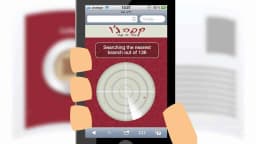
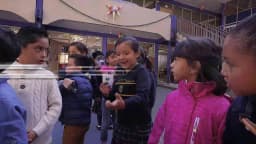
Liverpub's QR Foot ambient campaign, created by Danza Estratégia e Comunicação in Brazil in 2013, reimagined the QR code as an interactive leisure experience.

How Liverpub and Danza Made QR Codes Worth Scanning in Brazil
Liverpub's "QR Foot – It's QRCode, but it's not boring" is a 2013 ambient campaign created by Danza Estratégia e Comunicação in Vitória, Brazil, that physically embedded a QR code into a table football pitch to transform a passive scan mechanic into an active leisure moment for bar patrons, according to Zoominfo.
Liverpub launched the campaign in November 2013. Founded in 2008 by Moacyr Dalla Júnior and his son Bruno in Colatina, Espírito Santo, according to Liverpub's own documented history, the venue had built its identity around an English-style pub atmosphere, rock music, quality food, and informal entertainment. The QR Foot campaign extended that identity into the physical environment of the bar itself, treating the ambient medium not as a surface for messaging but as a stage for participation. The campaign carries a Clapboard Score of 59/100.
The strategic challenge was real and well-documented. By 2013, QR codes had become widely recognised across Brazil yet equally widely ignored, associated in the minds of most consumers with static promotional mechanics that offered little reward for the effort of scanning. Danza's response was to reframe the code entirely, designing a tabletop installation in which the grid of a QR code doubled as the playing field of a miniature football game. In the Brazilian recreational and leisure market, where football culture permeates even the most casual social spaces, the concept carried immediate cultural legibility. The single media asset documented for this campaign captures the installation in situ, communicating the concept with the directness that ambient work demands. The campaign reached its audience inside Liverpub's own premises, making the bar's regular clientele the primary market and the physical space itself the primary medium.
Danza identified a tension at the centre of QR code adoption in Brazil. Consumer familiarity with the format had grown substantially by 2013, yet that familiarity had not translated into engagement. The code had become a visual shorthand for promotional obligation rather than genuine interaction. According to qrcode-tiger.com, QR code fatigue was a recognised challenge for brands attempting to bridge physical and digital environments during this period, as novelty wore off faster than the infrastructure supporting the format could mature.
In Brazil specifically, the recreational and leisure sector provided a meaningful context for reframing that challenge. According to Promoview Com Br, Brazil's promotional marketing market recorded sales of R$46.8 billion in 2013, representing growth of approximately 5.5 percent versus 2012. That figure signals a competitive environment in which brands operating in leisure and entertainment were under genuine pressure to differentiate their physical and experiential presence. Liverpub competed in this environment against both established bar chains and informal neighbourhood venues, none of which had yet claimed ownership of interactive ambient formats as a brand signature.
Danza's strategic insight was to treat football not as a thematic decoration but as the structural logic of the execution itself. In Brazil, where football functions as a shared cultural language that transcends demographic boundaries, embedding the QR code mechanic inside a recognisable game format guaranteed that the installation would be understood and engaged with before a single scan took place. The leisure context of a pub environment further lowered the threshold for participation. Patrons were already primed for informal play. The campaign asked them only to look down at the table they were already sitting around. That alignment between consumer state, cultural context, and creative mechanic is what separates QR Foot from the category of standard point-of-sale QR activations common across the Brazilian market in 2013 and 2014.
Creative Director Luiz Carlos Silva led the QR Foot execution at Danza Estratégia e Comunicação. Art Director Enzo Gratz resolved the central visual problem of the campaign: making a functional QR code and a legible table football pitch occupy exactly the same physical space without either reading as a compromise of the other. Copywriter and digital coordinator Mailson Dutra shaped the campaign's verbal identity, anchoring it in the self-aware proposition that the work declared plainly — it is a QR code, but it is not boring. Production was handled by Arthur Marques.
The craft demand of the execution was precise. A QR code is a machine-readable format governed by strict specifications. Its grid of black and white modules must meet defined contrast, sizing, and quiet-zone requirements to scan reliably. Designing that grid to simultaneously function as the playing surface of a table football game, with goal areas, centre circles, and the visual conventions of a pitch, required the two systems to share geometry without either failing its primary function. The result, documented in the single media asset associated with the campaign, demonstrates that Gratz resolved this tension successfully. The piece reads as a football table at human distance and as a QR code when a device camera is introduced.
The ambient medium was the right choice for this creative idea. Traditional print or digital formats would have collapsed the installation into a two-dimensional image, removing the physical participation that gave the concept its meaning. By existing as a real object inside the bar, the installation invited touch, play, and social interaction before it invited a scan. That sequence — play first, scan second — reversed the conventional QR code experience and removed the primary barrier to engagement. The Vitória-based agency demonstrated with this piece that ambient creativity rooted in local cultural intelligence can produce work that is formally inventive and practically functional at the same time.
No independently verified performance data for the QR Foot campaign — including scan volumes, foot traffic uplift, or documented sales impact — is publicly available at this time. No verified award recognitions for this campaign at Cannes Lions, the Effie Awards, The One Show, or D&AD are on record, according to Goqr. The campaign is documented in the Clio Network archive, which positions it as an attempt to make QR code use more engaging within a leisure context, according to Clapboard's editorial records.
Structural analysis of the execution supports a moderate assessment of its effectiveness potential. The campaign's core strength is the precision of its insight-to-execution alignment. It correctly identified QR code fatigue as the obstacle, selected a culturally resonant format — table football — as the solution, and deployed that solution in the one environment where both elements were contextually appropriate simultaneously. These are the conditions that give ambient campaigns durability beyond their initial appearance, because the installation continues to function as long as it remains in place and continues to generate social sharing without paid amplification.
The limitation reflected in the Clapboard Score of 59/100 is primarily one of scale. A single installation in a single venue in Colatina, Espírito Santo, represents a geographically contained reach. The Brazilian leisure market's scale, with promotional marketing activity documented at R$46.8 billion in 2013 according to promoview.com.br, creates a context in which ideas of this quality require broader deployment to register measurable market impact. The concept was demonstrably replicable across multiple Liverpub locations or adapted for other leisure brands across Brazil, and the absence of documented expansion represents the primary gap between the campaign's creative quality and its commercial outcomes.
QR Foot is a 2013 ambient campaign created by Danza Estratégia e Comunicação for Liverpub in Brazil. It physically designed a QR code as a table football pitch, transforming a passive scan mechanic into an active game. The campaign launched in November 2013 and was produced by a team led by Creative Director Luiz Carlos Silva.
Danza Estratégia e Comunicação, based in Vitória, Brazil, created the QR Foot campaign. Creative Director Luiz Carlos Silva led the team, with Art Director Enzo Gratz handling the visual execution, Mailson Dutra serving as copywriter and digital coordinator, and Arthur Marques managing production.
Danza chose the ambient medium because the concept required physical presence to work. A table football pitch embedded with a functional QR code only delivers its meaning as a real object inside a bar. Digital or print formats would have reduced the installation to an image, removing the participatory element that defined the campaign's strategic logic.
Danza recognised that football functions as a shared cultural language across Brazil, making it immediately legible in any social setting. Embedding the QR code mechanic inside a football pitch format guaranteed comprehension and engagement before a scan occurred, bypassing the fatigue associated with conventional QR code executions in the Brazilian leisure market during 2013 and 2014.
The QR Foot campaign by Liverpub and Danza received a Clapboard Score of 59 out of 100. The score reflects the campaign's precise creative insight and strong ambient execution, moderated by its geographically limited deployment as a single installation within one venue in Colatina, Espírito Santo, Brazil.
No verified award recognitions for the QR Foot campaign at Cannes Lions, the Effie Awards, The One Show, or D&AD are publicly on record, according to Qr-Code-Generator. The campaign is documented in the Clio Network archive as a notable ambient execution, and it remains one of the more formally inventive QR code activations produced in Brazil in 2013.
.webp)
Creative Collaboration Platform: The Backbone of Modern Creative WorkWhat is a creative collaboration platform?Clapboard defines a creative collaboration platform as the operational core for today’s distributed creative teams. This is not a collection of digital collaboration tools stitched together; Clapboard’s system


Understanding the Creative Production MarketplaceWhat is a Creative Production Marketplace?Clapboard defines a creative production marketplace as a structured ecosystem where brands, agencies, and production talent converge to execute video, advertising, and branded content at scale. Unlike the legacy agency or freelanREAD FULL ARTICLE

The Urgent Need for a Creative Production Operating SystemWhy Traditional Creative Production Models Break DownClapboard sees the creative production landscape shifting under pressure. Content velocity is no longer a buzzword—it’s a mandate. Modern advertising demands relentless output across dozens of channels, each wREAD FULL ARTICLE