Liqui-Fruit Turns a Missing Straw Into a Punchline
Liqui-Fruit's 'City, Park, Cops' is a three-spot South African television campaign created by Bester Burke and launched in September 2013 to announce the removal of the attached straw from the brand's new packaging, using a single humorous insight to make a functional product change feel like an event worth watching, according to Themediaonline Co Za.
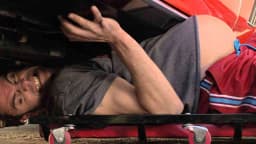
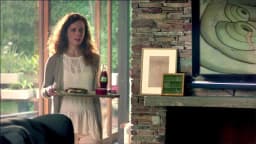
Bester Burke received a brief from Liqui-Fruit with one clear objective: promote new packaging. The most prominent change to that packaging was the removal of the straw — a small physical detail that the Cape Town agency recognised as a rich creative premise rather than a liability, according to Trendhunter. The campaign's title references its three distinct executions, each named after a different setting: City, Park, and Cops. Together they form a cohesive comedic universe built around the same absurdist logic, in which the absence of a straw triggers a cascade of consequences played entirely for laughs.
In the South African food and drink advertising landscape of 2013, campaigns within the non-alcoholic drinks category were largely dominated by aspirational lifestyle imagery, according to Thisismachine Co Za. Liqui-Fruit and Bester Burke chose a different register entirely — straightforward, character-driven physical comedy that demanded nothing from the viewer except attention. The Zebra Crossing moment, among others across the three films, exemplifies this approach: a visual gag that is legible in seconds and anchored entirely in the product truth, according to Assegaiawards Co Za. The campaign comprised three film assets produced by Giant Films and directed by Peri van Papendorp, giving the work a consistent visual and tonal signature across all three executions. The Clapboard Score for 'City, Park, Cops' stands at 63 out of 100, reflecting solid craft and a clear strategic premise against a competitive category.
Liqui-Fruit identified the removal of its attached straw as the central packaging change requiring consumer communication in 2013, according to Bizcommunity. Rather than frame the change defensively or bury it in lifestyle imagery, Bester Burke elected to place the missing straw at the absolute centre of the creative, transforming a potential point of consumer confusion into a comedic premise with broad appeal across the South African market.
The strategic rationale was grounded in a simple consumer truth: the straw was a recognisable, habitual feature of the Liqui-Fruit pack. Its removal would be noticed. The agency's response was to acknowledge that noticeability directly and lean into it with humour — a tonal choice consistent with Liqui-Fruit's established playful, fruit-led brand personality, which had been present in earlier campaigns including the 2010 'Summer Meltdown' work developed with agency Liquorice. By 2013, the non-alcoholic drinks segment in South Africa was fiercely contested. According to the National Agricultural Marketing Council of South Africa, Ceres held more than fifty percent of the long-life fruit-juice segment in South Africa in 2013, representing a dominant competitive position that Liqui-Fruit operated against directly. Clover's beverage portfolio, including Clover Krush and Clover Tropika, held majority share across multiple sub-categories of the South African fruit juice and dairy-fruit-mix market in the same year, according to the same source. Against competitors of that scale, a campaign built on a memorable, ownable idea — rather than generic fruit-and-sunshine imagery — offered Liqui-Fruit a sharper point of differentiation in the food and drink category.
Director Peri van Papendorp helmed all three films in the 'City, Park, Cops' campaign for Liqui-Fruit, working through production company Giant Films. The consistent directorial hand across all three executions — City, Park, and Cops — was not incidental. It ensured that the visual grammar, timing, and tonal register of the physical comedy remained unified, so that each film reinforced rather than diluted the cumulative effect of the campaign.
The creative team at Bester Burke responsible for the work comprised Creative Director Stephen Burke, Art Director Romano Cardinal, and Copywriter Jacques Laubscher. Their approach to the brief was structurally disciplined: a single insight — the straw is gone — expressed through three distinct real-world scenarios, each chosen to maximise the comic potential of that absence. The Zebra Crossing execution is representative of the campaign's method. A visual situation is established quickly, the straw's absence creates an unexpected consequence, and the punchline lands without elaboration. It is a format that trusts the audience and respects the thirty-second form.
Tonally, the films sit within a tradition of South African television advertising that prizes wit and observational specificity over production spectacle. The locations referenced in the campaign titles — City, Park, Cops — suggest grounded, recognisable South African settings rather than abstracted international visual language, giving the work a local texture that reinforces the brand's presence in the domestic market. The three-film structure also gave the campaign breadth without demanding a larger budget per execution; each film adds a new scenario while drawing on the same core comedic premise, maximising creative return on a tightly defined idea.
No verified performance data for 'City, Park, Cops' is publicly available. No independent trade-press reviews from Campaign, Adweek, or equivalent South African publications have been located, and no award citations from the Assegai Awards or comparable bodies have been confirmed for this specific campaign. In the absence of measurable outcomes, the campaign's structural effectiveness can be assessed on its own terms.
The core strength of 'City, Park, Cops' lies in its strategic clarity. The brief — promote new packaging — is answered with a creative device so directly tied to the product change that there is no gap between communication and objective. The straw's removal is not a backdrop to the advertising; it is the advertising. That alignment between business problem and creative solution is a reliable predictor of consumer cut-through, particularly in a cluttered non-alcoholic drinks category where generic visual tropes are common. The three-film structure amplifies reach within the campaign without fragmenting the idea, and Peri van Papendorp's consistent direction ensures that viewers encountering any of the three executions enter the same comedic world. The Clapboard Score of 63 out of 100 reflects a campaign that executes its premise with competence and tonal confidence, while operating within a relatively contained creative ambition — the idea is tight, the execution is clean, and the humour serves the brand rather than overwhelming it.
'City, Park, Cops' is a South African television campaign by Bester Burke for Liqui-Fruit, launched in September 2013. It uses humour to announce the removal of the attached straw from Liqui-Fruit's new packaging, across three distinct film executions set in different locations, each built on the same comedic premise.
Bester Burke, a Cape Town-based advertising agency, created the campaign. The core creative team comprised Creative Director Stephen Burke, Art Director Romano Cardinal, and Copywriter Jacques Laubscher, with Peri van Papendorp directing all three films through production company Giant Films.
Liqui-Fruit changed its packaging design and the removal of the attached straw was the most notable result of that change. No public statement detailing the specific commercial or environmental rationale for the straw removal has been verified, but the change formed the entire creative premise of the resulting TV campaign.
Peri van Papendorp directed all three films in the campaign for Liqui-Fruit. Production was handled by Giant Films. Van Papendorp's consistent direction across all three executions — City, Park, and Cops — unified the visual tone and comedic timing of the campaign as a whole.
The South African fruit juice market in 2013 was highly competitive. According to the National Agricultural Marketing Council of South Africa, Ceres held more than fifty percent of the long-life fruit-juice segment, while Clover's beverage brands dominated multiple sub-categories, making a memorable creative approach strategically important for Liqui-Fruit.
The Clapboard Score for 'City, Park, Cops' is 63 out of 100. The score reflects a campaign with clear strategic alignment and confident tonal execution, built on a single humorous insight tied directly to Liqui-Fruit's packaging change, operating within a focused rather than expansive creative ambition.
.webp)
Creative Collaboration Platform: The Backbone of Modern Creative WorkWhat is a creative collaboration platform?Clapboard defines a creative collaboration platform as the operational core for today’s distributed creative teams. This is not a collection of digital collaboration tools stitched together; Clapboard’s system


Understanding the Creative Production MarketplaceWhat is a Creative Production Marketplace?Clapboard defines a creative production marketplace as a structured ecosystem where brands, agencies, and production talent converge to execute video, advertising, and branded content at scale. Unlike the legacy agency or freelanREAD FULL ARTICLE

The Urgent Need for a Creative Production Operating SystemWhy Traditional Creative Production Models Break DownClapboard sees the creative production landscape shifting under pressure. Content velocity is no longer a buzzword—it’s a mandate. Modern advertising demands relentless output across dozens of channels, each wREAD FULL ARTICLE